Cycle Syncing: What to Keep and What the Evidence Cannot Support
Menstrual experiences differ. They do not justify a universal four-phase prescription for eating, training or working.
In this article

Folded towels on a changing-room bench, beside a water bottle that has never been opened
1. In Four Boxes Beside the Yoga Mat, She Planned Her Entire Month
A familiar scene in a gym changing room: a woman of thirty-five or thirty-six sits on a bench, turning her phone sideways to show a friend a calendar divided by hand into four colored sections: pale red, blue, yellow, and purple. Each section is filled with notes. Strength training this week, stretching only the next; more sweet potatoes and brown rice this week, magnesium and B6 next week; accept friends' dinner invitations this week, avoid presentations next week; this is a good week to negotiate a raise, but forget next week.
Her friend looks for two seconds and offers a typical response: "Isn't that just... those few days I get every month?"
But she shakes her head. The system is called cycle syncing: aligning eating, training intensity, work schedules, and social plans with the four phases of the menstrual cycle. She has followed it for seven months, scheduling everything from breakfast to weekly meetings according to the chart. She also subscribed to a monthly paid community providing new workouts and menus each week, with thousands of members like her.
The significance of this changing-room conversation extends beyond the gym. Over the past two years, the method has developed from a content topic into a complete commercial ecosystem: cycle-syncing menus, workouts, calendar templates, and paid communities. Every layer supports a business, often a substantial one. Chinese-language interest has risen too, with related topics on one content platform exceeding a million views and approximately 42.7% year-on-year growth, almost matching the English-language trend.
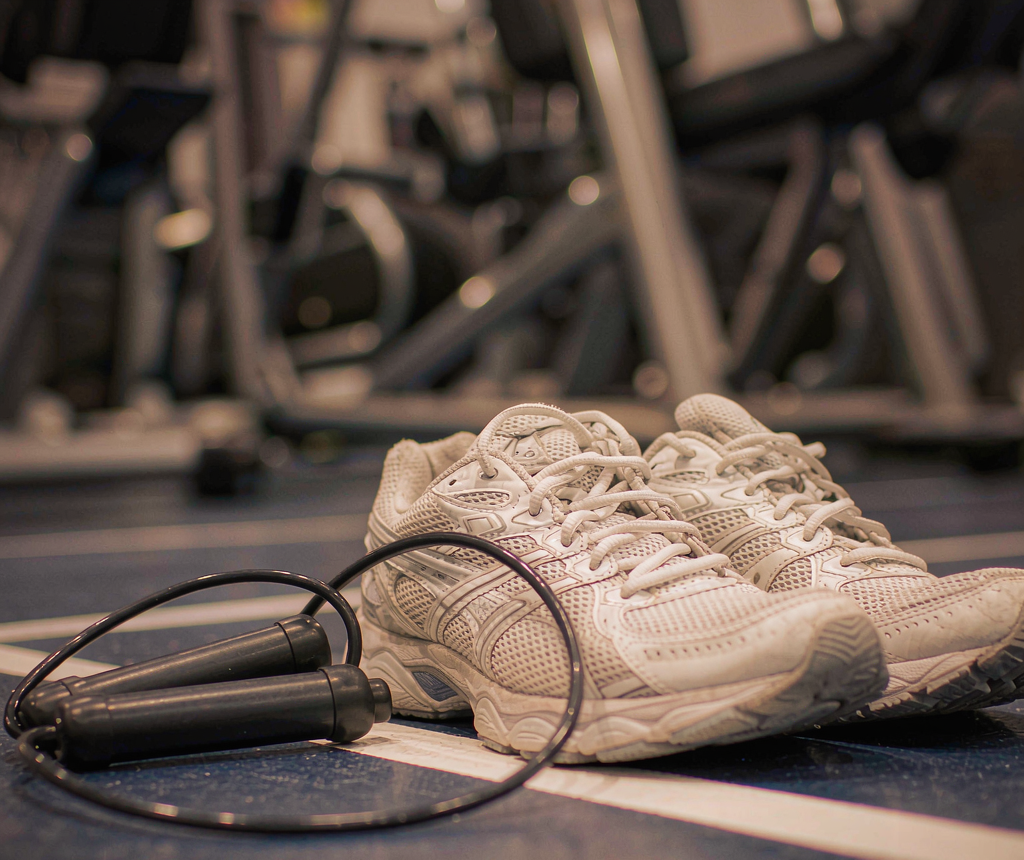
Those shoes and that rope never required checking a calendar before deciding whether to use them
Within this system, one repeatedly used and particularly memorable expression is luteal uglies.
Literally, it means "the ugliness of the luteal phase." It describes the final part of the cycle, approximately the two weeks after ovulation and before the next period, as a time when women become "ugly, stupid, and furious": worse skin, bloating, swelling, uncontrolled emotions, sluggish thinking, and impaired social skills. The prescribed response is to anticipate all of it and avoid anything important, public-facing, or intellectually demanding.
Why does the expression spread so effectively? It offers a highly specific explanation. Women in their thirties and early forties face a confusing combination of fatigue, weight changes, poorer sleep, difficulty concentrating, and mood fluctuations, for which modern life offers no single answer. Cycle syncing supplies a named, actionable explanation that can be put into practice tomorrow.
This article will neither tell you "It is pseudoscience, don't believe it" nor "It is wonderful, start now."
Reality is more complicated than either position. It is neither entirely right nor entirely wrong, but occupies a delicate position: new research is directly challenging its central claims, while growing numbers of sports medicine and clinical professionals partially accept its broader framework.
Let us examine its components.

A hand-filled calendar with four colored sections is the usual entry point into the method
2. Mechanisms and Background: How the System Was Built
2.1 From Premenstrual Syndrome to "Luteal Uglies"
First, cycle syncing did not appear from nowhere. It follows a medical concept with a long history: premenstrual syndrome.
The menstrual cycle can broadly be described in four phases. First comes menstruation, when estrogen and progesterone are both low. Second is the follicular phase: follicles develop and estrogen steadily rises. It is often described as "the best two weeks," with recovering energy, stable mood, and an environment relatively favorable to muscle synthesis. Third is ovulation: estrogen peaks and briefly falls, while luteinizing hormone surges. Fourth is the luteal phase: the corpus luteum formed after ovulation secretes progesterone, which gradually rises. If pregnancy does not occur, the corpus luteum degenerates after approximately two weeks, both hormone levels fall, and menstruation begins.
The luteal phase is indeed the least comfortable part of the cycle for many. Medicine has long called the pattern of "emotional and physical symptoms appearing around a week before menstruation and improving after it starts" premenstrual syndrome. The small group with symptoms severe enough to impair normal functioning is separately described as premenstrual dysphoric disorder. These are formally recognized clinical conditions with diagnostic criteria.
"Luteal uglies" is essentially a translation: it converts the relatively technical language of "premenstrual symptoms" into an emotional, visual, social-media-friendly expression. It drops qualifications such as "some people," "varying severity," and "requires assessment," universalizing the experience into "everyone becomes ugly, stupid, and furious during the luteal phase." The cost of the translation lies in those omissions.
2.2 How Well Supported Is the Four-Phase Classification Itself?
Describing hormonal changes in four phases is physiologically reasonable. Hormones do fluctuate cyclically; that is a fact.
The problem comes in the next step: inferring from "hormones fluctuate" that "eating, training, work, and socializing should all follow those fluctuations." That is an enormous leap.
The complete chain needed is "fluctuating hormone levels → changes in tissue function → measurable differences in exercise performance/cognition/mood → better outcomes from deliberately adjusting schedules to the cycle." Currently, the links differ greatly in strength. The first is strongest; they weaken progressively afterward.
"Luteal uglies" reasons backward from the latter to the former, portraying a loosely connected chain as a solid iron cable.
Language to watch
When you see "The luteal rise in progesterone causes X," look for three things: is it human research or mechanistic inference; how large was the sample and was there a control group; and how large was the effect—so small it is statistically significant but imperceptible in everyday life?
2.3 Why It Became a Business
Understanding the ecosystem matters more than arguing over right and wrong.
The commercial model has a natural advantage: it turns content into a schedule. Ordinary health education tells you something; cycle syncing tells you what to do today, tomorrow, and this week, day after day. This structure is naturally suited to subscriptions, courses, communities, and daily app notifications because users need to return every day.
One particular chain deserves attention: some brands use founder-funded research to substantiate their own methods. This makes commercial sense, but scientifically it is a signal requiring close scrutiny. When the funder, designer, and user of a study's conclusions are the same people, and findings directly serve product sales, its place in the evidence hierarchy must be substantially lowered. At most, it is an "industry observation" or "exploratory data," insufficient to support general claims that everything must be scheduled around the cycle.
This does not mean self-funded research must be fabricated. It means evaluating evidence requires looking beyond conclusions to who pays, who designs, and who benefits.
2.4 Parallel Growth in Chinese-Language Content
An easily overlooked fact is that this is no longer a niche foreign concept in China; it has undergone substantial localization. In Chinese short videos and illustrated posts, "luteal phase" has become common vocabulary, templates for "eating by your cycle" and "training by your cycle" circulate widely, and related content-platform topics exceed a million views with approximately 42.7% year-on-year growth. The pace almost mirrors English-language content.
Chinese and English readers therefore face the same question: when the broad principle that "the body has rhythms" seems sensible, but the specific claim that "everything must follow the cycle" lacks evidence, how far should belief extend?
3. Evidence Review: Where the Latest Challenge Lands
3.1 The Widely Quoted Claim Does Not Hold Up
To understand this debate, we must identify the physiological foundation of cycle syncing.
Its logic rests on the premise that women's energy metabolism differs between cycle phases. The usual account says follicular metabolism is higher, supporting more food and training, while luteal metabolism falls into an "energy-saving mode," encouraging fat storage and requiring lower calorie intake and training volume.
This claim has circulated for years in countless menus, workouts, educational articles, and even some clinical advice. It also feels intuitive: many women do feel hungrier, more tired, and puffier in the luteal phase.
Then a 2025 study directly rejected it. The central conclusion of that research, from a human-performance team associated with Wu Tsai, was that metabolic rate does not change significantly across the menstrual cycle. Claims such as "you burn several hundred fewer kilocalories daily in the luteal phase," repeatedly presented as facts, were unsupported by rigorous measurements.
A shock to the foundations
"Metabolic rate changes significantly across the cycle" is the most commonly cited physiological justification for cycle-based menus and workouts. Its direct rejection by research in 2025 removes one of the building's load-bearing walls.
The force of this conclusion is not that it overturns cyclical changes in how people feel. It overturns the reasoning that "these feelings can be explained by objective metabolic numbers, from which exact food and exercise prescriptions can be calculated." Without that number, schedules specified down to grams and sets lose their computational foundation.
3.2 Exercise Performance and Cycle Phase: Mixed Findings, No Universal Rule
What happens when we examine exercise performance directly?
The answer is mixed findings—the most honest and least pleasing statement in this field.
Many studies ask whether women's exercise performance differs between cycle phases. Taken together, they show the following:
Some studies report changes under particular conditions: elevated luteal body temperature may affect heat tolerance, for example, and some subjective fatigue scores rise during that phase. Others find no meaningful differences. Still others find that between-person differences far exceed between-phase differences: variation between cycles for the same woman is much smaller than differences between women, and each woman's response pattern is highly individual.
This means a universal cycle-based training chart derived from an "average effect" is methodologically unsound. An average effect is not an individual effect, and certainly not proof of usefulness for you.
The circulating claim: training intensity must be lowered in the luteal phase, or you will be injured or waste your training.
Current evidence does not support that blanket conclusion. Findings are mixed, with substantial individual variation. Lowering intensity is not inherently wrong, but the reason should be "I feel unwell today, slept badly, or am in a heavy training block," rather than "I am in the luteal phase."
Move the basis for decisions from the calendar to your own bodily signals.
3.3 Which Part Is Being Accepted?
If we stopped there, the conclusion would be "it is all nonsense." Reality is different.
More sports medicine and exercise physiology researchers accept the broad principle that "women's bodies are not identical every day, and training and nutrition should consider the cycle and wider physiological rhythms." Their reasons are straightforward:
First, women have long been underrepresented in sports science, and applying classic findings from predominantly male samples directly to women was never rigorous. Second, symptoms—period pain, premenstrual discomfort, bleeding volume, and fatigue—genuinely affect whether someone can attend training, its duration, and comfort. The mechanism need not involve muscles or metabolism for the consequences to be real. Third, considering these issues and allowing flexible training plans costs little and may provide substantial benefit.
What researchers accept is the principle of consideration, flexibility, and individualization. What they have not accepted is the precise prescription that everything must be strictly arranged around four phases.
These are often conflated, particularly in commercial content, because the latter sells better.
3.4 An Easily Overlooked Psychological Fact
Another point helps explain why so many people feel that it "really works."
Filling out and following a daily chart does more than adjust eating and training. It also makes you notice bodily sensations more often, provides an explanatory framework for discomfort instead of self-doubt, and creates a feeling of control.
These three effects have real value, and their mechanisms are independent of whether cycle syncing's specific claims are correct. Even if a phase-specific chart is physiologically unsupported, those following it may genuinely feel better.
This does not mean "it is a placebo, so it does not count." It means improvement may come from the framework itself rather than the precise prescription. Recognizing that distinction clarifies what to retain and discard.
The key distinction:
"Paying attention to bodily rhythms" is a useful behavioral change with real benefits. "Eating and training must follow the four menstrual phases" is an overly precise claim with insufficient evidence.
You can retain the former while rejecting the latter.
4. Risks and Controversies: What Actually Deserves Caution
4.1 The Expression "Luteal Uglies" Has Costs of Its Own
Language is not neutral. Calling a normal physiological phase "ugly" does several things:
It turns physiology into a negative judgment of appearance. "I feel worse during this time" changes from "I need care" to "I look unattractive." It also grants social permission to conclude that being luteal makes someone unsuitable for appearing, speaking, or handling important responsibilities. This is particularly dangerous in the workplace, where it may justify underestimating women's abilities.
A more practical concern is that oversimplified attribution obscures real causes. Premenstrual symptoms severe enough to impair functioning need clinical assessment. Persistent low mood, marked fatigue, and unexplained weight changes also cannot be explained simply by "the luteal phase has arrived." Putting everything in the "luteal uglies" basket may delay care.
4.2 "Avoid Important Events" May Point in the Wrong Direction
One widely circulated suggestion is to schedule important meetings, interviews, and negotiations in the follicular phase, avoiding public-facing activities during the luteal phase.
As flexible advance planning, this may be a reasonable form of self-care. As a rigid rule, however, it can have two consequences.
First, life cannot be rearranged to a 28-day template. Project deadlines, meetings, and family responsibilities are mostly beyond your control. Fitting them into a cycle chart can produce continual frustration: what seems like optimizing performance actually creates unreachable standards.
Second, it reinforces the suggestion that "I am unreliable on certain days." Its long-term effect on working women's self-understanding may be more concerning than modest luteal discomfort.
4.3 How Commercialization Reshapes Content
This point particularly deserves attention.
Once cycle syncing becomes a business, content incentives change. Free education tends to say "it is complicated and individual"; paid content needs to say "follow these four steps to take control." Complexity is difficult to package as a monthly fee; certainty is easy.
Consequently, "average effects" become "everyone experiences this," "some studies suggest" becomes "science proves," and "individual assessment is needed" is reduced to "follow your cycle." Each edit may seem small, but together they produce a system no longer corresponding to the original evidence.
Another common practice is citing founder-funded research for validation. As explained above, this is not fabrication, but substantially lowers the evidence grade. Treat such citations like a brand's own product assessment.
4.4 Situations That Actually Require Medical Care
Whether or not you use cycle syncing, the following should not be absorbed into the explanation of "the luteal phase."
Seek Care for These Situations Rather Than Attributing Them Yourself
First, the menstrual cycle itself becomes irregular: suddenly shorter or longer cycles, substantially heavier or lighter bleeding, or bleeding between periods. These may require assessment rather than being merely "hormonal fluctuations."
Second, premenstrual symptoms seriously affect work or relationships. This is a clinical condition needing formal assessment and appropriate management, not something solved by changing a menu.
Third, persistent low mood, anxiety, or substantial sleep disruption. Around age 40, these are easily dismissed as "hormones," but they are independent, treatable health problems.
Fourth, unexplained fatigue, marked weight change, palpitations, or heat/cold intolerance. Thyroid function, anemia, and metabolic conditions need consideration; do not assume the cycle is responsible.
Fifth, unusual exercise-related symptoms, including chest tightness, marked breathlessness, dizziness, or sudden joint pain. These are unrelated to cycle phase and should follow standard sports medicine assessment.
4.5 A Particular Note for Readers Over 40
For readers over 40, one structural fact must be stated: cycle syncing was originally designed for reproductive-age women with regular, stable menstrual cycles.
After 40, many cycles become less predictable: shorter, longer, a missed month, or variable flow. These are typical perimenopausal changes.
At that point, "schedule everything by four phases" loses its premise. You may not even reliably know the cycle day or phase. Rigid application causes ongoing confusion: "Why do I feel so bad when I am supposed to be follicular? Am I doing something wrong?"
Perimenopause itself also requires accurate understanding and may need medical assessment. If you are in your forties using cycle syncing to explain every discomfort, you may postpone a consultation that matters. We discuss this at length in another article.
An essential boundary
Any health plan that encourages "observe another cycle" despite clear abnormal signals has a problem.
A plan should help you live better, not endure better.
5. Practical Suggestions: Keep the Useful Parts
After all this, a practical question remains: how should it be used?
We suggest a different approach: downgrade cycle syncing from a set of rules to an observation tool.
5.1 Three Things Worth Keeping
Keep: records, flexibility, and awareness of when to seek care
Records. Tracking symptoms, sleep, mood, and training experiences for several months is valuable in itself. The purpose is not calculating a rule, but arriving at a consultation able to describe concrete patterns rather than saying "I just feel unwell." This helps medical assessment considerably.
Flexibility. Allowing adjustments in training and eating on difficult days is sound, without needing cycle theory. The reason is simple: training must be sustainable, which requires avoiding injury and making it so punishing that you come to hate it.
Awareness of when to seek care. Knowing which symptoms need a doctor rather than representing normal fluctuations is the most valuable element, yet the one commercial content most often omits.
5.2 Four Things to Discard
Discard: overly precise claims
Discard the term "luteal uglies." It turns a physiological phase into up to two weeks of self-rejection. You can acknowledge harder days without calling them "ugly."
Discard "everything must follow the phases." The physiological premise, significant metabolic changes across the cycle, was rejected by research in 2025; exercise performance findings are mixed, and individual differences exceed phase differences.
Discard phase-based menus and workouts specified down to grams and sets. Their precision is an illusion. Basic nutrition and training principles—adequate protein and energy, regular strength and aerobic exercise, and sufficient sleep—do not change with the cycle day.
Discard the idea that adherence requires a monthly subscription. If a health habit requires a paid monthly community to continue, consider whether you are maintaining the habit or the identity.
5.3 A More Practical Alternative Framework
Arrange activity around your actual condition that day rather than the calendar, while keeping a stable long-term foundation. For example:
Fix what should remain consistent. Sleep duration, protein intake, weekly strength-training frequency, and daily activity are fundamentals and should not fluctuate with the cycle. Most research supports the benefits of long-term consistency in these basics.
Let today's experience guide today's adjustments. Train normally when able; reduce volume or walk when clearly uncomfortable. These decisions do not require a calendar. With attentive records, your pattern may emerge after several months, but it will be yours, rather than one supplied by a template.
Make "Do I need a doctor?" a separate red line. It depends on symptom characteristics and duration, independently of any cycle chart.
Four Questions to Bring to a Consultation
Do my cycle changes or symptom patterns warrant further investigation? Which tests are needed?
Do my recorded symptoms fit a treatable diagnosis or fall within normal variation?
If management is needed, what options exist, what are their benefits and risks, and which should come first?
When should I return sooner rather than wait for the next scheduled appointment?
These questions assume neither an answer nor that "I must take medication" or "I must never take medication."
5.4 Practical Advice About Spending
Before paying for cycle-syncing content or products, make three assessments:
First, is it selling knowledge or identity? Basic nutrition and training principles are widely available publicly and need not be purchased. If it offers belonging to a group, recognize that this is what you are buying. That is not inherently wrong, but it is not medicine.
Second, what is its evidence? Founder-funded research, a brand's own survey, or "feedback from tens of thousands of users" ranks low in the evidence hierarchy and cannot support universal claims that "you must do it this way."
Third, does it have boundaries? Responsible content explains when to see a doctor. A program offering a nonmedical solution for every symptom has crossed its boundaries.
6. Conclusion: The Framework Is More Worth Keeping Than the Claims
Return to the changing room.
Several months later, the woman will probably discover she remains tired and irritable during a supposedly excellent follicular phase, or achieves a great running performance during a supposedly poor luteal one. The mismatch may prompt doubt, a crucial step.
She may then neither reject everything nor accept everything. She keeps tracking because it helps her explain herself to doctors; keeps the flexibility to reduce volume on difficult days because it supports persistence; and removes the four-color calendar from her phone wallpaper because life cannot be rearranged into a 28-day template.
She will probably unsubscribe from the paid communities and "luteal forbidden activities" lists, not because everything they say is wrong, but because she understands what they are.
The system's real value lies in the question it asks, rather than its conclusions. It asks a previously neglected question: women's bodies are not identical every day, so should eating, training, and daily rhythms take that into account?
It is a good question, and the answer is yes. It has encouraged research, acknowledgment of women's underrepresentation in sports medicine, and greater attention to bodily signals.
But "asking the right question" and "having that particular ready-made answer" are different things. When a question becomes a monthly subscription product, the answer is easily written in advance.
For women over 40, a practical approach may be to borrow the question, reject the absolute claims, keep observing the body, and abandon the compulsion to live by a chart.
Replace "What cycle day is it?" with "How do I feel today?" Replace "I cannot do X in this phase" with "If this continues, whom should I consult?"
The former is a calendar; the latter is you.
Main Reference Sources
· Hormonal changes across the four menstrual phases and clinical definitions of premenstrual symptoms, as commonly described internationally in obstetrics and gynecology.
· A 2025 study of the menstrual cycle and energy metabolism by a human-performance research team associated with Wu Tsai, rejecting the widely cited claim that metabolic rate changes significantly with cycle phase.
· Systematic reviews and original studies on cycle phase and exercise performance: mixed findings, with individual differences exceeding phase differences.
· Public discussions in sports medicine of women's longstanding underrepresentation in exercise research and the need for caution in extrapolating male-sample findings.
· Public content-platform topic data: Chinese cycle-syncing topics exceed a million views with approximately 42.7% year-on-year growth; English topics have maintained interest for two years.
· Media reporting and industry observations of the commercial ecosystem—subscription courses, menus, training plans, and paid communities—and brands using founder-funded studies for self-validation.
· Public discussions analyzing luteal-phase social media language and the circulation of "luteal uglies."
This article provides health education, not individualized medical advice. Eating and exercise schedules, symptom attribution, and decisions about seeking care require assessment by a doctor or relevant professional in light of individual circumstances. Seek timely care for marked menstrual-pattern changes, bleeding between periods, or symptoms seriously impairing everyday functioning.
Read the source material
The original archive manuscript is restored above. These additional references offer context; their inclusion does not constitute medical validation of every original claim. Clinical and regional terminology review are pending.
A good question starts a conversation.
Explore a related editorial discussion. Reading is open to everyone; posting and replying require a free reader account.
More from the library
 Reproductive health · 13 MIN READCan You Still Have a Baby After 40? Fertility Decline and a Decision Framework↗
 Reproductive health · 13 MIN READCan You Exercise During Your Period? The Medical Truth About “Menstrual Detox Exercises”↗
 Reproductive health · 14 MIN READPMS and PMDD: Understanding the Premenstrual Emotional Storm↗