Insulin Resistance: Why Metabolic Risk Still Matters When Blood Glucose Is Normal
Consider glucose, blood pressure, lipids and history together. HOMA-IR is not a universal self-diagnosis threshold.

In this article
Fasting glucose is normal, but insulin is elevated. How should you interpret this laboratory report? Your waist measurement has increased, but your weight has barely changed. Should you have your insulin tested? These questions are appearing more often in discussions of midlife women's health.
Insulin resistance deserves attention. But in short videos and health-screening packages, it is often expanded into a diagnosis said to explain fatigue, obesity, and insomnia, and even used to sell supplements and weight-loss drugs. The distinction matters: insulin resistance describes a physiological state, whereas prediabetes and diabetes have defined blood-glucose diagnostic criteria. Conflating them can cause appropriate screening to be overlooked and may lead to a string of extra tests that do not change treatment decisions.
Metabolic risk should be considered in the context of glucose, waist circumference, blood pressure, blood lipids, medical history, and daily habits. Drawing on the ADA's 2026 guidelines and original studies, this article explains the evidence on mechanisms, testing, and interventions. Research figures are presented with their populations and time frames; they should not be used to calculate an individual's probability of disease.
| First distinguish this when reading a laboratory report. Insulin resistance can be present before glucose rises; a normal glucose result is also real and valuable information. Whether further assessment is needed depends on overall risk, not on interpreting “normal” as evidence that danger is being hidden. |
|---|
I. Where does insulin resistance occur?
Insulin is secreted by the pancreatic β cells. After a meal, it coordinates how skeletal muscle, the liver, and adipose tissue use and store energy. Insulin resistance means that these tissues respond less to the same insulin level and require more insulin to produce the previous effect.[4]
The “key and lock” analogy can help introduce the concept, but the real mechanisms are more complex: different tissues can respond differently, and not every cell relies on insulin to “open a door.” For example, an important role of insulin in the liver is suppressing glucose production; in muscle, its roles include promoting glucose transport and glycogen synthesis.
| Main tissue | What may happen when its response is reduced |
|---|---|
| Skeletal muscle | Insulin-stimulated glucose uptake falls, reducing the efficiency of post-meal glucose handling. Muscle contraction can also promote glucose uptake through pathways that are partly independent of insulin. |
| Liver | Insulin becomes less able to suppress hepatic glucose output. The liver may continue releasing more glucose even when the body has already received energy. |
| Adipose tissue | Suppression of lipolysis weakens, increasing fatty-acid release and interacting with metabolic abnormalities in the liver and muscle. |
| Pancreatic β cells | They may compensate by secreting more insulin. If secretion cannot meet demand, glucose is more likely to rise; this is not a fixed progression that everyone experiences. |
Visceral fat and ectopic lipid in the liver and muscle are closely associated with insulin resistance. Mechanistic studies examine how diacylglycerols, ceramides, inflammatory signals, and other factors affect post-receptor insulin-signaling pathways. These changes should not be imagined as “oil droplets clogging the cell entrance,” nor should they be taken to mean that clearing one type of fat or toxin will restore metabolism.[4]
High insulin levels often coexist with insulin resistance, but they are not the sole basis for judging someone's condition. Insulin secretion, hepatic clearance, meal timing, medications, and the assay method all affect the result. Interpreting a single elevated number as “the pancreas is being overworked” without knowing the testing conditions also overlooks the difference between β-cell function and insulin sensitivity.
The rate of progression from insulin resistance to diabetes differs from person to person. Some people maintain normal glucose for a long time; some reduce their risk after intervention; and some still progress. Genetics, β-cell reserve, age, and environment all contribute. Medicine has no universal “ten-year countdown.”
II. Midlife women should recognize risk without being misled by symptoms
Insulin resistance and prediabetes usually have no clear, specific symptoms. Post-meal sleepiness, fatigue, cravings for sweets, and difficulty losing weight can occur in people without insulin resistance. Sleep deprivation, a large meal, anemia, thyroid disease, depression or anxiety, and some medications may also explain some of these experiences.
These feelings should therefore not be turned into a self-test claiming that “two symptoms mean you might have insulin resistance.” An unvalidated score can recast ordinary experiences as signs of disease and miss high-risk people who have no noticeable symptoms. More useful risk information includes a family history of diabetes, a history of gestational diabetes, PCOS, overweight or increased abdominal fat, and known abnormalities in glucose, blood pressure, or lipids.
| Clue worth recording | How to interpret it |
|---|---|
| Waist and weight trends | Waist circumference can reflect risk related to abdominal fat, but it does not directly measure visceral fat and cannot diagnose insulin resistance on its own. Thresholds vary by population and guideline. |
| Family history of diabetes, prior gestational diabetes, or PCOS | These histories support a more active discussion about glucose screening. The metabolic risks associated with PCOS should be assessed; insulin testing alone is not a way to diagnose PCOS. |
| Acanthosis nigricans–like skin changes | Thickened, velvety darkening of skin around the neck, armpits, or other areas may be associated with high insulin, but a clinician should identify it; do not diagnose yourself from a photograph. |
| High triglycerides, low HDL-C, elevated blood pressure, or fatty liver | These findings suggest that overall metabolic risk needs assessment. Each also has its own diagnostic and treatment pathway and should not all be attributed to a single insulin result. |
One change worth noting during the menopause transition is body composition. The SWAN longitudinal cohort found that fat mass increased faster and lean mass declined during this period, even though the rate of weight gain did not necessarily accelerate at the same time. This means that relying on the scale alone may miss changes; it does not prove that every woman develops insulin resistance after menopause.[5]
Age, hormonal changes, reduced activity, sleep problems, and pre-existing metabolic risks often overlap. Whether to treat hot flashes or insomnia, and whether to use menopausal hormone therapy, should be assessed according to the relevant indications. Do not start hormone therapy on your own out of concern about insulin resistance, and do not attribute all midlife fatigue to “menopause.” People at a normal weight may also need screening, especially if they have a family history or a history of gestational diabetes.
Everyday-life illustration | Making room for activity in daily routines. The people shown are not research participants, and the photograph is not a way to assess health.
III. Appropriate screening: establish glucose status before deciding whether to add tests
The ADA's 2026 recommendations call for diabetes screening to begin at age 35 for adults generally; screening may begin earlier for people with overweight or obesity plus other risk factors. When screening is normal, reassessment is usually recommended at least every three years, with the exact interval determined by risk and results. Prediabetes usually warrants testing at least annually; people at higher risk or adjusting treatment may need a shorter interval. A history of gestational diabetes calls for lifelong follow-up and should not be dismissed after one normal postpartum result.[1,2]
Common outpatient tests include fasting venous plasma glucose, glycated hemoglobin (HbA1c), and, when needed, an oral glucose-tolerance test (OGTT). They answer whether glucose is currently abnormal; they do not directly measure the degree of insulin resistance.
Use ADA glucose ranges without mixing standards
Fasting plasma glucose: 5.6–6.9 mmol/L falls in the ADA's prediabetes range; 7.0 mmol/L or higher falls in the diabetes diagnostic range. WHO uses 6.1 mmol/L as the lower threshold for impaired fasting glucose. The same result can therefore be classified differently under different standards. When quoting a threshold, identify the guideline instead of switching between standards within one article.
HbA1c: The ADA classifies 5.7%–6.4% as prediabetes and 6.5% or higher as diabetes. HbA1c reflects average glucose over a period of time, but anemia, changes in red-cell lifespan, some hemoglobin variants, pregnancy, and certain kidney conditions can affect its interpretation. If the result differs substantially from measured glucose, the reason needs to be investigated.[1,3]
Two-hour plasma glucose on a standard OGTT: 7.8–11.0 mmol/L indicates impaired glucose tolerance; 11.1 mmol/L or higher falls in the diabetes diagnostic range. This refers to a test performed in a medical setting according to a standard protocol. It cannot be replaced by a home glucose reading two hours after an ordinary meal.[1]
Except in situations such as unequivocal hyperglycemia with typical symptoms, diabetes diagnosis generally requires confirmation of an abnormal result. An abnormal health-screening result warrants timely medical follow-up; one normal result does not mean that risk will never arise. Home glucose meters and consumer continuous glucose monitors have their uses, but cannot by themselves replace standardized diagnostic testing. These thresholds apply to nonpregnant adults; pregnancy has its own screening and diagnostic pathways.
Why HOMA-IR is not suitable for everyone to calculate and diagnose themselves
A common HOMA-IR formula is fasting insulin (μU/mL) × fasting glucose (mmol/L) ÷ 22.5. This model estimates insulin resistance in the fasting steady state; it does not describe how every organ responds under all conditions throughout the day. Insulin units must not be mixed, and a post-meal sample must not be entered into a fasting formula.
The distribution varies with the study population, age, ancestry, body composition, and insulin assay. The universal claim that “over 2.0 or 2.5 means a diagnosis” is therefore unreliable. Interpretation is more difficult during treatment with exogenous insulin or when β-cell function is substantially impaired. Laboratory guidelines also state that routine insulin testing is not recommended to guide clinical decisions for most people with diabetes or cardiovascular risk.[3]
If a clinician orders a test for a specific question, it is reasonable to ask: How would this result change a decision or treatment? When reliable fasting glucose, HbA1c, and an OGTT when indicated are already available, additional packages for insulin curves, “metabolic age,” or microbiome testing may not provide comparable value. The hyperinsulinemic-euglycemic clamp used in research comes closer to a direct assessment of sensitivity and is not a routine health-screening test.
| Do not mistake a “normal reference value” for a diagnostic standard. A laboratory reference interval, a disease diagnostic threshold, and future risk are different things. A high HOMA-IR does not automatically mean medication is needed; glucose within the diagnostic range should not be ignored just because an insulin result is “not high.” |
|---|
IV. Manage metabolic risk as a whole rather than focusing only on insulin
Insulin resistance often coexists with abdominal obesity, lipid disorders, high blood pressure, metabolic dysfunction-associated steatotic liver disease (MASLD), and PCOS. These conditions share mechanisms and can influence one another, but they should not all be presented as one inevitable causal chain.
“Metabolic syndrome” itself has different definitions. The earlier IDF definition made central obesity a required criterion. A 2009 joint statement from several professional organizations used a threshold of three out of five risk components and did not require an abnormal waist circumference; it also allowed waist thresholds to follow national or regional standards. These definitions should not be combined into an “internationally uniform standard.” Metabolic syndrome names a cluster of risks; it does not mean that a blood test has confirmed insulin resistance.[13]
Practical management still needs to address each factor: whether blood pressure needs treatment; how LDL-C fits with overall cardiovascular risk; whether fatty liver carries a risk of fibrosis; and whether glucose is progressing. Even if weight and glucose improve, do not stop existing blood-pressure or lipid-lowering treatment on your own.
Cognitive decline and some cancer risks have also been associated with metabolic abnormalities in observational studies, but obesity, age, lifestyle, and other factors may jointly affect the results. Such an association cannot be turned into “insulin resistance causes cancer,” much less used to promote a battery of tests or wellness programs without outcome evidence.
V. What kinds of studies provide the strongest intervention evidence?
DPP: a lower diabetes incidence in a high-risk population
The Diabetes Prevention Program (DPP), a randomized trial published in the New England Journal of Medicine in 2002, enrolled 3,234 high-risk adults whose glucose was elevated while fasting and after a glucose load but who did not yet have diabetes. Their mean age was 51; 68% were women. The intensive lifestyle program aimed for at least 7% weight loss and at least 150 minutes of activity each week. Mean follow-up was 2.8 years.[6]
Diabetes incidence in the placebo, metformin, and intensive lifestyle groups was 11.0, 7.8, and 4.8 cases per 100 person-years, respectively. The paper reported a 58% lower incidence in the lifestyle group than in the placebo group (95% confidence interval, 48%–66%) and a 31% reduction in the metformin group (17%–43%). This was the effect of a combined intervention, not of one food or a single exercise movement.
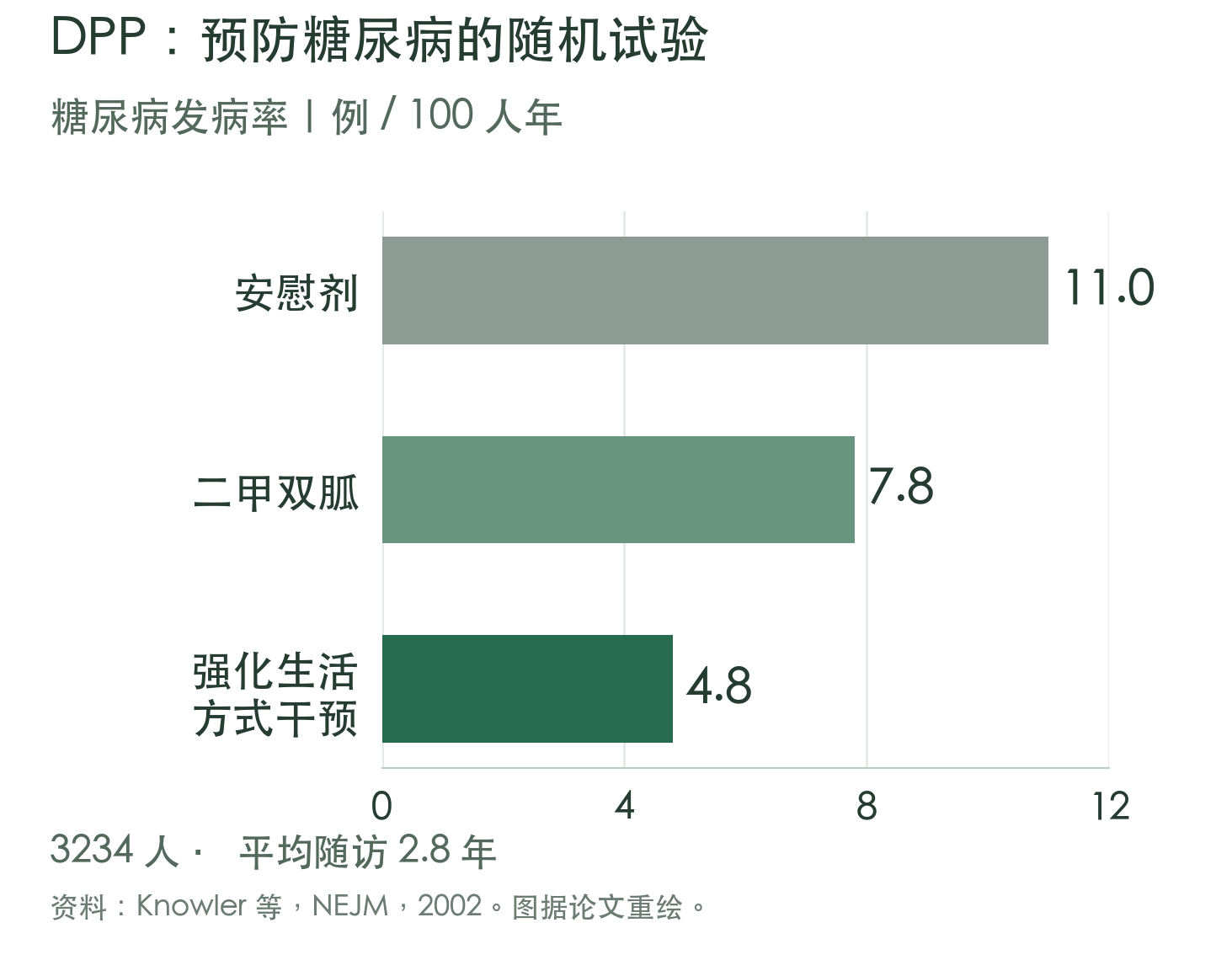
Figure 1 | DPP randomized trial: 3,234 participants, mean follow-up 2.8 years. Person-years add up each participant's observed time; they are not a head count. Bars show incidence rates, while 58% is the relative reduction reported in the paper.[6] Redrawn from the original study.
“Per 100 person-years” combines the observed time contributed by participants. It should not be read as “only 4.8 of 100 people developed diabetes over three years.” The study also estimated that about 6.9 people would need to take part in the intensive lifestyle program to prevent one case over three years. That number depends on the participants' baseline risk and cannot be directly applied to people with entirely normal glucose and very low risk.
The program included goal-setting, behavioral support, and continuing follow-up; it cannot be reduced to a doctor saying “eat less and move more.” Based on this evidence, the ADA's 2026 guidelines recommend referring high-risk adults with overweight or obesity to a diabetes prevention program, aiming to sustain weight loss of at least 5%–7% of initial weight along with regular activity.[2]
DiRECT: remission is possible for some people who already have diabetes
DiRECT was an open-label, cluster-randomized trial conducted in UK primary care. It enrolled people aged 20–65 with a diabetes duration under six years, a BMI of 27–45 kg/m², and no insulin treatment. The program involved diet replacement under the supervision of a healthcare team, food reintroduction, weight maintenance, and medication adjustment. It must not be rewritten as a recommendation to restrict calories severely and stop medication on one's own at home.[7,8]
In the intention-to-treat analysis, each group included 149 participants. At one year, remission was 46% in the structured weight-management group and 4% with usual care; at two years, the figures were 36% and 3%. These are the proportions in each group meeting the study's remission criteria. They are not “percentage reductions in diabetes risk,” and cannot be directly compared with DPP's 58%.
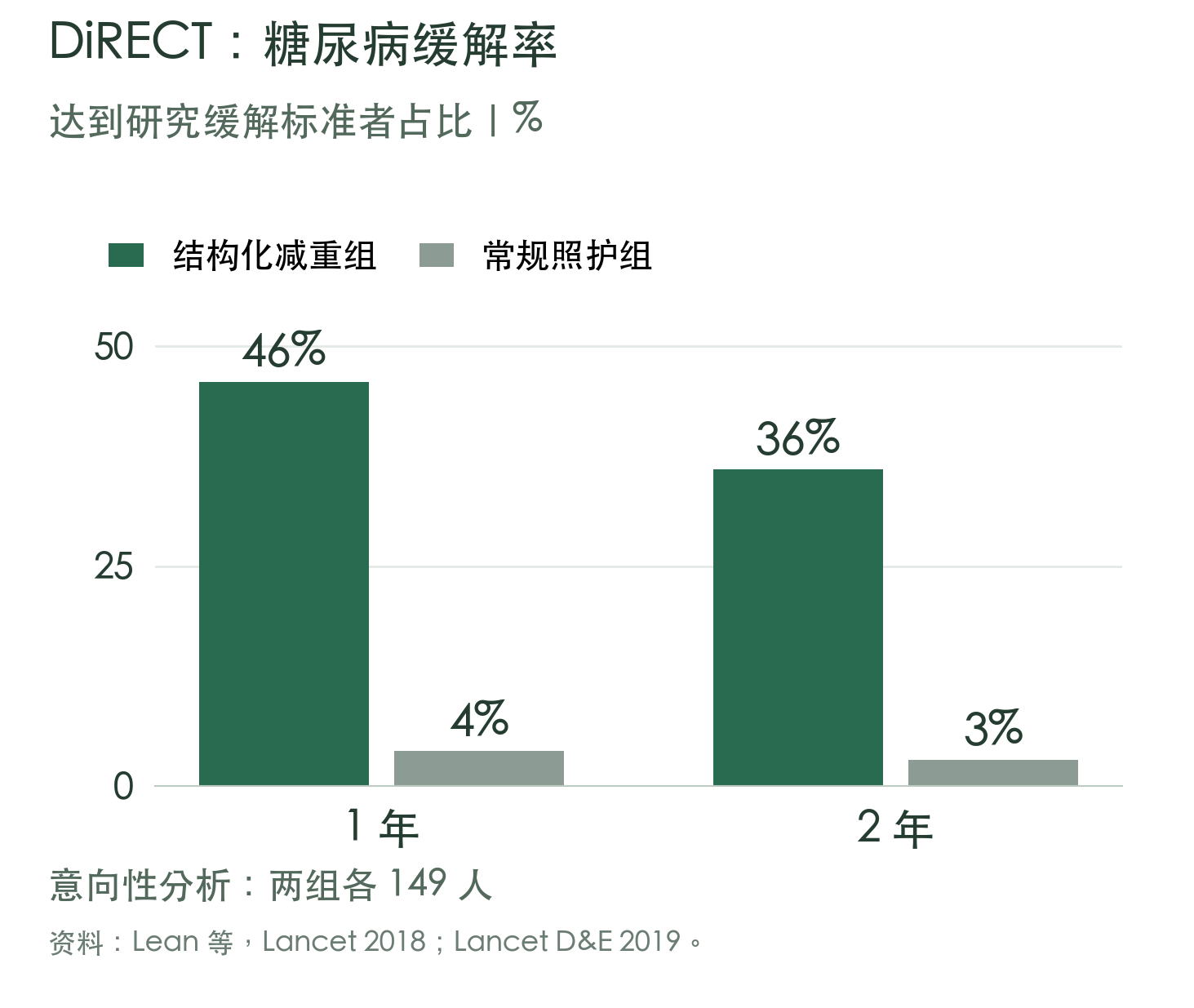
Figure 2 | One- and two-year results from the same DiRECT trial, with 149 participants in each group; percentages are rounded as in the paper. The trial used the remission criteria of its time, which are not exactly equivalent to later consensus definitions.[7,8] Redrawn from the original study.
An international consensus in 2021 generally defined remission as HbA1c below 6.5% for at least three months without glucose-lowering medication. This means glucose control has entered a stable phase; it does not require every glucose measure to return completely to normal and does not erase a previous diagnosis. Diabetes may recur after weight regain. Even during remission, people should continue at least annual glucose monitoring and appropriate checks for complications.[9]
Look AHEAD: metabolic improvements cannot be translated directly into cardiovascular benefit
The Look AHEAD randomized trial enrolled 5,145 adults with diabetes and overweight or obesity, with a median follow-up of 9.6 years. The intensive lifestyle group improved weight, HbA1c, and physical fitness, but the primary composite cardiovascular outcome did not decline significantly: hazard ratio 0.95, 95% confidence interval 0.83–1.09, P=0.51.[10]
This does not erase the metabolic value of lifestyle intervention. It shows that weight loss, improvement in one marker, diabetes prevention, and reductions in heart attacks or strokes are different outcomes that require separate studies. It is possible to have reasonable hopes for an intervention while describing long-term outcomes accurately.

Everyday-life illustration | Meal patterns can be adapted to locally available foods. This photograph is illustrative and does not depict a DPP or DiRECT trial diet.
VI. Applying dietary and exercise changes—and their evidentiary limits
Adjust meal patterns before focusing on eating order or timing windows
Dietary interventions need to consider total energy, nutritional quality, sustainability, and personal preferences together. Reducing sugar-sweetened drinks, replacing some refined staples with whole grains and legumes, increasing vegetables, and including fish, eggs, meat, and soy foods in appropriate amounts are often easier to sustain than chasing a single “superfood for blood sugar.” Healthy fats and nuts also provide energy; a food's healthy label is not a reason to eat unlimited amounts.
Rice is not a single cause of insulin resistance. Portion size, combinations of foods, total daily intake, physical activity, and an individual's glucose response all matter. Mediterranean-style eating and moderately lower-carbohydrate patterns are possible choices, but no macronutrient ratio is right for everyone. People with kidney disease, pregnancy, an eating disorder, or medications requiring special consideration need a more specific nutritional assessment.
“Eat vegetables before staple foods” may affect post-meal glucose in some short-term studies, but this does not support a claim that it can reverse insulin resistance long term. It can be an arrangement that some people find acceptable, but it should not replace attention to portions and food quality. There is no need to turn an ordinary meal into a test in order to follow a fixed sequence.
Time-restricted eating also has limits. In a 2022 randomized trial of 139 adults with obesity followed for one year, both groups restricted calories. Adding a fixed eating window did not yield a significant additional benefit for weight loss or metabolic-risk measures. The study does not prove that all forms of time-restricted eating are ineffective; it is a reminder that any advantage of meal timing cannot be separated from total intake and adherence.[11]
For people using insulin or medication that can cause hypoglycemia, extending the fasting period can also affect safety. Fasting on one's own, skipping whole meals, or copying a very-low-energy research protocol is not an ordinary lifestyle change recommended here.
Combine aerobic and resistance exercise, and break up long periods of sitting
Muscle contraction can increase glucose uptake, and regular activity can improve insulin sensitivity. At least 150 minutes of moderate-intensity activity each week is an important target in prevention programs for high-risk adults. Resistance training can be added to help maintain strength and function. Intensity should increase gradually, taking fitness, joint health, and existing medical conditions into account.[2]
Resistance training is valuable, but this does not mean that each small increase in muscle mass processes a proportional amount of extra glucose. Muscle quality, training consistency, and whole-body metabolism also matter. For midlife women, maintaining strength is more worth tracking over time than pursuing weight loss alone; dietary restriction for weight loss should not result in ongoing inadequacy of protein or other nutrients.
Brief walking after meals has specific research behind it. A randomized crossover trial involving 41 adults with diabetes compared walking for ten minutes after each meal with one 30-minute walk per day. The incremental area under the glucose curve over three hours after meals was about 12% lower. Each approach lasted only two weeks. This is a short-term glucose outcome and cannot be used to estimate a reduction in long-term complications.[12]
Breaking up sedentary work, avoiding unnecessary car trips, and adding everyday walking can all complement formal exercise. Staying up late to fit in exercise and then compensating with even harder training is often difficult to maintain. People taking glucose-lowering medication should also discuss how activity interacts with hypoglycemia risk with their healthcare team.

Everyday-life illustration | Resistance exercise should progress gradually. The photograph is not an exercise tutorial and does not ask readers to imitate the weight shown.
Make weight, sleep, and stress sustainable goals
For people with overweight or obesity, moderate weight loss can often improve metabolism. For someone at a normal weight with low muscle strength, the goal should not simply be copied as “lose more.” The meaning of a given weight loss is also different if it involves substantial muscle loss. Weight-loss results from an intensive study should not be turned into a target weight that everyone is expected to achieve.
Long-term sleep deprivation is associated with metabolic risk. People who snore significantly, have pauses in breathing, or experience excessive daytime sleepiness may need an assessment for a sleep disorder rather than supplements. Persistent anxiety, workplace stress, and caregiving responsibilities may also affect eating, activity, and sleep. An intervention plan needs to make room for these real conditions. Recording risks and barriers to implementation is more likely to identify a modifiable factor than setting many goals all at once.
VII. When should medication be considered, and when should you seek care?
Metformin, GLP-1–related medicines used to treat obesity or diabetes, and other metabolic treatments each have specific populations for which they may be appropriate. The ADA's 2026 guidance makes a selective recommendation about metformin for diabetes prevention in adults at high risk, with particular attention to a history of gestational diabetes, younger age with a higher degree of obesity, and elevated glucose or HbA1c. This is not a recommendation that “anyone with a high HOMA-IR should take medication.”[2]
Treatment decisions also need to consider kidney function, other conditions, current medication, plans for pregnancy, cost, and access to follow-up. Long-term metformin users may need assessment of vitamin B12. Weight-loss medication requires consideration of adverse effects and long-term management. Do not take medication on your own to “lower insulin,” and do not stop treatment that protects glucose, blood pressure, or lipids in pursuit of remission.
A supplement changing a laboratory marker does not mean it reduces diabetes or cardiovascular events. Commercial claims such as “reversal,” “detox,” or “pancreatic repair,” without clearly identified populations, comparators, and clinical outcomes, should not be treated as established therapy. When existing tests show an abnormality, organizing the questions with primary care, internal medicine, or endocrinology is generally more useful than first buying a supplement package.
| Seek medical assessment promptly if these occur. Marked thirst or frequent urination, unexplained weight loss, blurred vision, or test results in the diabetes diagnostic range call for prompt medical review. If accompanied by vomiting, abdominal pain, substantial dehydration, unusually deep and rapid breathing, or altered consciousness, seek urgent care immediately rather than waiting for the next health check. |
|---|

Everyday-life illustration | Make room for regular activity and rest. The landscape photograph does not illustrate a treatment effect.
VIII. Bring information that can change a decision to your next appointment
Organize previous fasting-glucose and HbA1c results, blood-lipid and blood-pressure records, and trends in weight and waist circumference. Add family history, any history of gestational diabetes or PCOS, and a list of medications. If fatigue, insomnia, or another concern persists, describe its duration and impact separately so that it is not all assigned to one metabolic label.
You can write specific questions for your appointment: “Do I currently meet the criteria for prediabetes or diabetes?” “Do I need an OGTT, and why?” “Would measuring insulin change treatment?” “What activity and nutrition goals fit me, and when should I be retested?” The answers bring you closer to a next step than a HOMA-IR value without context.
Professional management of insulin resistance ultimately comes down to verifiable outcomes: whether glucose is stable; how waist circumference and weight change; whether strength and activity can be maintained; and whether blood pressure, lipids, and accompanying conditions are being addressed. Keep recording these measures and adjust the plan with your clinician to understand what an intervention has achieved.
References and guidelines
[1] ADA Professional Practice Committee. “2. Diagnosis and Classification of Diabetes: Standards of Care in Diabetes—2026.”
doi:10.2337/dc26-S002
Clinical guideline; screening of nonpregnant adults, glucose diagnosis, and confirmation of results.
[2] ADA Professional Practice Committee. “3. Prevention or Delay of Diabetes and Associated Comorbidities: Standards of Care in Diabetes—2026.”
doi:10.2337/dc26-S003
Clinical guideline; monitoring of prediabetes, lifestyle interventions, and selective medication prevention.
[3] Sacks DB, et al. “Guidelines and Recommendations for Laboratory Analysis in the Diagnosis and Management of Diabetes Mellitus.” Diabetes Care. 2023.
doi:10.2337/dci23-0036
Laboratory guideline; uses and standardization limitations of insulin testing.
[4] Petersen MC, Shulman GI. “Mechanisms of Insulin Action and Insulin Resistance.” Physiological Reviews. 2018;98:2133–2223.
doi:10.1152/physrev.00063.2017
Mechanistic review; tissue differences, ectopic lipids, and insulin signaling.
[5] Greendale GA, et al. “Changes in body composition and weight during the menopause transition.” JCI Insight. 2019;4:e124865.
doi:10.1172/jci.insight.124865
SWAN longitudinal cohort; changes in body composition during the menopause transition, not a treatment trial.
[6] Knowler WC, et al. “Reduction in the incidence of type 2 diabetes with lifestyle intervention or metformin.” New England Journal of Medicine. 2002;346:393–403.
doi:10.1056/NEJMoa012512
DPP randomized trial; 3,234 participants, mean follow-up 2.8 years.
[7] Lean MEJ, et al. “Primary care-led weight management for remission of type 2 diabetes (DiRECT): an open-label, cluster-randomised trial.” Lancet. 2018;391:541–551.
doi:10.1016/S0140-6736(17)33102-1
Open-label cluster-randomized trial; one-year results.
[8] Lean MEJ, et al. “Durability of a primary care-led weight-management intervention for remission of type 2 diabetes: 2-year results of DiRECT.” Lancet Diabetes & Endocrinology. 2019;7:344–355.
doi:10.1016/S2213-8587(19)30068-3
Two-year follow-up of the same trial; its remission criteria are not the same as later consensus definitions.
[9] Riddle MC, et al. “Consensus Report: Definition and Interpretation of Remission in Type 2 Diabetes.” Diabetes Care. 2021;44:2438–2444.
doi:10.2337/dci21-0034
International consensus; definition of remission and continuing follow-up.
[10] Look AHEAD Research Group. “Cardiovascular effects of intensive lifestyle intervention in type 2 diabetes.” New England Journal of Medicine. 2013;369:145–154.
doi:10.1056/NEJMoa1212914
Randomized trial; 5,145 participants, median follow-up 9.6 years, with no significant difference in the primary cardiovascular outcome.
[11] Liu D, et al. “Calorie Restriction with or without Time-Restricted Eating in Weight Loss.” New England Journal of Medicine. 2022;386:1495–1504.
doi:10.1056/NEJMoa2114833
Randomized trial; 139 adults with obesity, followed for one year.
[12] Reynolds AN, et al. “Advice to walk after meals is more effective for lowering postprandial glycaemia in type 2 diabetes mellitus than advice that does not specify timing.” Diabetologia. 2016;59:2572–2578.
doi:10.1007/s00125-016-4085-2
Randomized crossover trial; 41 adults with diabetes, each regimen lasting two weeks.
[13] Alberti KGMM, et al. “Harmonizing the metabolic syndrome: a joint interim statement.” Circulation. 2009;120:1640–1645.
doi:10.1161/CIRCULATIONAHA.109.192644
Joint statement by several professional organizations; the “three of five components” definition of metabolic syndrome.
Additional sources checked: NIH / NIDDK, “Insulin Resistance & Prediabetes” (reviewed 2025); WHO / IDF, “Definition and diagnosis of diabetes mellitus and intermediate hyperglycaemia” (2006). Information checked through October 7, 2026.
This article provides general health education and does not replace individual diagnosis or treatment. Research findings have specific conditions of applicability. Testing, medication, weight management, and follow-up should be discussed with a qualified professional in light of individual circumstances.
Read the source material
The original archive manuscript is restored above. These additional references offer context; their inclusion does not constitute medical validation of every original claim. Clinical and regional terminology review are pending.
A good question starts a conversation.
Explore a related editorial discussion. Reading is open to everyone; posting and replying require a free reader account.