Baduanjin: A Practical, Evidence-Based Guide to Gentle Movement
Gentle movement, attention and breathing may make activity easier to sustain. Research signals should be distinguished from disease treatment and strength training.

In this article
On the neighborhood's open space one weekend morning, a few more people are following a Baduanjin video. Some faces are familiar: a neighbor who was doing aerobics last month has now switched to this "slow movement." Online interest is even greater: Weibo's #Baduanjin topic has reached 240 million views, and "gentle wellness" has become a new identity for many midlife women. Some like that it is not tiring and needs little space; others have heard it can "improve suboptimal health." Others wonder whether this old practice genuinely works or is another trend inflated by traffic.
This article aims to clarify what research has and has not established about traditional practices such as Baduanjin, what lies behind the term "suboptimal health," and how to start safely without common pitfalls.
1. First, "Suboptimal Health": An Overused Term Describing Something Real
A real view of Bhutan: Punakha Dzong and its river valley
On social media, "suboptimal health" has become an all-purpose basket for poor sleep, fatigue, low mood, and backache. It is not a standardized modern medical diagnosis, but descriptively it captures a real condition: tests have not reached disease thresholds, while functioning, sleep, and mood have clearly deteriorated. Researchers more often use specific terms such as "psychological subhealth," "fatigue syndrome," or "sleep disorder."
This distinction directly shapes expectations. Traditional practices improve these states of "reduced function without established disease," including fatigue, sleep quality, mood, and balance. They cannot replace diagnosis and treatment of a defined illness. If a thyroid disorder, anemia, or depressive disorder lies behind "suboptimal health," diligent practice will not address its root. This principle runs throughout the article.
The popularity of gentle wellness among midlife women has practical logic: work and family fragment time, making intensive training difficult to sustain; joints and backs increasingly object to vigorous exercise; and fatigue and sleep problems create a real need for relief that adds no burden. Baduanjin fits all three constraints: low exertion, little space, no equipment, and gentle positive feedback each time. Its popularity reflects supply meeting demand.
A Central Point
"Suboptimal health" is more a prompt than a label: review sleep, stress, diet, activity, and any necessary medical checks. Traditional practice addresses movement and relaxation. It is one piece of the puzzle, not the whole picture.
2. What Has Research Shown About Baduanjin?
Baduanjin is a traditional daoyin health practice with more than a thousand years of history, using simple symmetrical movements, breathing, and focused attention. It is low intensity and easy to learn. Over the past decade or so it has become a research focus in Chinese exercise science and rehabilitation, with a substantial body of systematic reviews.
A 2017 meta-analysis of 19 randomized controlled trials found significant improvements in quality of life, sleep quality, balance, grip strength, trunk flexibility, systolic and diastolic blood pressure, and resting heart rate [Academic]. A 2026 systematic review and meta-analysis in Frontiers in Psychology focused on university students: 36 RCTs involving over 3,200 participants showed significant improvements in overall mental health, depression, anxiety, negative emotions, perceived stress, and sleep quality. Subgroup analysis suggested that approximately three weekly sessions over about 12 weeks performed well [Academic].
240 million
Views of Weibo's #Baduanjin topic [Media]
36 RCTs
Studies in the 2026 mental health meta-analysis [Academic]
8 weeks
Regular practice can show improvements in sleep and mood [Academic]
Evidence is also accumulating for insomnia. A meta-analysis of eight RCTs with 650 participants found Baduanjin superior to usual controls in overall clinical response, Pittsburgh Sleep Quality Index, and anxiety scores [Academic]. A 2025 network meta-analysis comparing five traditional practices, involving 50 RCTs and 4,226 patients with insomnia, found improvements with Yijinjing, Wuqinxi, Liuzijue, Baduanjin, and Tai Chi, with Baduanjin ranked among the better options [Academic].
For midlife women, there is an additional sense of fit. Educational material from Fujian Provincial Hospital states that traditional practices such as Tai Chi and Baduanjin improve flexibility and mobility, help reduce fractures, and suit older menopausal women. Menopausal metabolic problems, weight gain, and mood fluctuations are also contexts well suited to gentle, smooth, stable exercise [Association].
The Evidence Boundaries Must Be Clear
The authors rated overall methodological quality as moderate; samples were relatively small and follow-up short. The 2026 meta-analysis also found that sleep and stress improvements did not persist after the intervention ended [Academic]. Baduanjin is therefore an effective health behavior, not a permanent switch. Benefits depend on continued practice and gradually recede after stopping. Evidence for treating established diseases such as depression, thyroid disease, or osteoporosis is insufficient, and it cannot replace standard diagnosis and care.
Is Emphasizing Particular Movements for Particular Symptoms Reliable?
Some educational material recommends selecting movements by symptoms: those who feel hot or irritable might emphasize "Two Hands Hold Up the Heavens to Regulate the Triple Burner" and "Drawing the Bow to Shoot the Eagle"; those with backache, dizziness, or poor sleep might emphasize "Looking Back to Relieve the Five Fatigues and Seven Injuries" and "Two Hands Hold the Feet to Strengthen the Kidneys and Waist" [Media]. These suggestions come from clinical experience and traditional theory, not strict evidence-based conclusions. A safer approach is to practice all eight movements for whole-body activity. If a particular area is tense, related movements may be repeated within your ability, without provoking pain. Persistent backache or dizziness warrants investigation rather than trying to solve it with one movement.
3. Why Can "Slow Practice" Work?
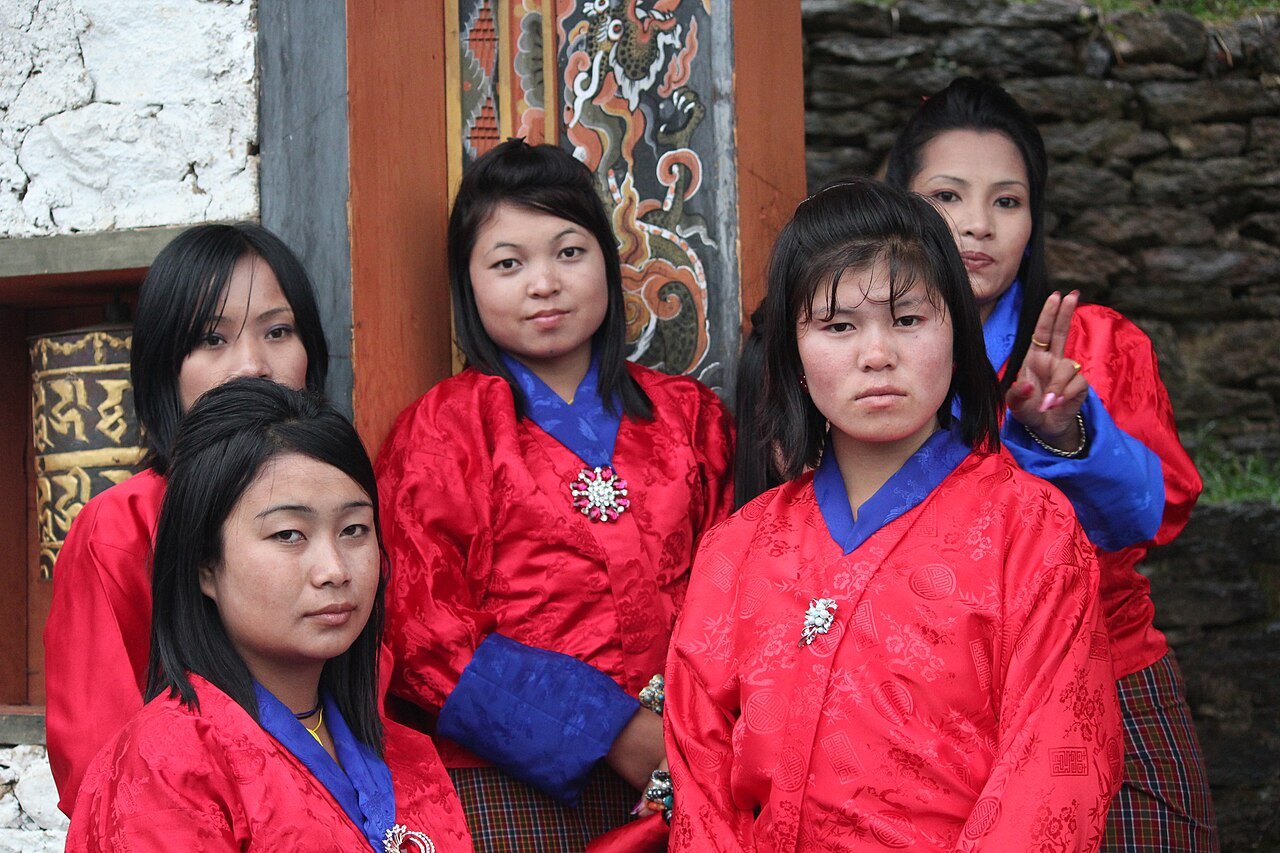
A real scene from Bhutan: a young woman's traditional clothing and daily life
Traditional practice is often mistaken for stretching alone. It actually combines body, breathing, and attention in a mind–body intervention with pathways recognizable in modern research:
- Breathing and autonomic function: slow, deep breathing activates the parasympathetic system, helping the body shift from tension to relaxation and downregulate the stress response;
- Gentle musculoskeletal loading: Baduanjin includes slow multijoint stretching and moderate weight-bearing throughout the body, providing safe, effective stimulation for range of motion, flexibility, and balance, particularly for women with declining bone and muscle mass after the menopausal transition [Association];
- Attention and emotional regulation: focusing on movement and breath resembles modern mindfulness mechanisms and can interrupt the anxiety–physical tension loop;
- Accessibility and sustainability: compared with intensive training or equipment-based classes, it is nearly cost-free, portable, and easy to learn, making long-term adherence more likely—one of the scarcest qualities in chronic disease prevention.
Understanding the mechanisms shows that this is not mysticism. It packages four activities supported by modern evidence—aerobic activity, stretching, balance, and mindfulness—into an accessible traditional form. Its value lies in sustained practice rather than mysterious practice.
It has a different role from modern training: gym strength work is irreplaceable for increasing muscle and bone density, where Baduanjin cannot match it. Baduanjin excels at flexibility, balance, breath regulation, and willingness to continue. For women over 40, the ideal is a layered combination: reserve intense sessions for energetic days and use traditional practice as a daily foundation, making movement more resilient to daily pressures and less likely to stop.
4. Who Is It Suitable For, and When Should a Doctor Be Consulted First?
Baduanjin is generally safe and broadly suitable, but not something everyone can practice without qualification. Seek assessment before starting or adapting it in these circumstances:
- Acute lumbar disc herniation or an acute phase of skeletal disease: avoid practice until stable; simplified movements may then be used with guidance [Academic];
- Severe osteoporosis: avoid deep forward bends, rapid turns, and deep squats. Start with simplified ranges on level ground, preferably with a companion or support rail [Academic];
- Uncontrolled hypertension, heart disease, or other chronic illness: obtain medical assessment first and stop at the slightest exercise discomfort [Academic];
- Marked frailty or postoperative recovery: individualize intensity and duration;
- Chronic conditions such as diabetes: practice cannot replace medication; continue prescribed treatment [Academic].
A "Standard Textbook" Arrived in 2026
In May 2026, a Baduanjin group standard led jointly by the Chinese Health Qigong Association and the China Association of Chinese Medicine was formally released [Media]. This provides a national-level reference for movement and teaching. Beginners are better served by standard instructional videos or in-person classes than by copying random short videos.
5. How to Practice: Practical Advice for Beginners

A real view of Bhutan: Thimphu and traditional architecture
Research and clinical education suggest that correct practice matters more than volume. First meet the eight movements, each with an accessible name and emphasis: Two Hands Hold Up the Heavens to Regulate the Triple Burner, whole-body stretching and breathing; Drawing the Bow to Shoot the Eagle, opening chest/back and strengthening upper limbs; Raising One Hand to Regulate the Spleen and Stomach, stretching the sides and mobilizing the spine; Looking Back to Relieve the Five Fatigues and Seven Injuries, slow head turns and neck/shoulder relaxation; Swaying the Head and Tail to Clear Heart Fire, moving the waist/hips and relaxing the trunk; Two Hands Hold the Feet to Strengthen the Kidneys and Waist, forward stretching of the lower back and posterior legs; Clenching the Fists and Gazing Fiercely to Build Strength, active gripping and whole-body engagement; and Seven Bounces on the Heels to Dispel Illness, heel raises and gentle bouncing to close. Beginners need not memorize each claimed effect; first learn the sequence from standardized instruction.
Main recommendations:
- Frequency and duration: research suggests approximately three sessions weekly for 8–12 weeks [Academic]. For daily wellbeing, one or two rounds of roughly 12–20 minutes each can be used, producing light perspiration without fatigue [Media];
- Progress gradually: increase range slowly rather than aiming for full positions immediately. Remember "continue with muscle soreness, reduce with pain, stop with numbness": muscle aching may be acceptable, joint pain calls for reduced range, and numbness means stop immediately [Media];
- Breathing and mindset: breathe naturally at first; explore inhaling while rising and exhaling while lowering after becoming comfortable. A calm mind matters more than perfect form. Treat practice as relaxation rather than another task [Media];
- Timing and setting: avoid practice immediately after eating, allowing at least half an hour, and choose ventilation and level ground [Academic];
- Integrate with wider activity: menopausal women and those over 40 can combine it with about 150 minutes weekly of aerobic activity, such as brisk walking or swimming, plus 2–3 resistance sessions, covering cardiovascular fitness, muscles, and flexibility [Association].
6. Neither Glorify nor Dismiss the Practice
When traffic makes Baduanjin popular, two extremes emerge: calling it a cure-all or dismissing it as nothing more than slow-motion group calisthenics. Neither matches the evidence.
Misconception one: Baduanjin can "cure" thyroid nodules, hypertension, or diabetes.
It cannot. It is an effective health behavior that can improve function and some measures, but cannot replace medication and standard care. People with chronic disease still need prescribed treatment.
Misconception two: no improvement after a few days means it is useless.
Research improvements generally appear after 8–12 weeks of regular practice. Treating it as a fast-acting tonic guarantees disappointment.
Misconception three: movements must be perfect, or there is no point practicing.
The opposite is true. Beginners should prioritize comfortable extension and easy breathing rather than range. "Continue with soreness, reduce with pain, stop with numbness" is the safety boundary.
Misconception four: it is too gentle to benefit younger people.
Studies show benefits in university students and midlife participants. Low intensity does not mean only for older adults, and it can accompany strength training.
Misconception five: discomfort means you should practice harder.
Acute pain, dizziness, or marked fatigue means stop, not increase practice. Persistent discomfort requires medical assessment rather than pushing through.
A Practice and Symptom Record Template to Bring to a Doctor
- Practice: frequency, session duration, and version followed—standard, simplified, or a particular creator;
- Physical response: relaxation afterward, and timing and movements associated with pain or dizziness;
- Sleep and mood: time to fall asleep, awakenings, and broad changes in daytime energy;
- Background: menstrual changes, chronic illness and medication, and recent abnormal health-screening findings.
7. Seven Questions You May Want to Ask

A real view of Bhutan: Himalayan valleys and rural landscapes
- Does Baduanjin conflict with yoga or gym training?
No. They complement one another: Baduanjin emphasizes flexibility, balance, and relaxation; strength training covers muscle mass and bone density; aerobic activity covers cardiorespiratory fitness. A combination is more comprehensive.
- How long should I practice daily?
For wellbeing, one or two rounds, roughly 12–20 minutes, can suffice. Research doses for sleep and mood improvement are around three sessions weekly for 8–12 weeks. Avoid finishing fatigued.
- Can I learn from short videos?
Yes, preferably instruction backed by a group standard or reputable organization. Avoid videos with obvious movement errors. A few in-person lessons can help correct basics.
- Is it useful for significant menopausal symptoms?
Research supports improved sleep, mood, and balance, and its intensity is suitable. Significant symptoms still warrant medical evaluation; use practice as part of lifestyle care, not the only approach.
- Can I practice with osteoporosis?
Caution and individualization are needed: avoid deep forward bends, rapid turns, and deep squats, and start with simplified movements. Severe osteoporosis warrants medical assessment first and attention to fall prevention.
- What is the best time?
Do not fixate on an ideal time. Avoid immediately after meals and extreme hunger; choose a time you can sustain. Ventilation and level ground matter most.
- Do benefits disappear after stopping?
A meta-analysis suggests sleep and stress improvements did not persist after the intervention stopped [Academic]. Treat it as an exercise habit whose benefits can fade, not a vaccine. Continued practice supports continued benefit.
- Worrying about perfect form makes me tenser. What should I do?
This is a common beginner trap. For the first weeks, focus on following the sequence and breathing naturally; range and detail can come later. Feeling more relaxed afterward is the best current standard.
- How does it differ from group dancing or brisk walking?
Group dancing and walking emphasize aerobic activity and social connection; Baduanjin emphasizes flexibility, balance, and breathing relaxation with less joint impact. Combine them: walking as a foundation, dancing for enjoyment, and traditional practice for daily relaxation/stretching, according to time and preference.
8. Closing Thoughts: Make "Gentle Wellness" a Sustainable Life Habit
Baduanjin's popularity is not based only on nostalgia. It fits midlife women's circumstances: fragmented time, increasingly sensitive joints, less reliable sleep and mood, and no wish to surrender life to intensive training or many supplements. It offers an accessible, low-risk starting point backed by research.
Remember two things. It improves functional state but cannot replace check-ups and standard care; investigate persistent fatigue, insomnia, and pain. Its benefits also depend on continuity. Put a few sessions into the weekly schedule as routinely as brushing teeth, so gentle wellness becomes a genuine bodily benefit rather than merely a popular topic.
Another overlooked benefit is that classes and practice with companions provide social and emotional support. For midlife women whose time goes almost entirely to work and family, those minutes of time for themselves are as valuable as the movements. Health includes not just measures and doses, but feeling that you take yourself seriously. That feeling often sustains adherence longest.
This issue's practical focus
The practice is useful, not magical. Investigate abnormal symptoms first, then develop it as a sustainable activity habit. With underlying disease or osteoporosis, have a doctor assess movements and intensity, leaving safety to professional judgment.
Disclaimer
: This educational article is compiled from public research reviews and expert health education. It cannot replace an in-person diagnosis or individualized advice from a licensed physician. Consult professionals before starting or changing exercise, particularly with chronic illness, skeletal problems, pregnancy, or the postpartum period. Topic views are platform data, not peer-reviewed evidence. Studies differ in populations, doses, and methodology; correlation is not causation, and effects vary.
A Quick Literature Guide for Clinician Readers

A real view of Bhutan: mountain settlements and natural scenery
- Zou L et al., 2017, systematic review/meta-analysis of Baduanjin health benefits, 19 RCTs: significant improvements in quality of life, sleep, balance, grip strength, trunk flexibility, systolic/diastolic pressure, and resting heart rate; insufficient evidence for leg strength, cardiorespiratory endurance, and pulmonary function [Academic].
- Chen J et al., 2026, Frontiers in Psychology, university-student mental health meta-analysis, 36 RCTs and 3,233 participants: significant improvements in SCL-90, SDS, SAS, POMS, PSS/CPSS, and PSQI; approximately three weekly sessions over 12 weeks appeared favorable; sleep and stress improvements did not persist afterward; overall moderate methodological quality [Academic].
- Systematic review/meta-analysis of Baduanjin for insomnia, eight RCTs and 650 cases, Clinical Journal of Chinese Medicine, 2022: overall response, PSQI, and SAS superior to usual controls; authors note average methodological quality [Academic].
- Network meta-analysis of five traditional practices for insomnia, 50 RCTs and 4,226 cases, 2025: all five improved insomnia, Baduanjin ranked favorably and Liuzijue highest; proposed mechanisms include regulation of cerebral cortical activity [Academic].
- Fujian Provincial Hospital affiliated with Fujian Medical University, menopausal exercise education: aerobic activity 3–5 times weekly totaling approximately 150 minutes plus 2–3 resistance sessions; Tai Chi and Baduanjin improve flexibility/mobility, help reduce fracture risk, and suit older women [Association].
- Safety points, People's Daily Health client/group-standard reporting, 2026: Baduanjin group standard released in May 2026; "continue with soreness, reduce with pain, stop with numbness"; acute disc herniation, severe hypertension, acute spinal injury, severe osteoporosis, or marked frailty require avoidance or assessment [Media].
- Audience data: approximately 240 million views of Weibo's #Baduanjin, a representative topic in midlife women's gentle wellness [Media].
Note: these are reading leads for professionals. Clinical decisions should return to original publications and current guidelines. The educational text minimizes technical terminology for accessibility.
Additional Research and Evidence Boundaries
- Randomized trials and systematic reviews suggest possible improvements in balance, flexibility, and some sleep/mood measures, but study protocols and sample sizes vary substantially.
- Traditional practice can be one form of activity, not a replacement for standard treatment of fractures, depression, or chronic disease.
- Adapt intensity to age, joints, and cardiopulmonary capacity; stop and seek assessment for pain or dizziness.
International Literature and Data Comparison
| Source | Supported judgment | Relationship to article figures |
|---|---|---|
| WHO global traditional medicine strategy | Traditional practices may support health promotion but require quality and safety assessment | Relates to scope and risk reminders |
| Cochrane reviews of exercise and physical function in older adults | Regular moderate activity can improve some functional outcomes | Supports interpretation of balance, flexibility, and sleep measures |
| Systematic reviews of randomized Baduanjin trials | Some positive signals, with substantial protocol/sample heterogeneity | Read confidence intervals around effect sizes; do not equate them directly with treatment efficacy |
Read the source material
The original archive manuscript is restored above. These additional references offer context; their inclusion does not constitute medical validation of every original claim. Clinical and regional terminology review are pending.
A good question starts a conversation.
Explore a related editorial discussion. Reading is open to everyone; posting and replying require a free reader account.
More from the library
 Movement & strength · 14 MIN READWomen and Muscle Building: From the Ideal of Being “Fair-Skinned, Thin, and Youthful” to Strength↗
 Movement & strength · 14 MIN READWomen’s Exercise Injuries and Scientific Prevention: Runner’s Knee, Yoga Injuries, and Why Gentle Exercise Can Still Hurt↗
 Nutrition & evidence · 13 MIN READSoy, Isoflavones, and Equol: Can That Bowl of Soy Foods Really “Replenish Estrogen” After 40?↗