Periods Stopped Early: Should Bone Checks Start Early Too? Evidence on Early Menopause, POI, and Osteoporosis
Early menopause or primary ovarian insufficiency deserves an earlier bone-health conversation. One test number cannot predict your future alone.

In this article
1. An "unexpected finding" outside the bone density room on Wednesday morning
Imagine a clinic scenario (the people and dialogue are fictional): on Wednesday morning, Ms. Chen, 45, receives a DXA report showing a lumbar spine T-score of −1.8. She reached menopause at 44, still hikes at weekends, and had never thought she needed to discuss bone health. For her, the number on the report is only the starting point of assessment; it cannot by itself establish that she will fracture a bone in the future.
Her doctor needs to clarify whether the timing of menopause is reliable, whether she has taken medicines affecting bone, whether she has had a low-trauma fracture, and what the hip DXA measurements show. Secondary causes may also need investigation. Her question is a common one: “I am only in my forties. Why do I need to think about my bones now?”
The answer is not “her bones are already damaged,” but “her period of low estrogen may be longer, so a baseline and follow-up plan should be established earlier.” Bone changes differ between individuals; a doctor cannot plot someone's definite bone trajectory at 60 solely from her age at menopause.
This is precisely the point discussions of bone health in early menopause aim to convey. In July 2026, public conference reporting introduced the Guideline for Prevention and Treatment of Osteoporosis in Women with Early Menopause and Menopause (2026 edition), led by Professor Ruan Xiangyan, and its proposal to bring the prevention window forward. This article treats that reporting as a lead and cross-checks it against retrievable international documents on POI, bone density diagnosis, and menopausal hormone therapy. Conference reporting is not equivalent to the full formal guideline in which evidence levels can be checked recommendation by recommendation. Women like Ms. Chen, facing declining bone mass in their forties and fifties, should not have to wait for a fracture before being noticed.
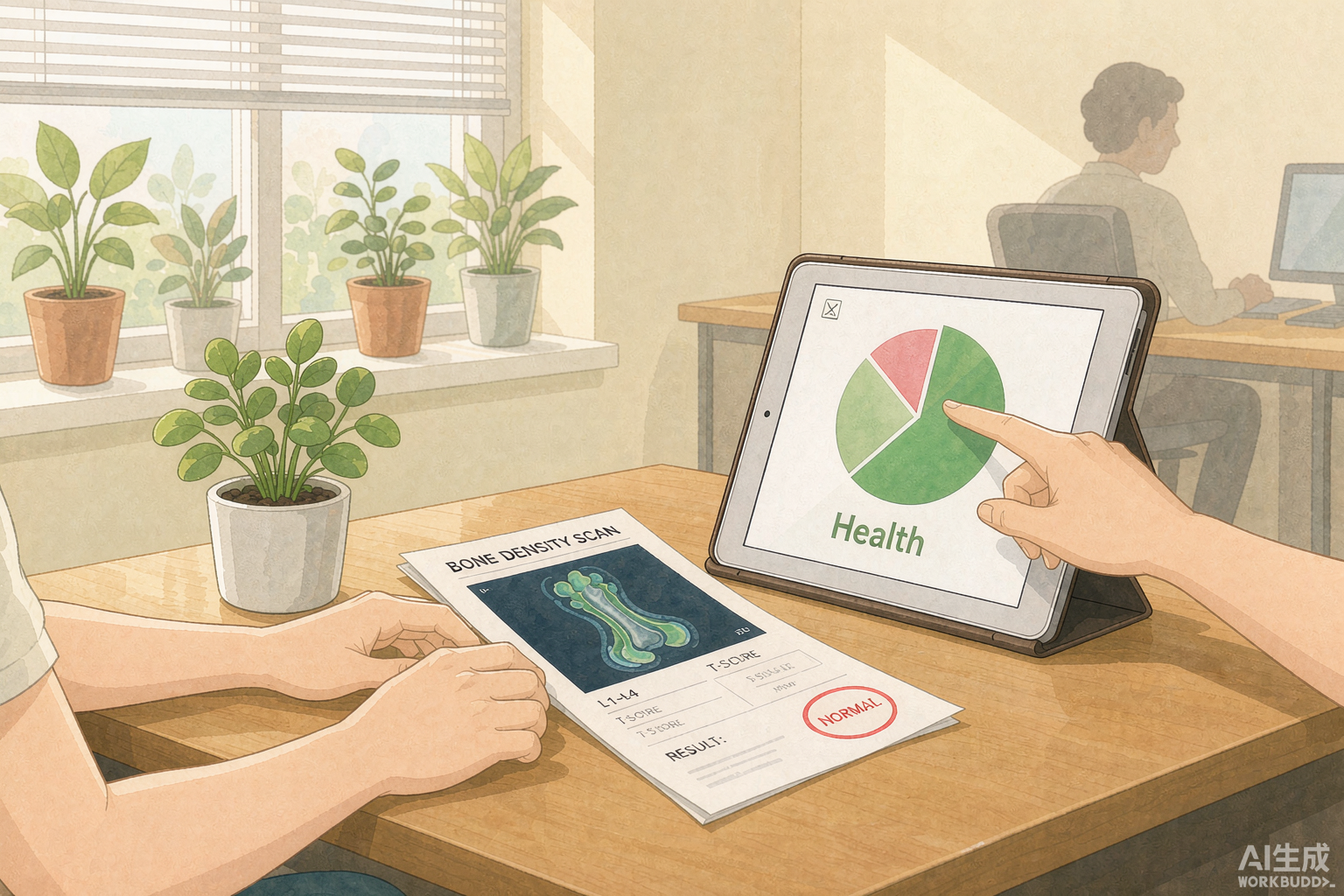
Putting the bone density report on the table can bring bone-protecting decisions forward by ten years
2. Understanding the mechanism: why do bones begin to "lose reserves" at menopause?
To understand why this guideline emphasizes "bringing the window forward," first understand that bone is never a lifeless stone: it is living tissue continually moving between "demolition" and "construction." Osteoblasts deposit calcium and build the framework; osteoclasts dissolve and remove old bone. When young, construction slightly exceeds demolition and bone mass slowly accumulates toward its peak. After reaching that peak in the thirties or forties, the balance quietly begins to shift.
Estrogen has a key role in "holding osteoclasts back." It suppresses their activity and slows bone dissolution. After menopause, ovarian function declines and endogenous estrogen falls sharply, releasing this "brake." Osteoclasts become overactive, bone resorption substantially outpaces formation, and net bone loss begins. This is not an imagined sensation; it is a real biological process.
How fast is the loss? Longitudinal observational research shows that bone loss can accelerate markedly during perimenopause and early postmenopause, but rates differ between lumbar spine and hip, with wide variation between individuals. “Losing two to three percent each year” cannot be treated as a constant ten-year formula for every woman. Lower bone density is only part of risk: age, prior fragility fractures, fall risk, glucocorticoid use, and weight also affect fracture probability.
Early menopause and POI matter because low estrogen may begin earlier and last longer. They signal the need for earlier assessment, not that everyone loses bone at the same rate. Menopause before 45, particularly POI before 40, should prompt not only “Are there hot flashes?” but also “Should we establish a bone density baseline?”
A long-confused distinction must be clear: primary ovarian insufficiency (POI, formerly called “premature ovarian failure”) is not the same as early menopause. The 2024 international POI guideline defines it as menstrual irregularity or absent periods for at least 4 months before age 40, with FSH >25 IU/L. Repeat testing is used when diagnosis is uncertain; “two blood tests” should not be described as mandatory for everyone. Early menopause generally means menopause between 40 and 45. Both warrant timely bone-health assessment, but fertility plans, hormone regimens, and follow-up must still be discussed separately.
Another often-overlooked mechanism is that once bone loss passes a threshold, structural collapse may not be fully restored even if estrogen is subsequently replaced. “Bringing the window forward” is therefore more than a slogan: it is a race against time. Intervention while bone reserves remain substantial can achieve more; once bones are porous like a honeycomb, replacement may only limit damage rather than reverse it.
3. When osteoporosis develops, how does the body "give way"?
Having explained why bones "lose reserves," we should address a lingering hope: “So a little has gone—it does not hurt.” Osteoporosis is insidious precisely because it is not simply “slightly fragile bones,” but the beginning of a sequence of health setbacks: from an inconspicuous compression to height, posture, mobility, and the ability to live independently, each layer can deteriorate. Understanding this explains why guidelines urge earlier action.
Fragility fractures: bending or coughing can be enough, even without a fall
Osteoporosis-related fractures are called "fragility fractures": they result not from major forces such as car crashes or falls from a height, but from everyday activity or minor trauma. The three most common sites are the vertebrae, hip (proximal femur), and wrist (distal radius). Vertebral compression fractures are particularly important because they are often "silent." About one third of people have no obvious pain, noticing only that they are becoming shorter, their clothes seem longer, or their back is rounding. Several vertebrae may already have collapsed by the time the problem is recognized. This is why these fractures are easily missed while deterioration accumulates.
Loss of height and spinal deformity: a quiet "collapse"
Each vertebral body that flattens slightly takes away a little height. As the changes accumulate, the back arches into what is commonly called a "hunchback" (medically, kyphosis). Beyond shortening height by several centimeters, this shifts the body's center of gravity and compresses the chest and abdominal spaces: breathing becomes shallower, appetite worsens, and forward leaning during walking makes falls easier. For many women, changed posture also brings an inexpressible loss: the person in the mirror no longer matches the upright self they remember.
Chronic pain and reduced activity: a cycle in which moving less makes things worse
Lower back pain commonly accompanies osteoporosis, particularly after vertebral compression. Pain makes people afraid to move; moving less leads to further muscle loss, weaker bone, and poorer balance, raising the chance of another fall and fracture. It is a deepening cycle. For many older adults, it is not the fracture alone but the chain of “fear of falling → less movement → greater frailty → an actual fall” that gradually erodes quality of life.
Less visible costs: complications and psychological effects
Hip fracture is the most serious example. Across cohorts differing in age, region, and baseline health, all-cause mortality in the year after fracture is often around two in ten. This does not mean each death is directly caused by the fracture, and data from older hip-fracture cohorts cannot be applied to women with early menopause in their forties. Recovery of mobility also varies. What is clearer is that someone with one fragility fracture has higher subsequent fracture risk and needs prompt assessment and secondary prevention. Chronic pain, fear of falling, and reduced activity also deserve discussion at follow-up.
Why women with early menopause or POI have more at stake
Early menopause and POI bring low-estrogen exposure forward, so the risk of inadequate bone mass may accumulate earlier. But “earlier menopause” cannot be directly converted into a definite fracture-risk multiple for every person. The real priorities are early assessment, identifying modifiable risks, and interpreting current bone density alongside fracture history, medication, and fall risk.
4. What does a new guideline actually add?
Public conference reports describe the 2026 guideline as led by Professor Ruan Xiangyan, with twenty-four recommendations around six clinical questions, using the GRADE assessment framework. These are document details from conference reporting. Because this article has not checked recommendation strength against a retrievable full guideline, it does not label the reported numbers and advice as “strong recommendations” or “high-quality evidence.” Actual clinical decisions still require the formal version and the evidence grading for each recommendation.
For general readers, three practical threads are more useful to remember:
Key point
Include bone health throughout women's life-course care, rather than mentioning it in passing at a menopause clinic.
Key point
Bring the prevention window forward: identify high-risk situations early, including POI, early menopause, and an existing fragility fracture.
Key point
For those with indications, no contraindications, and generally aged under 60 or within 10 years of menopause, MHT can address symptoms and bone health together; specific benefits and risks require individualized assessment.
Why does this matter? Chinese epidemiological surveys show substantially higher osteoporosis prevalence among women over 50 than men of the same age. But surveys differ in age structure, DXA measurement sites, and diagnostic thresholds, so percentages from different studies cannot be pieced together into one person's risk. Early menopause is associated with low bone density; association does not mean “early menopause inevitably causes a fracture.” More useful than a national average is knowing your menopause age, whether you have had a fragility fracture, and your actual DXA results.
From a public-health perspective, population aging continually increases the medical and care burden of fragility fractures. Disease-burden model estimates have uncertainty intervals, and “deaths attributable to low bone density” cannot be interpreted as low bone density directly causing each death. This article therefore does not use striking figures such as “a one-hundred-and-thirty-nine-percent increase” or “a sixty-three-fold difference” without original tables, age stratification, and intervals.
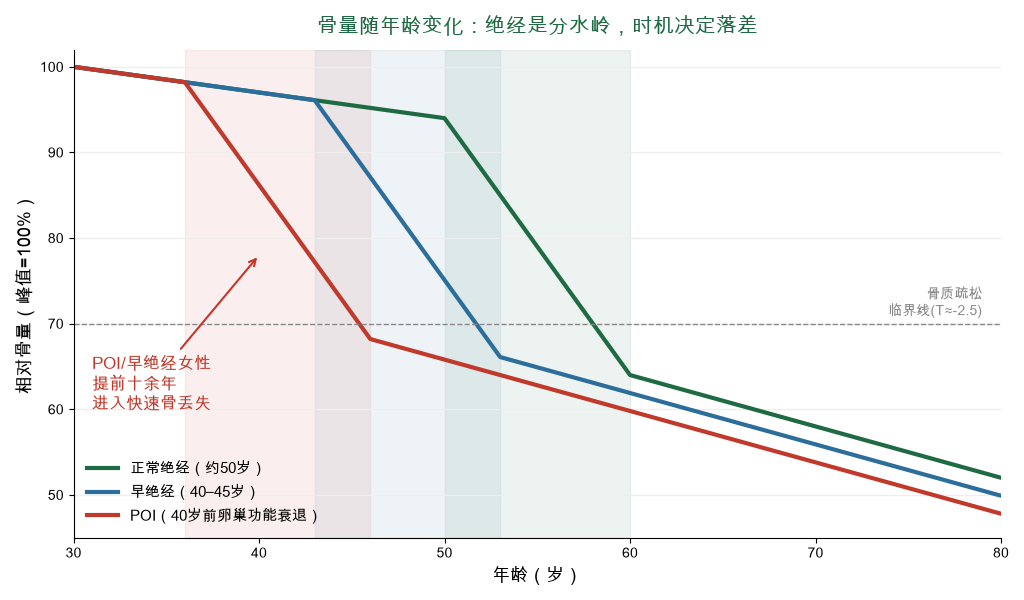
Figure 1: A conceptual illustration, not measured cohort data, and not suitable for predicting an individual's fracture risk.
Mount Bromo, East Java · On-location photography
How do you know how strong your bones actually are? Central DXA measurement of lumbar spine and hip is the standard bone density assessment. Postmenopausal women are generally diagnosed using T-scores: ≤−2.5 meets the osteoporosis threshold, while −1.0 to −2.5 indicates low bone mass. Premenopausal women are generally assessed using Z-scores, with Z≤−2.0 indicating “below the expected range for age”; a T-score alone must not be used to label a young woman as having “osteoporosis.” Baseline DXA is advisable when POI is diagnosed; whether and when to repeat depends on initial density and treatment. P1NP and CTX can assist monitoring of certain treatments, but factors such as blood-sampling time affect them; one result alone cannot diagnose osteoporosis.
When reading a report, distinguish three things:
Use T-scores for postmenopausal diagnosis; prioritize Z-scores before menopause; and assess fracture risk independently in people with a low-trauma fracture even if the T-score has not reached −2.5. A doctor should decide whether vertebral imaging, investigations for secondary causes, or FRAX are appropriate in light of age and history.
A quick guideline review for physician readers
Suggested clinical reading order: first establish POI/early-menopause diagnosis and prior fractures; then review baseline DXA, falls, and secondary risks; next discuss hormone therapy or osteoporosis-specific drugs; finally agree on reassessment. The 24 recommendations in conference reporting cannot be summarized as “everyone should have P1NP/CTX checked every 3–6 months.” Nor should breast safety of a particular progestogen be presented as a definite causal conclusion without checking the formal guideline. Consult the full formal guideline for recommendation levels.
5. Risks and benefits: is MHT a friend to bones, or a burden?
At this point, many people ask: “Then should I quickly take hormones to replace what is missing?” Not so fast. Randomized trials support a reduction in fracture risk during systemic MHT use, but the effect varies by population, regimen, fracture site, and follow-up duration. One cannot promise broadly that “all fractures fall by 50%–60%,” and improving cognition or preventing cardiovascular disease must not be a reason to start MHT. For symptomatic women suitable for treatment, bone benefit is part of shared decision-making. With an existing fragility fracture or very high fracture risk, osteoporosis-specific medication also needs assessment.
The “window” is not an automatic prescription. The 2022 North American Menopause Society position statement considers the overall benefit–risk ratio generally more favorable for most people with indications who are under 60 or within 10 years of menopause and have no contraindications. First initiation later than that requires more cautious consideration of absolute cardiovascular and thrombotic risks. Hormone replacement in POI is a different clinical situation and cannot simply be rejected using the initiation-age framework for usual postmenopause.
Green: suitable for considering MHT for bone protection
Symptoms such as hot flashes affecting daily life, or confirmed POI/early menopause requiring consideration of physiological hormone replacement. Shared decision-making follows exclusion of contraindications and discussion of administration route and endometrial protection. Age and time since menopause are only part of assessment.
Yellow: individualized weighing is needed
Hypertension, diabetes, and migraine require assessment according to control and specific type. A history of venous thrombosis, stroke, or certain tumors does not mean someone can independently switch to a transdermal formulation because the condition is “controlled.” The relevant specialty must first assess contraindications and alternatives. Observational safety signals for different progestogens cannot be equated directly with confirmation from randomized trials.
Red: defer or avoid MHT
Known or suspected hormone-dependent malignancy, unexplained vaginal bleeding, active or previous thromboembolism, stroke, and active liver disease require routine systemic MHT discussion to pause while the specific cause and product labeling are assessed. Do not experiment with medication yourself. Nonhormonal options for bone health can still be discussed.
One group needs separate discussion: women with POI and early menopause. Hormone replacement means something different for them than for women after usual-age menopause. It is not only about symptoms, but replacing estrogen that has been lost early. The 2024 international POI guideline generally recommends continuing treatment, in the absence of contraindications, to the average age of natural menopause, then reassessing. Dose, route, and risks require individualization; do not stop on your own just because hot flashes improve.
Drug labeling and regulatory information change, but a label adjustment in one country or for one formulation cannot replace checking each person's contraindications, nor be generalized into “MHT no longer has risks.” The clinically important questions remain indication, route, whether the uterus is present, medical history, and regular reassessment.
Why not draw a “doubling of risk” bar chart?
Relative fracture risk in early menopause and POI depends on age, cause, hormone-treatment history, and follow-up duration. Without a single cohort and clear denominator, three groups cannot be plotted as precise bars of 1.0, 1.35, and 2.0. Fracture risk also cannot be plotted on the same axis as MHT trial results.

Lake Toba, North Sumatra · On-location photography
Misconception one: "I am still young; my bones will be fine."
Incorrect. Early menopause and POI indicate that bone-health assessment may need to happen earlier. “Ms. Chen” at the start is a fictional example, not a substitute for population prevalence data.
The correct approach: if periods stop early, put bone density assessment on the agenda.
Misconception two: "MHT is an upgraded calcium supplement; take it whenever you want bone protection."
Inaccurate. MHT's primary role is relief of menopausal symptoms; bone protection is an additional benefit. Outside the window or with contraindications, it may not be the best option, and dedicated osteoporosis drugs may fit better.
The correct approach: whether to use it, which type, and for how long should be determined by a doctor according to your age, time since menopause, and contraindications.
Misconception three: "POI and early menopause are the same thing."
Incorrect. POI is ovarian insufficiency before forty. The 2024 international guideline requires menstrual changes together with FSH>25 IU/L, with repeat testing only if results are uncertain. Early menopause generally means menopause between forty and forty-five.
The correct approach: identifying your category determines when and how intensively to intervene.
What if MHT is unsuitable, or fracture risk is already high? A doctor can consider bisphosphonates, denosumab, bone-forming drugs, and other treatments according to risk stratification. Stopping denosumab requires advance planning for subsequent antiresorptive treatment to prevent rebound vertebral fractures. Younger patients planning pregnancy particularly need specialist assessment of treatment timing. Herbal medicines and supplements cannot replace treatments supported by fracture-endpoint evidence.

Borobudur, Central Java · On-location photography
6. Clinical recommendations: turn "protecting bones" into small actions you can start now
All these mechanisms and data ultimately become a checklist you can take into a consultation and begin acting on. Whether or not you already use MHT, these steps deserve attention.
Prepare these items before your appointment
- Menstrual history: Your age at the last period, whether irregularity or absent periods began before forty, and any chemotherapy, radiotherapy, or ovarian surgery history—these determine whether early menopause or POI applies;
- Previous bone density reports: Bring images or measurements if tested before, so the doctor can examine trends;
- Medication and disease list: Current medicines, any thrombosis history, and previous breast or gynecological problems;
- Height records: Losing two or three centimeters in recent years may signal silent vertebral compression.
Questions you can proactively ask during the consultation
- "Based on my menopause age, do I have early menopause or POI? How high is my bone-loss risk?"
- "Should I have DXA? Should it measure lumbar spine and hip, or other sites too?"
- "At my age and with my health, do MHT's benefits outweigh its risks? If I do not use it, are there other bone-protecting medicines?"
- "How should progestogen be incorporated? How should breast and thrombosis risks be assessed?"
- "How often should bone density and bone-turnover markers be rechecked?"
Lifestyle is a foundation no medicine can replace
Lifestyle is the foundation. Obtain calcium primarily through food; whether supplements are needed depends on total daily intake. Vitamin D dosing should reflect risks, test results, and local recommendations, rather than treating “everyone must reach 30 ng/mL” as a universal target. Protein should be sufficient, with individualization for kidney disease and similar conditions. Exercise should include regular weight-bearing, resistance, and balance training. People with vertebral fractures should first have movements adapted by a professional, avoiding high-risk movements such as deep forward bending as a generic prescription.
One red line to remember
Women with a uterus who use systemic estrogen usually require adequate progestogen to protect the endometrium. A common sequential regimen uses progestogen for about 12–14 days each month, not “12–14 days each year”; continuous combined regimens use different schedules. A doctor determines progestogen type, dose, and route. Transdermal estrogen may reduce venous thrombosis risks associated with certain oral formulations, but does not permit people with an existing thrombosis contraindication to medicate themselves.
Another special situation is iatrogenic POI caused by cancer treatment or ovarian removal. Before treatment, early referral to a fertility-preservation team allows discussion of the suitability of egg, embryo, or ovarian-tissue freezing. This is not a universally feasible “bone-protection prescription”; transplantation also has limitations related to disease type, recurrence risk, and technical conditions. Bone-health assessment, cancer treatment, and fertility preservation should be planned jointly by the relevant specialties.

Prambanan Temple, Central Java · On-location photography
Finally, whichever route you take, do not treat it as a "one-off transaction." Annual reassessment is recommended whether using MHT or osteoporosis drugs: Have symptoms changed? Has bone density changed? Has the risk profile changed? Regard the plan as something to adjust dynamically, rather than one prescription lasting a lifetime.
7. Back to Ms. Chen: one report can be a turning point
Return to “Ms. Chen” at the beginning. This is a fictional example illustrating the consultation process, not a real patient or clinical prescription. If menopause occurs at 44 and low bone mass is measured at 45, the next steps are to check DXA sites and quality, ask about fractures and medication, investigate secondary causes, and discuss symptoms and treatment goals. Whether to use transdermal estrogen, how to protect the endometrium, and when to repeat DXA require a full assessment; a T-score of −1.8 alone cannot determine a specific prescription.
The example illustrates not “receive a report and prescribe hormones,” but the value of earlier bone-health assessment when periods stop early. Even if the first result is only low bone mass, there is still an opportunity to bring nutrition, exercise, symptoms, and medication options into one thoughtful discussion.

Jakarta cityscape · On-location photography
At this point, I want to leave three sentences with everyone who has read this far. First, the right to be informed is your baseline: periods ending early and bone mass quietly declining are not trivial matters to “just endure”; you have the right to ask for a serious assessment. Second, bring records to your appointment: menstrual history, old reports, and a medication list are far clearer than “I seem to ache more lately” and help a doctor make sound decisions. Third, decide together with your doctor: whether to use MHT, which type, and for how long comes from clinician–patient weighing of the issues, not a conclusion supplied by an article, a friend, or an advertisement. This article sells no product and recommends no brand. It simply hopes that at your next checkup or consultation, you will ask one more question: “Should I start looking after my bones now?”
Disclaimer: This article is health education. Information about the 2026 guideline comes from public conference reporting; formal recommendations and grading still need verification against the full guideline. Other clinical explanations refer to the international professional documents listed below. The opening case is fictional and cannot replace in-person diagnosis. Decisions about menopausal hormone therapy, specific dose and route, and osteoporosis medication must be made by a qualified doctor using history, examination, imaging, and individual goals.
Evidence and sources (distinguished by purpose)
① Publication, organizational format, and recommendation count for the 2026 guideline: conference news reporting, which is secondary information. This article has not checked each GRADE level against the formal full text.
② POI diagnosis, bone health, and hormone replacement: jointly published by ESHRE/ASRM/IMS and others,
Evidence-based guideline: Premature Ovarian Insufficiency
(2024).
③ Populations for T-score and Z-score use: International Society for Clinical Densitometry, 2023 Official Positions (Adult).
④ Indications and age/time-since-menopause considerations for usual postmenopausal MHT: The Menopause Society (formerly NAMS),
The 2022 hormone therapy position statement
,
Menopause
2022;29:767–794, doi:10.1097/GME.0000000000002028.
⑤ Fracture risk and medication decisions: combine local formal guidelines, product labeling, and individualized assessment. This article removed precise risk multiples whose denominators and intervals could not be verified within the same study design.
Images: Six on-location photographs from Indonesia show Raja Ampat, Mount Bromo, Lake Toba, Borobudur, Prambanan Temple, and Jakarta's cityscape. They are scenic illustrations, not medical evidence.
Sources and review scope
- Editorial author
- Gingera Editorial
- Clinical reviewer
- Not yet assigned
- Citation date check
- Pending; source publication dates are not recorded here.
- Risk note
- High: verify age thresholds, evaluation and treatment statements against current specialist guidance.
Questions for the clinical reviewer
- Early ovarian insufficiency and bone health guidance varies by age and jurisdiction.
- Do not turn a population-level association into an individual screening or treatment instruction.
Report a content issue
This record lists review questions and citations. It does not mean a clinician has reviewed or approved the article.
- ESHRE: Guideline on premature ovarian insufficiency ↗
- Bone Health & Osteoporosis Foundation: What is osteoporosis? ↗
Published correction log
- Loading correction history…
Read the source material
- ESHRE: Guideline on premature ovarian insufficiency
- Bone Health & Osteoporosis Foundation: What is osteoporosis?
The original archive manuscript is restored above. These additional references offer context; their inclusion does not constitute medical validation of every original claim. Clinical and regional terminology review are pending.
A good question starts a conversation.
Explore a related editorial discussion. Reading is open to everyone; posting and replying require a free reader account.
More from the library
 Intimate health · 20 MIN READMore Than 65% of Postmenopausal Women Are Affected, Yet Almost No One Speaks About It↗
 Nutrition & evidence · 11 MIN READAvoiding the Supplement Sales Trap: An Evidence-Based Buying Guide for Women Over 40↗
 Hormones & treatment · 10 MIN READCan You Use MHT With High Cardiovascular Risk? Reading a Position Paper and a New Study↗