Can You Use MHT With High Cardiovascular Risk? Reading a Position Paper and a New Study
Risk factors, established disease and acute symptoms need different assessment. Symptom relief is not the same as heart disease prevention.

In this article

The heart and the ovaries have never been two unrelated systems
1. First distinguish risk factors from diagnosed heart disease
Abnormal blood lipids, hypertension, or carotid plaques indicate a need to assess cardiovascular risk. A previous myocardial infarction, diagnosed ischemic heart disease, or continuing active symptoms such as chest pain present a different level of clinical concern. They cannot all be dismissed as “a slightly unstable heart,” and a decision about menopausal hormone therapy (MHT) certainly cannot be based on a single laboratory or ultrasound result.[1,3]
MHT is mainly used to relieve symptoms such as hot flashes and night sweats; some people also need help with vaginal dryness and sleep difficulties. Assessment should consider symptom burden, time since the final menstrual period, blood pressure and lipids, smoking, and any history of thrombosis together. Existing statins, antihypertensive medication, or other cardiovascular preventive measures should not be stopped because MHT is being discussed.[1,3]

Putting “the heart” and “menopause” on the table together is the beginning of a safe decision
Beside Lake Bratan, Bali · Unsplash photography
2. Understanding the mechanism: why estrogen is related to the heart
Estrogen has physiological links with vasodilation, lipid metabolism, and inflammatory signaling. But “estrogen in the body participates in vascular regulation” does not establish that “giving estrogen prevents heart attacks or strokes.” The latter question requires comparison of actual clinical events, while considering age, treatment timing, formulation, and existing disease.[1,3]
Around menopause, estradiol levels change alongside fat distribution, blood lipids, blood pressure, and other factors; aging itself also changes risk. The FIGO/WHF paper notes an association between declining endogenous estrogen during menopause and increased cardiovascular risk, while poorer cardiovascular health may also be associated with earlier menopause. An association does not mean everyone should receive hormones.[1]
This is why a symptom clinic cannot overlook blood pressure, lipids, and smoking history. Vascular markers or the prevalence of hypertension in a single population cannot replace personal assessment. Checking your own test results, medical history, and current medication matters more than applying a general percentage to yourself.[1,3]
The “timing window” is an important variable when discussing systemic MHT. FIGO/WHF considers earlier initiation—ideally soon after symptoms appear, and no later than ten years after the final menstrual period—alongside individual risk.[1] This is not a hard line dividing “safe within ten years” from “dangerous beyond ten years.” Existing atherosclerosis, a history of thrombosis, or active cardiac symptoms still require separate assessment.[1,3]
“The earlier and cleaner the vessels, the more hormones protect the heart” is only a simplified mechanistic hypothesis, not a substitute for evidence on clinical outcomes. More reliable questions are whether this woman needs symptom relief, how high her baseline cardiovascular and thrombotic risks are, and how to choose the formulation, dose, and reassessment plan.[1,3]

Rice terraces, Bali · Unsplash photography
3. A clinical position paper and an observational study
In September 2026, FIGO/WHF published a joint position paper, while a new analysis of the SWAN cohort appeared in JAMA Internal Medicine. The former combines clinical recommendations and evidence synthesis; the latter analyzes observational data. Their information cannot be interpreted as “two trials proving safety.”[1,2]
The joint position paper published on September 22 by FIGO (the International Federation of Gynecology and Obstetrics) and WHF (the World Heart Federation) specifically discusses MHT in people with cardiovascular risk factors or established ischemic heart disease. It emphasizes risk stratification, choice of route, and shared decision-making, rather than issuing a blanket “permission slip” to all patients with heart disease.[1]
- Support for a “risk-stratified” approach—Women with cardiovascular risk factors need a thorough medical assessment before an individualized choice of MHT type, dose, and route of administration;
- Consider a transdermal route for higher thrombotic risk—The paper considers transdermal estrogen, combined when needed with micronized progesterone or dydrogesterone, a relatively more appropriate option. This does not mean thrombotic risk becomes zero;
- Established ischemic heart disease is not automatic clearance—For substantial symptoms, the paper allows consideration of systemic MHT after careful discussion of risks and benefits, prioritizing assessment of low-dose transdermal estrogen. Whether a progestogen is needed depends on whether the uterus is present. Complex cases require joint decisions by cardiology and gynecology;
- Existing preventive measures must continue—All primary and secondary prevention measures, including statins, must be maintained rather than stopped because MHT is used;
- Multidisciplinary decisions for complex cases—The most complex individual cases should have their plans determined by a team of cardiology, gynecology, internal medicine, and primary-care clinicians.
The SWAN analysis published on September 8 used multicenter cohort data from 1997–2017 and included 2,737 women who reported hot flashes or night sweats, had no cardiovascular disease at enrollment, and had not previously used MHT. During follow-up, 755 began systemic MHT and 224 fatal or nonfatal cardiovascular events were recorded. Researchers used a “target trial emulation” design to compare treatment initiators with noninitiators, but the information still came from an observational cohort.[2]
The overall adjusted hazard ratio (aHR) was 0.78 (95% CI 0.62–0.98). It was 0.73 (0.58–0.93) for those starting within ten years of menopause and 1.53 (0.66–3.52) for those starting later. The last group’s confidence interval was very wide and crossed 1, so it cannot establish that later initiation increases risk by 53%. Among Black women, the subgroup aHR was 0.51 (0.33–0.81), while similarly clear associations were not observed in other groups. Subgroup findings require particular caution.[2]
Target trial emulation defines in advance “who qualifies for enrollment, when comparison begins, and which two strategies are compared,” then uses cohort data to align known confounders as closely as possible. It still cannot exclude unmeasured differences. In SWAN, myocardial infarction, stroke, heart failure, and revascularization were mainly self-reported by participants; cardiovascular deaths came from death certificates. The authors explicitly noted residual confounding and inconsistency in cardiovascular benefit. The results should not be used as a basis for MHT to prevent cardiovascular disease.[2]
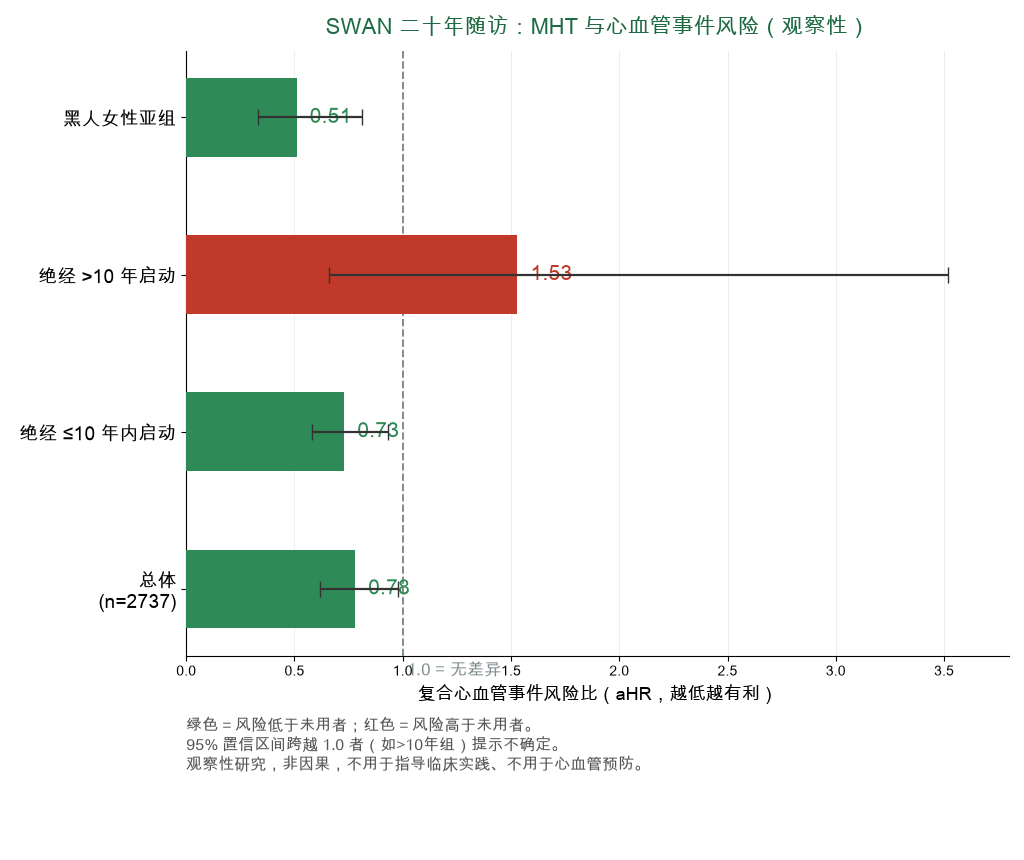
Figure 1 | Associations observed in the SWAN cohort. The interval for initiation more than ten years after menopause crosses 1; these results cannot establish causation or be used for cardiovascular prevention.[2]
How to read these numbers:
The study supports continued investigation of “when to start,” but does not establish a cardiovascular protective effect of MHT. The FIGO/WHF clinical position concerns individualized risk balancing for symptom treatment. SWAN’s results came from a population without a history of cardiovascular disease,
and cannot be directly extrapolated to people with a previous heart attack or established ischemic heart disease
.[1,2]

Sumbawa Island · NASA space photography (s26-38-056)
4. Assessing risks and benefits: stratification, timing, and administration route
Read together, the two publications can be distilled into several practical principles.
First, consider when treatment begins. People younger than 60 or within 10 years of menopause generally have a relatively more favorable risk–benefit balance when discussing symptom treatment, but neither age nor elapsed time is an independent “safety pass.” Starting for the first time long after menopause, or having significant existing vascular disease, requires more detailed risk assessment.[1,3]
Second, consider the route. Oral estrogen undergoes hepatic first-pass metabolism and can affect coagulation-related markers. Transdermal estrogen bypasses first-pass metabolism, and observational data generally suggest a lower venous-thrombosis risk than oral regimens. Randomized evidence directly comparing clinical outcomes across routes remains insufficient; it is therefore inappropriate to say transdermal therapy “absolutely does not increase” thrombotic risk. For higher-risk people, FIGO/WHF favors low-dose transdermal regimens alongside continued management of existing risk factors.[1,3]
Third, consider whether endometrial protection is needed. People with a uterus usually need an appropriate progestogen to protect the endometrium when using systemic estrogen; regimens differ after hysterectomy. FIGO/WHF favors micronized progesterone or dydrogesterone in higher-risk circumstances, but existing evidence does not support describing any formulation as having “zero thrombotic risk.”[1,3]
Fourth, continue cardiovascular prevention as usual. MHT is not used for primary or secondary cardiovascular prevention. Statins, antihypertensives, or other treatments that are already indicated should not be stopped on your own because you use MHT. Changes to those medications also require the treating clinician’s judgment.[1,3]
When systemic MHT is not currently appropriate, evidence-supported nonhormonal options remain available for discussion, including certain prescription medications for hot flashes and cognitive behavioral therapy for sleep and symptom-related distress. Selection depends on coexisting conditions, medications, and local availability.[3,4] Vaginal dryness or pain requires separate assessment. Systemic exposure from local treatment is usually different from that of systemic MHT, so their risks cannot be equated directly.[3]
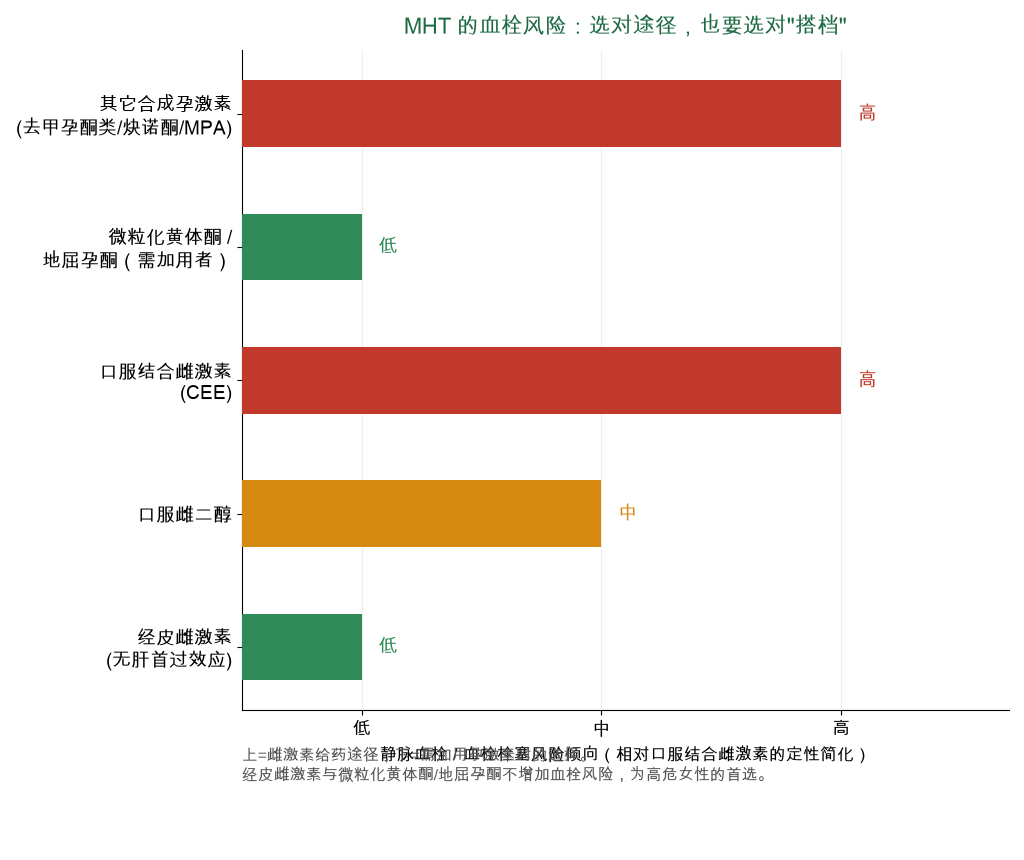
Figure 2 | The original route diagram is a qualitative comparison only, not an indication of an individual’s quantitative risk or medication contraindications. Direct randomized evidence on comparative outcomes is insufficient.[1,3]
Before starting systemic MHT, contraindications and recent cardiovascular events need assessment, followed by discussion of symptom intensity, personal risk, the specific formulation, and follow-up arrangements. The FIGO/WHF paper permits some patients with previous ischemic heart disease to consider treatment for symptom relief after rigorous assessment. It does not mean people with active chest pain, a recent heart attack, or a history of thrombosis can self-medicate.[1,3]

Java Island · NASA space photography (sts072-737-012)
5. In the consultation: what to bring, what to ask, and who decides
Consultation time is limited. Organizing test results, symptoms, and medication details beforehand helps the clinician distinguish “having risk factors” from “established cardiovascular disease” and clarify treatment goals.
Suggested records to bring: Recent blood-pressure, lipid, and glucose results, relevant imaging, or cardiology records; any history of myocardial infarction, stroke, venous thrombosis, breast disease, or endometrial disease; a list of current medications, especially statins, antihypertensives, anticoagulants, or antiplatelet drugs; and the frequency and severity of hot flashes, night sweats, and sleep disturbance. The date of the final menstrual period and whether the uterus is present also affect the discussion.[1,3]
Questions you can ask proactively: “Does my cardiovascular condition put me in a category that can use MHT, or one that needs caution?” “If I use it, is transdermal or oral treatment more suitable for me? Which progestogen would I need?” “I already take a statin/blood-pressure medication. Could it conflict with MHT, and does anything need adjustment?” “Roughly how long would treatment continue, how often would I be reviewed, and what signs mean I should stop?” Writing these questions in your phone can make walking into the appointment less stressful.
Complex cases need multidisciplinary input. With established ischemic heart disease, complicated medication regimens, or disagreement about risk, cardiology and gynecology should jointly review treatment goals, recent events, and alternatives. Bringing the same medical history and medication list to both specialties helps prevent information gaps.[1]
MHT is not a one-off prescription that never needs reassessment. An effective dose consistent with the treatment goal should be used, with regular review of symptoms, bleeding, and cardiovascular risk, and discussion with the clinician about continuation, adjustment, or stopping. There is no fixed stopping time applicable to everyone; duration depends on continuing risk–benefit assessment.[3]
A common misunderstanding: If FIGO/WHF says “people with heart disease can use it,” does that mean MHT protects the heart?
No. Neither publication treats MHT as a cardiovascular preventive medication. FIGO/WHF discusses “use after balancing risks and benefits to relieve symptoms”; SWAN reports “an association with lower event risk when started within the window.” They support “symptom management,” not “heart-protective treatment.” Using MHT as a supplement to “maintain the heart” could instead lead someone to neglect statins and lifestyle measures they need to continue.
Fact: The role of MHT is to relieve menopausal symptoms. Protecting the heart relies on statins, blood-pressure and glucose management, exercise, and diet; neither replaces the other.
Finally, this article does not recommend a specific product or regimen. It returns “questions you can ask your clinician” to you. Claims that MHT prevents heart attacks or strokes lack sufficient supporting evidence. The practical destination is to voice your questions, then leave the remaining decisions to shared professional judgment.
6. Two distinctions to keep clear
First, having risk factors is not the same as having established ischemic heart disease. Even with the same diagnosis, recent events and symptom stability change the treatment discussion. Second, considering MHT to relieve hot flashes is not the same as using MHT to prevent a heart attack. The FIGO/WHF position and observational results from SWAN each have boundaries of applicability and cannot substitute for each other.[1,2]
If you already have a history of heart disease, do not start or rule out treatment on the basis of a single article. At the appointment, first explain which symptoms trouble you most, then review cardiovascular risk, thrombosis- and cancer-related contraindications, administration routes, and nonhormonal choices with the clinician. A shared decision is not complete until the follow-up plan is clearly recorded.[1,3,4]

Indonesian islands and straits · NASA space photography (s08-50-1840)
Evidence boundaries for clinician readers:
FIGO/WHF 2026 is a joint position paper allowing some people with established ischemic heart disease to consider MHT for symptom relief after careful balancing, while emphasizing continued standard cardiovascular prevention and multidisciplinary collaboration.[1] SWAN 2026 is an observational target trial emulation involving 2,737 people without baseline cardiovascular disease. Its hazard ratios describe associations rather than causal treatment effects from a randomized trial and cannot be extrapolated into treatment benefits for people with established heart disease.[2] NAMS 2022 includes age, time since menopause, administration route, and personal risk in risk–benefit assessment; MHT is not a cardiovascular preventive strategy.[3]
[1] Benedetto C, et al. Menopause hormone therapy in women with cardiovascular risk factors or established ischemic heart disease: A joint FIGO and WHF position paper. Int J Gynaecol Obstet. 2026 Sep 22. doi:10.1002/ijgo.71356; PMID:42768976.
[2] Wang Z, et al. Menopausal Hormone Therapy and Cardiovascular Risk in Midlife Women With Vasomotor Symptoms. JAMA Intern Med. 2026 Sep 8. doi:10.1001/jamainternmed.2026.2922; PMID:42709460.
[3] The North American Menopause Society. The 2022 hormone therapy position statement. Menopause. 2022. doi:10.1097/GME.0000000000002028; PMID:35797481.
[4] The North American Menopause Society. The 2023 nonhormone therapy position statement. Menopause. 2023. doi:10.1097/GME.0000000000002200; PMID:37252752.
Disclaimer:
This article is health education, not medical advice, and cannot replace an in-person consultation or professional diagnosis. Starting, adjusting, or stopping any medication regimen must be decided by your treating clinician based on your specific history; professional medical diagnosis takes precedence. If you have diagnosed cardiovascular disease or relevant symptoms, consult cardiology and gynecology before beginning any hormone therapy. Do not buy, change, or stop medication, or delay assessment, because of this article.
Read the source material
The original archive manuscript is restored above. These additional references offer context; their inclusion does not constitute medical validation of every original claim. Clinical and regional terminology review are pending.
A good question starts a conversation.
Explore a related editorial discussion. Reading is open to everyone; posting and replying require a free reader account.
More from the library
 Hormones & treatment · 14 MIN READSo Many Estrogens: What Actually Makes Them Different?↗
 Hormones & treatment · 9 MIN READMHT and Bone Health: How Estrogen Helps Bones Save for Life on World Osteoporosis Day↗
 Hormones & treatment · 6 MIN READUK BMS / NICE 2026 Menopause Practice Update: Seven Key Changes, With Theory and Evidence Explained↗