So Many Estrogens: What Actually Makes Them Different?
Estradiol, conjugated estrogens, patches and vaginal products cannot be understood simply as “all estrogen.”

In this article
A prescription may say “estradiol,” yet a patch, gel, and tablet can involve three different ways of using it; other prescriptions say “estradiol valerate” or “conjugated estrogens,” and the molecules are not identical either. All can improve menopause-related symptoms, but “they are all estrogens” does not mean “their risks and evidence are exactly the same.”
What matters is not the brand name but three levels: what the molecule is, how the medicine enters the body, and whether treatment targets systemic or local symptoms. Drawing on NAMS, IMS, NICE, and ACOG guidance and studies including WHI, ESTHER, and BMJ, this article explains those differences within the limits of the evidence. It does not offer individual prescriptions, and a relative risk in a study is not the same as an individual's absolute risk.
| First, make the statement precise. “Transdermal treatment is more appropriate to discuss for people with clotting risk factors” does not mean “transdermal treatment has no risk”; “local vaginal estrogen has low absorption” does not mean everyone can use it without assessment. Before choosing a route, clinicians still need to review previous thrombosis, breast and endometrial history, migraine, liver disease, surgery, prolonged bed rest, and other relevant information. |
|---|
01 First distinguish three things: molecule, route, and treatment goal
In clinical practice, different medicines are often shortened to “estrogen,” but they may share only receptor effects, rather than pharmacokinetics or outcome evidence. 17β-estradiol is the body's main endogenous estrogen; estradiol valerate is its esterified prodrug, releasing estradiol after entering the body; conjugated estrogens (CEE) are a mixture of multiple estrogen components.
Next, consider the route. Oral medicines pass through the gastrointestinal tract and first-pass liver metabolism, with more pronounced effects on clotting factors, triglycerides, and hepatic proteins; transdermal patches, gels, and sprays bypass the first-pass effect and produce steadier blood concentrations. Low-dose vaginal preparations act mainly locally, with far lower systemic exposure than systemic MHT.
Finally, consider the goal. Hot flashes, night sweats, affected sleep, and menopause-related bone loss are issues to discuss in relation to systemic treatment; vaginal dryness, pain with intercourse, urinary frequency, and recurrent urinary tract infections can often be assessed first through a local treatment pathway. Someone may have both categories of symptoms, but different treatment goals do not mean a local preparation must be added to a systemic regimen.
| What to examine first | The question it answers | What cannot be inferred |
|---|---|---|
| Molecule | Is it 17β-estradiol, estradiol valerate, CEE, or local estriol? | “Identical structure” alone cannot establish identical clinical risks across all preparations. |
| Administration route | Oral, transdermal, or local vaginal? Is there a first-pass effect? | Transdermal cannot be described as risk-free, nor oral as absolutely prohibited. |
| Treatment goal | Improving systemic symptoms or addressing local GSM symptoms? | Local preparations cannot replace all systemic indications, nor should systemic medicine automatically address an isolated local problem. |
Nordic mountain-and-lake illustration | Distinguishing treatment goals first creates room to discuss prescription choices. This is an educational illustration, not a depiction of a patient or study setting.
02 Four common estrogens: differences in the molecules themselves
17β-estradiol: identical to the body's endogenous molecule
17β-estradiol is one of the most common active ingredients in hormone therapy during the menopause transition and after menopause. “Bioidentical” or “structurally identical” means its molecular structure matches the body's 17β-estradiol. It does not mean its source is natural or its risk is lower, nor that dose, route, and contraindications can be assessed less carefully.
The same active ingredient can be made into oral tablets, patches, gels, sprays, or vaginal preparations. Risks observed in studies often reflect the combination of “molecule + dose + administration route + population,” rather than something attributable solely to the word “estradiol.”
Estradiol valerate: a prodrug, not a completely different estrogen
Estradiol valerate undergoes hydrolysis by esterases in the body, ultimately releasing 17β-estradiol. The differences mainly involve absorption rate, peak-to-trough variation, and individual tolerability, rather than a completely different active molecule acting at the receptor. Simply ranking it above or below “natural estradiol” mistakes pharmacokinetic differences for differences in therapeutic effectiveness.
Conjugated estrogens (CEE): a mixture of multiple components
CEE is not a single molecule, but a mixture of estrogens consisting mainly of components such as estrone sulfate. Much of WHI's long-term outcome evidence comes from CEE, particularly CEE combined with medroxyprogesterone acetate (MPA) or CEE alone. These studies tell us about the benefits and risks of specific regimens in specific populations, but cannot automatically substitute for long-term hard-outcome evidence for every estradiol preparation.
Estriol and low-dose vaginal preparations: the local goal matters more
Low-dose vaginal estrogen mainly addresses genitourinary syndrome of menopause (GSM) affecting the vagina, urethra, and bladder trigone. NAMS position statements support discussing local treatment when nonhormonal measures are insufficient; because systemic absorption is low, effects on coagulation and systemic metabolism are generally smaller than with systemic MHT. However, “generally” does not mean “absolutely safe for everyone”: unexplained vaginal bleeding, a history of breast cancer treatment, and other circumstances still require specialist assessment.
| Ingredient/form | Clinical role | Evidence boundaries |
|---|---|---|
| 17β-estradiol | A common active ingredient in systemic MHT, administered orally or transdermally. | An identical molecule does not mean an identical route; long-term hard outcomes depend on the specific regimen. |
| Estradiol valerate | An esterified prodrug of 17β-estradiol that releases the active molecule after oral administration. | Pharmacokinetic differences should not be marketed as “more natural” or “more advanced.” |
| CEE | A multicomponent estrogen mixture with important randomized trial evidence from WHI. | WHI findings cannot be directly extrapolated to all preparations and all ages. |
| Low-dose vaginal estrogen | Mainly improves local GSM symptoms. | Systemic exposure is lower, but bleeding and cancer history still need review. |
03 Oral versus transdermal: the first-pass effect changes the risk profile
After oral estrogen enters the portal circulation, it reaches the liver first, potentially increasing hepatic synthesis of clotting factors and affecting triglycerides and the renin–angiotensin system. The transdermal route bypasses the first-pass effect and usually has smaller effects on clotting proteins. This mechanism explains why guidelines prioritize discussion of transdermal regimens when venous thrombosis risk factors are present.
A mechanism, however, is not an outcome. The “more favorable” profile of transdermal regimens is supported mainly by observational studies and pharmacology; large trials directly randomizing different routes with VTE as the primary endpoint are lacking. Different doses, exposure from patches versus gels, and participants' existing risks also affect results. A more accurate statement is therefore “low-dose transdermal regimens show a weaker association signal with VTE,” rather than “risk-neutral, with absolutely no increase.”

Arctic Circle aurora illustration | Transdermal administration bypasses the first-pass effect, but a “weaker association” must not become “zero risk.”
ACOG Committee Opinion 556 and relevant IMS and NAMS recommendations all emphasize individualization. When factors such as previous VTE, known thrombophilia, obesity, age, recent major surgery, immobility during long journeys, and smoking accumulate, the prescription needs reassessment. People at high clotting risk should not switch from oral treatment to patches themselves, nor skip a medical-history review because “patches are safe.”
| Level of evidence | What it can show | What it cannot show |
|---|---|---|
| Pharmacological/mechanistic studies | The first-pass effect changes hepatic proteins and coagulation-related measures. | They cannot independently predict whether an individual will develop VTE. |
| Observational studies | Low-dose transdermal treatment usually shows a weaker association with VTE than oral treatment. | They cannot completely exclude confounding from prescribing choices and population differences. |
| Randomized trials (WHI) | Benefits and risks of specific CEE regimens. | All CEE findings cannot be transferred directly to every estradiol preparation. |
| Guidelines and consensus statements | A practical framework for indications, contraindications, and risk stratification. | They do not prescribe for an individual or replace follow-up. |
Figure 1 places these sources of evidence alongside each other. It deliberately does not plot the ESTHER ratios, BMJ ratios, and WHI event rates on the same axis, because study designs, outcome definitions, and baseline population risks differ; a direct ranking would create false precision.
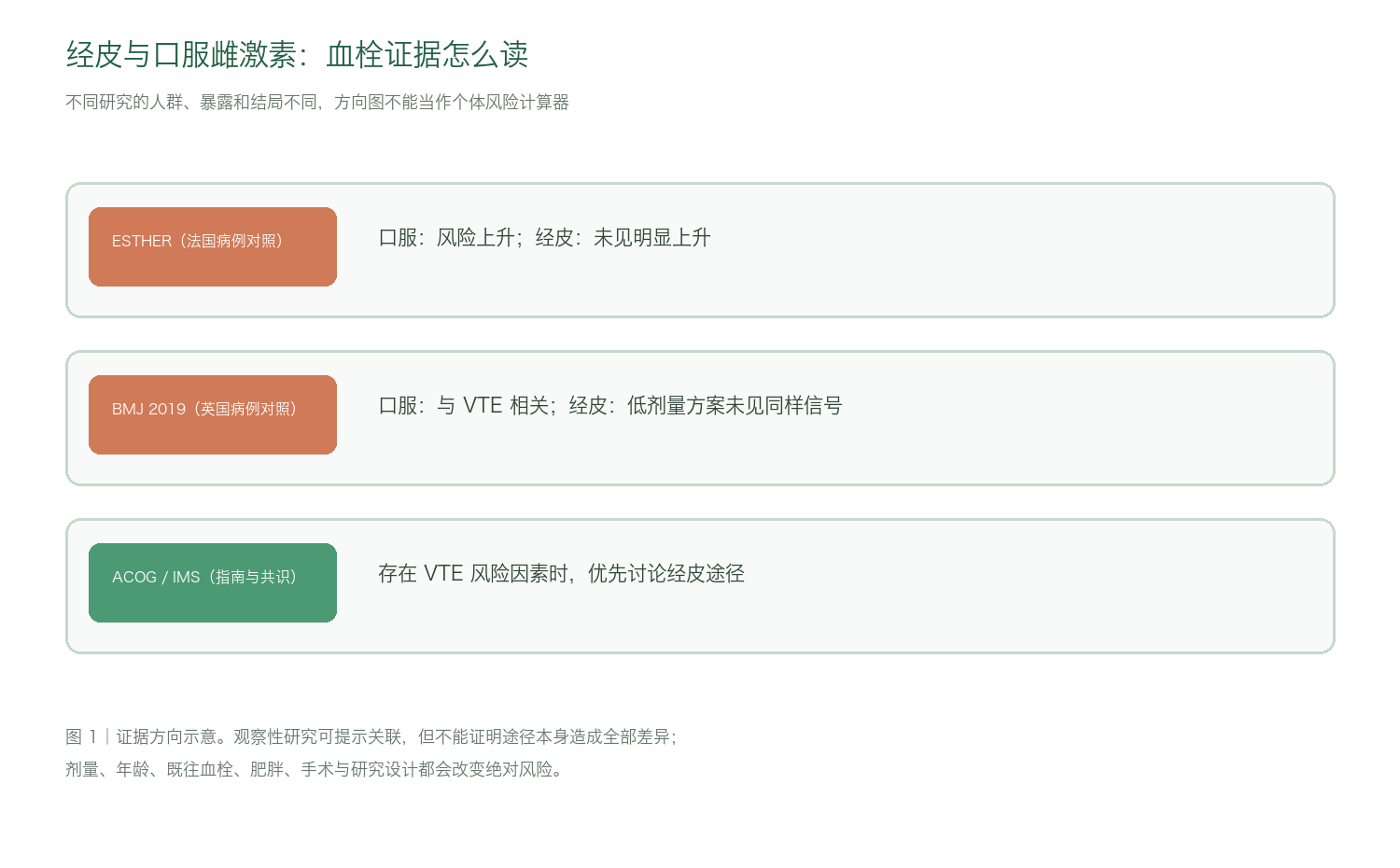
Figure 1 | Redrawn from ESTHER, BMJ 2019, and relevant ACOG/IMS recommendations. This directional diagram is neither an individual risk prediction nor a pooled estimate of effects across studies.
04 Translating “relative risk” into useful risk communication
Studies commonly express associations using odds ratios (OR), risk ratios (RR), or risk differences. For example, ESTHER reported a stronger association between oral estrogen and VTE than between transdermal estrogen and VTE; the BMJ 2019 UK database study also observed differences among oral preparations. These figures come from case-control or database studies. They do not mean “taking it will definitely multiply risk by this amount,” and cannot simply be applied to an individual woman.
Absolute risk depends on baseline risk. Younger women without risk factors have a very low baseline VTE risk, so even if relative risk rises, the absolute increase in events may be limited; someone with previous VTE or thrombophilia already has a different baseline, and the same relative change has a larger absolute impact. Clinicians need both forms of expression, rather than a single multiplier used to frighten or reassure.
| Questions to ask at a consultation: “What are my baseline clotting risk factors? Will this route change my absolute risk? If we choose transdermal treatment, how will we set the dose and reassessment schedule?” These three questions are more likely to yield actionable answers than “Which estrogen is the safest?” |
|---|
VTE must also be distinguished from arterial events. Evidence on VTE cannot simply substitute for evidence on ischemic stroke risk with oral administration or the effects of smoking and migraine with aura; blood pressure, atrial fibrillation, diabetes, and lipids also need separate assessment. Compressing all “cardiovascular risk” into a single ranking is inaccurate and does not help shared decision-making.
Dose and reassessment: neither “the lower the better” nor fixed forever
Guidelines often use the phrase “lowest effective dose,” but an easily overlooked condition is that the dose must adequately control the target symptoms and maintain benefit within an acceptable risk range. Choosing a seemingly safer low dose while symptoms remain severe and sleep remains impaired may not produce a better outcome; conversely, increasing the dose yourself to obtain rapid effects makes exposure, bleeding, and adverse effects harder to interpret.
After starting or adjusting a regimen, reassessment usually examines symptom improvement, abnormal bleeding, breast and gynecological findings, blood pressure, and new clotting risk factors. Not everyone needs repeated blood estrogen measurements; clinical response and safety information are often more useful. If symptoms are only local, increasing the systemic dose will not automatically resolve them; if hot flashes remain prominent, a local preparation cannot shoulder systemic treatment goals alone.
Surgery, long-distance travel, fractures, infection, prolonged bed rest, or newly developing migraine aura can all change the risk assessment. Proactively telling your clinician about these changes at follow-up is more valuable than simply saying “I am still taking the medicine.” Product labeling, available formulations, and insurance rules also differ between countries, so dose figures in an online article cannot be converted directly into personal instructions.
05 What WHI tells us concerns specific regimens and specific timing
WHI is one of the most important sources of randomized evidence on menopausal hormone therapy. The CEE-plus-MPA randomized trial shows why breast cancer, coronary heart disease, stroke, and VTE outcomes cannot be compressed into “hormones are harmful” or “hormones extend life”; the CEE-alone trial had a different risk profile. Early trial termination, participants' ages, and treatment timing also affect interpretation.
The “window of opportunity” is an interpretation of WHI and subsequent analyses: among women younger than 60 or within 10 years of menopause who have no contraindications, the benefit–risk ratio for symptom treatment is usually more favorable; with later initiation, cardiovascular benefit has not been demonstrated, and some risks may instead increase. NAMS, IMS, and NICE all consider age, time since menopause, and individual risk together.

Nordic snowy-mountain illustration | “When to start” matters as much as “what to use”; remembering a drug name alone is not enough.
This is not a license to assume “starting earlier prevents more heart disease.” WHI does not support using MHT for primary prevention or initiating hormones to prevent dementia. The best-established indications remain moderate-to-severe vasomotor symptoms, menopause-related GSM, and selected osteoporosis prevention settings; suitability depends on individual risks and treatment goals.

Figure 2 | Different evidence answers different questions. Figures from studies with different designs and populations cannot simply be added across studies.
06 Progestogen is not an optional extra: the uterus changes the regimen's logic
People with a uterus receiving systemic estrogen usually need an adequate dose and duration of a progestogen or other endometrial protection to reduce endometrial hyperplasia and cancer risk; most people who have had a hysterectomy do not routinely need a progestogen, although residual endometrium, endometriosis, or other special circumstances still require specialist judgment.
Micronized progesterone, dydrogesterone, and certain synthetic progestogens differ in metabolism and receptor profiles. Observational studies and systematic reviews suggest possible differences in associations with breast outcomes and thrombosis, but this evidence is vulnerable to influences from age, dose, duration, and prescribing choices. “Potentially more favorable” must not be turned into “safer, as proven by randomized trials.”
| Prescription information | Why ask? | Common misinterpretation |
|---|---|---|
| Whether you have a uterus and any previous endometrial procedures | Determines the need for endometrial protection and follow-up priorities. | “I only use a little estrogen, so the endometrium does not matter.” |
| The progestogen's generic name and administration method | Evidence and tolerability differ among progestogens. | Treating “natural” as equivalent to zero breast and clotting risk. |
| Cyclic or continuous regimen | Relates to bleeding patterns, age, and time since menopause. | Stopping treatment or increasing doses yourself when bleeding occurs. |
Persistent or recurrent postmenopausal bleeding should first be investigated medically, rather than addressed by adjusting estrogen-to-progestogen proportions online. Any explanation of “bleeding after starting medicine” needs to consider treatment start date, regimen, dose, and ultrasound or endometrial investigations together.

Scandinavian forest illustration | A prescription is more than a list of drug names: uterine status and endometrial protection also need to be clear.
07 Local vaginal estrogen: keep it distinct from systemic MHT
GSM is a common chronic problem after menopause, and symptoms may worsen over time. Lubricants and moisturizers suit mild cases mainly involving discomfort during sex; when symptoms persist or urinary problems coexist, low-dose vaginal estrogen, vaginal DHEA, or other options can be discussed with a clinician. Systemic absorption varies with local estrogen doses and preparations.
The NAMS 2020 position statement considers that low-dose local treatment does not usually require routine added progestogen in the way systemic MHT does. However, people with a breast cancer history, those taking aromatase inhibitors, or those with unexplained bleeding should first undergo joint assessment by relevant specialists. “Low absorption” must not be expanded into “use it freely without keeping records.”
Local treatment is not a “one-time cure” either. GSM is more like a chronic symptom complex requiring long-term management, and symptoms may recur after treatment stops. Effectiveness should be assessed through changes in dryness, pain, urinary symptoms, and quality of life, rather than pursuing a blood estrogen concentration deemed “normal.”
08 Understanding your prescription: four questions are more useful than brand names
When you receive a prescription, note these four items on your phone: the active ingredient, administration route, dose and frequency, and—if you have a uterus—whether endometrial protection is included. At follow-up or when changing hospitals, bringing the generic name is more reliable than reporting only a brand name.
| Order for checking a prescription | Example questions |
|---|---|
| Ingredient | Is this 17β-estradiol, estradiol valerate, CEE, or local estriol? |
| Route | Oral, patch, gel, spray, or vaginal preparation? Does the first-pass effect matter? |
| Purpose | Is it mainly to improve hot flashes and sleep, or only dryness, pain, and urinary symptoms? |
| Protection and reassessment | Do I have a uterus? Which progestogen is it? How often should blood pressure, bleeding, breasts, and risk factors be reassessed? |
If a prescription only says “estrogen” without the generic name, route, or dose, do not guess based on packaging color. Your clinician needs your symptoms, menstrual or menopause timing, previous thrombosis and breast history, smoking status, and migraine history to explain why that route was chosen.
09 Three common misconceptions to correct now

Nordic nature illustration | Risk figures from different studies cannot be compared directly without considering study design.
| Misconception one: natural means safe. Structurally identical estradiol is still a medicine; naturally sourced mixed estrogens also have doses, routes, and indications. Safety comes from regulated preparations, appropriate patient selection, and ongoing reassessment, rather than a “natural” label. |
|---|
| Misconception two: transdermal means absolutely no clotting risk. Observational evidence suggests a weaker VTE association signal with low-dose transdermal regimens, but obesity, previous VTE, thrombophilia, surgery, and prolonged immobility still matter. Transdermal treatment is not a pass around all contraindications. |
|---|
| Misconception three: oral treatment must be inferior to transdermal. Oral treatment is not unsuitable for everyone. It has particular features concerning convenience, cost, and some hepatic metabolic effects; oral estradiol may be a reasonable choice for people without relevant risk factors. The key is matching the regimen to the person. |
|---|
10 Bring your questions to the consultation, rather than someone else's regimen home
There is no universal answer to “Which estrogen is best?” independent of population and goals. Someone with migraine aura, a mother who developed thrombosis at a young age, and elevated blood pressure has a different benefit–risk profile from someone without relevant history who mainly wants hot-flash relief; the same person's regimen may also need adjustment as age, surgery, weight, and medicines change.
A more dependable approach is to bring the symptom timeline, menstrual or menopause timing, previous thrombosis, breast and gynecological evaluations, current medicines, and your main concern to the consultation. For your clinician, these details are more useful than “the internet says this one is safest”; for you, they turn a medication change into shared decision-making rather than trial and error based on feelings.
Estrogen differences ultimately return to three words: molecule, route, goal. Understanding them is not about prescribing for yourself, but knowing at each follow-up what your clinician is weighing, which evidence applies to you, and which findings are only study associations.
If you are considering treatment, start by recording your most troublesome symptoms over a week: how many hot flashes occur daily and whether they affect work and sleep; whether vaginal dryness or intercourse pain persists; whether there is abnormal bleeding; and whether surgery, fracture, immobility during long journeys, or a new chronic condition has occurred in the past year. Such records do not make decisions for your clinician, but make treatment goals concrete and help determine reasons to continue, adjust, or stop treatment at reassessment.

Northern mountain sunset illustration | Bringing questions into the consultation matters more than bringing someone else's regimen home.
| Evidence boundaries of this article. This article explains differences between estrogen preparations, routes, and study designs; it is not advice to diagnose, prescribe, switch, or stop medicine. Seek timely medical care for postmenopausal bleeding, chest pain, breathlessness, one-sided leg pain and swelling, sudden neurological abnormalities, or similar symptoms. |
|---|
References and guidelines
- The 2022 Hormone Therapy Position Statement of The North American Menopause Society. Menopause. 2022;29:767–794. DOI: 10.1097/GME.0000000000002028.
- Baber RJ, et al. 2016 IMS Recommendations on women's midlife health and menopause hormone therapy. Climacteric. 2016;19:109–150. DOI: 10.3109/13697137.2015.1129166.
- NICE. Menopause: diagnosis and management (NG23). Updated 2024. https://www.nice.org.uk/guidance/ng23.
- ACOG Committee Opinion No. 556: Postmenopausal estrogen therapy route of administration and risk of venous thromboembolism. Obstet Gynecol. 2013; reaffirmed guidance.
- Canonico M, et al. Hormone therapy and venous thromboembolism among postmenopausal women: the ESTHER study. Circulation. 2007;115:840–845. DOI: 10.1161/CIRCULATIONAHA.106.642280.
- Vinogradova Y, et al. Use of hormone replacement therapy and risk of venous thromboembolism. BMJ. 2019;364:k4810. DOI: 10.1136/bmj.k4810.
- Rossouw JE, et al. Risks and benefits of estrogen plus progestin in healthy postmenopausal women. JAMA. 2002;288:321–333. DOI: 10.1001/jama.288.3.321.
- Anderson GL, et al. Effects of conjugated equine estrogen in postmenopausal women with hysterectomy. JAMA. 2004;291:1701–1712. DOI: 10.1001/jama.291.14.1701.
- Manson JE, et al. Menopausal hormone therapy and health outcomes during the intervention and extended poststopping phases of WHI. JAMA. 2013;310:1353–1368. DOI: 10.1001/jama.2013.278040.
- Stute P, et al. The impact of micronized progesterone on breast cancer risk: a systematic review. Climacteric. 2018;21:111–122. DOI: 10.1080/13697137.2017.1421925.
- The 2020 genitourinary syndrome of menopause position statement of NAMS. Menopause. 2020;27:976–992. DOI: 10.1097/GME.0000000000001609.
This medical content was compiled from public guidelines and studies. Before publication, review it against local product labeling and clinical standards.
Read the source material
- ACOG: Hormone therapy for menopause
- NICE: Menopause identification and management, NG23
- ACOG: Compounded bioidentical menopausal hormone therapy
The original archive manuscript is restored above. These additional references offer context; their inclusion does not constitute medical validation of every original claim. Clinical and regional terminology review are pending.
A good question starts a conversation.
Explore a related editorial discussion. Reading is open to everyone; posting and replying require a free reader account.
More from the library
 Hormones & treatment · 10 MIN READCan You Use MHT With High Cardiovascular Risk? Reading a Position Paper and a New Study↗
 Hormones & treatment · 9 MIN READMHT and Bone Health: How Estrogen Helps Bones Save for Life on World Osteoporosis Day↗
 Hormones & treatment · 6 MIN READUK BMS / NICE 2026 Menopause Practice Update: Seven Key Changes, With Theory and Evidence Explained↗