Can Food “Replenish” Estrogen? Unpacking the Claim
Separate food composition, receptor activity and treatment effects before turning an ordinary meal into an unsupported hormone prescription.
In this article
Soy, flaxseed, kudzu powder, and black soybean milk are often placed under the same shelf label: “natural estrogen.” This leads many people to an intuitive assumption: food should replenish estrogen missing from the body. It sounds reasonable, but conflates “what a food contains” with “whether the human body can use it as medication.”
The more accurate answer is that animal foods may contain extremely small amounts of endogenous hormones, but their intake cannot be compared with therapeutic doses. Phytoestrogens in plant foods are not estrogen; they are compounds that bind weakly to estrogen receptors. They can form part of a healthy diet, and some people may experience modest symptom improvement, but this does not justify replacing menopausal hormone therapy (MHT).
This article explains molecules, doses, study design, and safety boundaries separately. NAMS 2023 concluded that soy foods, soy extracts, and equol are “not recommended for treatment of vasomotor symptoms.” Here, “not recommended” means the evidence is insufficient for inclusion among effective treatments, rather than that soy foods are harmful.
| Remember this first: “contains phytoestrogens” does not mean “contains human estrogen”; “natural” does not mean “reaches therapeutic concentrations.” If hot flashes, night sweats, or abnormal bleeding already affect life, food cannot replace proper assessment. |
|---|
01 First unpack the word “estrogen”
Human 17β-estradiol is a steroid hormone that activates estrogen receptors with relatively high affinity. Phytoestrogens include several groups, such as soy isoflavones, flax lignans, and coumarins. Partial structural similarities allow receptor interaction, but their affinity, concentration, tissue distribution, and metabolism differ.
“Phytoestrogen” is a term from nutrition and chemistry; it does not mean that plants produce human estradiol. Calling them all “natural hormones” can mislead readers into believing that eating them replenishes hormone levels, and obscures differences in evidence between compounds.
| Source | Actual components | Can it serve as estrogen replacement? |
|---|---|---|
| Meat, eggs, dairy | May contain trace endogenous steroid hormones; amounts depend on animal, tissue, and detection method | Food portions cannot be converted into therapeutic doses |
| Soybeans and soy foods | Isoflavones, including genistein and daidzein | Not estrogen; may have weak receptor effects |
| Flaxseed, whole grains, some nuts | Lignans and their intestinal metabolites | Not estrogen; clinical effects are inconsistent |
| Kudzu, alfalfa, and other plants | Various plant compounds, including isoflavones and coumarins | Plant origin alone establishes neither efficacy nor safety |
Nordic landscape illustration | Food composition, receptor effects, and clinical outcomes need separate discussion.
02 Animal foods contain hormones—why do they still not replace them?
Animals do produce endogenous hormones such as estradiol, estrone, and estriol, and trace residues may be detected in meat, eggs, and dairy. This does not directly mean that “eating meat, eggs, and dairy replaces hormones.” Amounts vary with animal physiology, tissue, husbandry, and detection methods. Hormones entering the digestive tract also undergo digestion, intestinal metabolism, and hepatic first-pass clearance.
Medicines actually used for menopause treatment have specifically designed doses, formulations, and absorption routes, with defined indications, contraindications, and follow-up requirements. Placing trace food components and prescription-drug exposure on a single “replacement” scale is an error of magnitude. In an ordinary diet, appropriate total energy, saturated fat, protein, fiber, calcium, and vitamin D matter more than searching for hormone-containing foods.
Nor should this be reversed into a claim that all animal foods “disrupt the endocrine system.” There is no reliable evidence that trace endogenous estrogen in an ordinary diet produces the pharmacological effects of MHT in healthy women. A reasonable approach is a balanced diet, reliable food sources, and medical assessment of hormone-therapy questions.
| Do not merge two questions: “does food contain trace hormones?” is a detection question; “can eating it produce a drug effect?” is a pharmacokinetic and dose question. Answering the first does not automatically answer the second. |
|---|
03 Why can phytoestrogens act “similarly” without being equivalent to estrogen?
Phytoestrogens generally bind estrogen receptors far less strongly than 17β-estradiol. Estimates of relative affinity vary by receptor subtype, experimental system, and comparison method. Reviews commonly place genistein and daidzein within a small fraction of estradiol's affinity. Using one fixed percentage to represent all foods and all people creates false precision.
Their effects also depend on receptor subtype. Genistein has a stronger preference for ERβ, while ERα and ERβ are distributed differently across breast, uterus, bone, vessels, and central nervous system. Receptor selectivity may produce modest or tissue-specific effects, but does not turn phytoestrogens into self-adjusting “natural SERM medicines.”
Food isoflavones are also affected by cooking, processing, gut microbes, and individual metabolism. Whether daidzein becomes S-equol depends on the microbiota. Research estimates that roughly three to five in ten adults can perform this conversion, with substantial population differences. “Some people feel better after soy and others feel nothing” may reflect baseline symptoms, placebo effects, overall dietary changes, and metabolic capacity together.

Nordic misty-forest illustration | Different experiences of the same food cannot directly establish a drug effect.
| Variable | Why it changes results | Reminder for readers |
|---|---|---|
| Compound type | Genistein, daidzein, and lignans are different molecules | Do not treat “phytoestrogens” as one drug |
| Food form | Whole beans, soy milk, extracts, and capsules differ in dose and matrix | Whole-food research cannot be directly extrapolated to high-dose supplements |
| Gut metabolism | Equol production varies between individuals | One person's experience cannot predict everyone's |
| Symptoms and baseline risk | Hot-flash frequency, menopausal stage, sleep, and stress influence outcomes | Record symptoms before discussing change |
04 Clinical trials: can soy isoflavones actually improve hot flashes?
Clinical research produces less tidy conclusions than advertising. The NAMS 2023 nonhormone therapy position statement lists soy foods, soy extracts, and equol as “not recommended” for vasomotor symptoms, with limited or inconsistent evidence. Recommended nonhormonal treatments include cognitive behavioral therapy, clinical hypnosis, certain SSRIs/SNRIs, gabapentin, and fezolinetant. In the absence of contraindications, MHT remains the most effective treatment for moderate-to-severe vasomotor symptoms.
Some meta-analyses observe small improvements. A 2024 review including 36 studies reported an association between 30–80 mg of soy isoflavones daily and reduced hot-flash frequency and severity. However, formulations, durations, participants' menopausal stages, and outcome definitions varied. Relative reductions cannot be converted directly into how many fewer weekly hot flashes one particular woman will experience.
A 2025 meta-analysis of 12 randomized controlled trials in perimenopausal women reported a small improvement in overall menopausal symptoms, but no significant effect on hot flashes or vasomotor symptoms, with high between-study heterogeneity. Both kinds of finding can coexist without either necessarily being “wrong.” They suggest effects may be small and highly dependent on study conditions.
In a 2023 single-center, unblinded whole-food trial by Barnard and colleagues, a low-fat diet plus daily cooked soybeans was associated with a marked reduction in moderate-to-severe hot flashes. The result deserves attention, but the sample included only 84 people and the intervention encompassed an entire dietary pattern. It was not a drug trial of “soy alone,” and cannot establish equivalent effects for purified isoflavone capsules.

Nordic forest illustration | An impressive study result must be read alongside sample size, blinding, and the intervention combination.
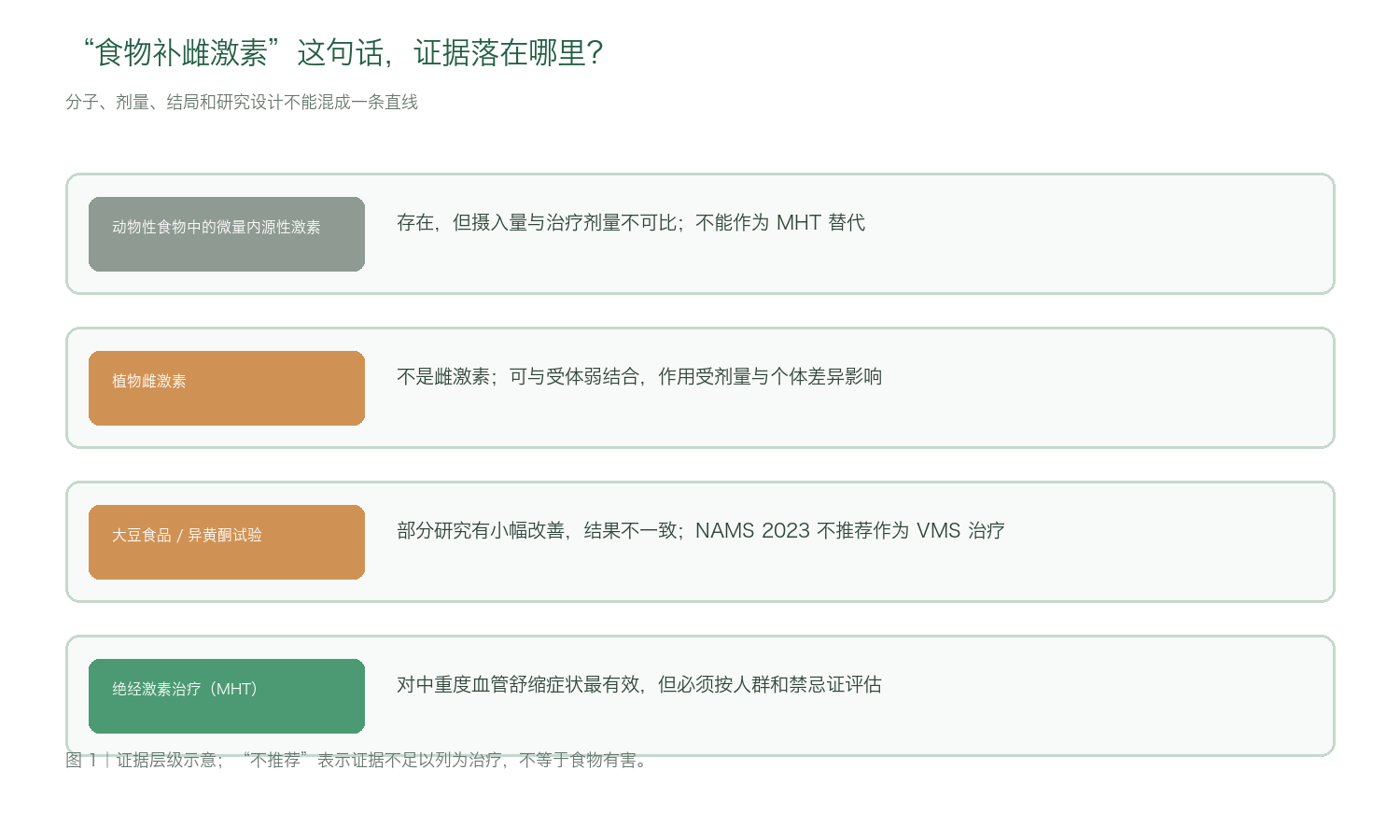
Figure 1 | Reorganized by research question. Phytoestrogens are not human estrogen. “Not recommended” means insufficient evidence for treatment, rather than a verdict on food safety.
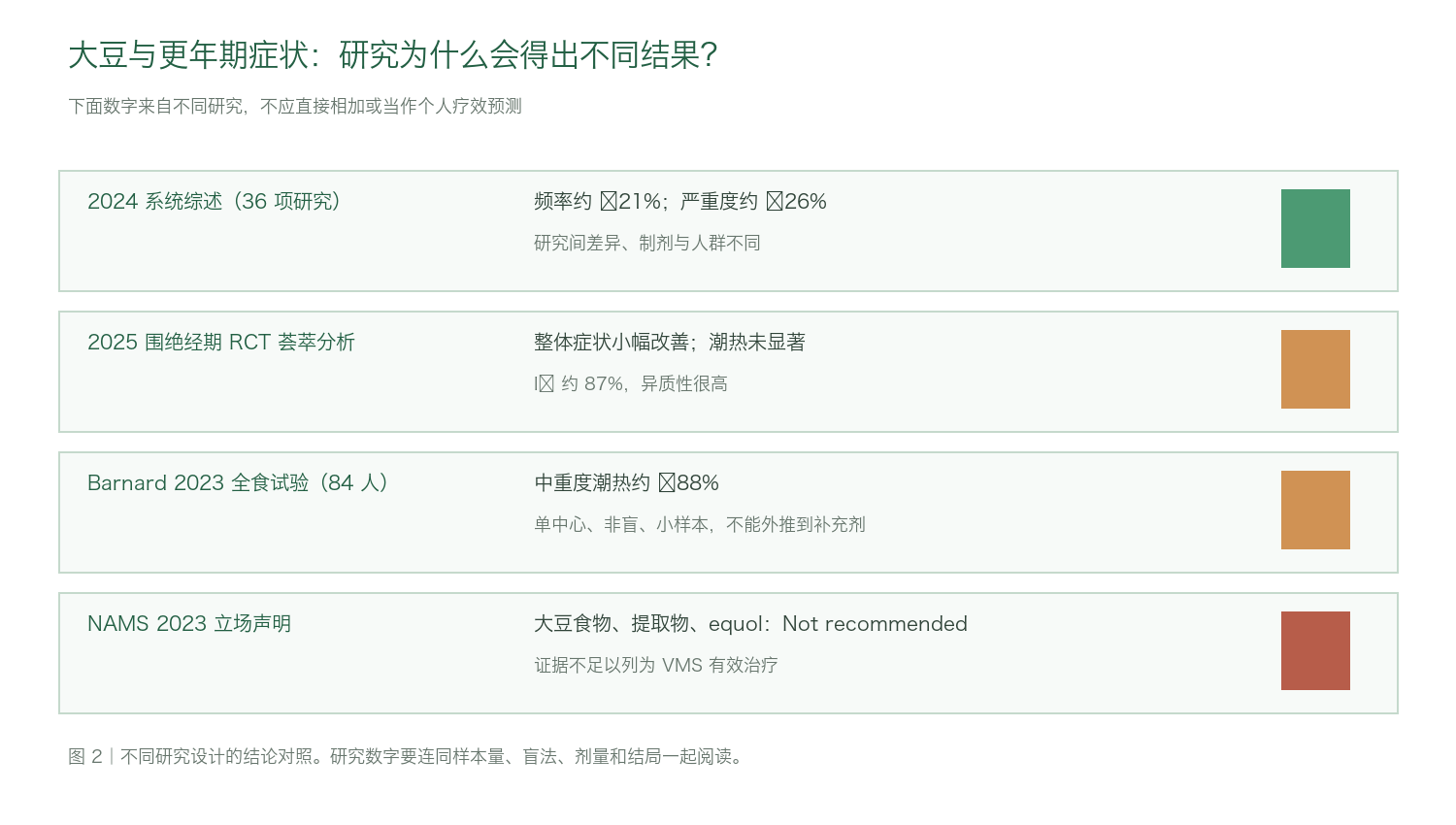
Figure 2 | Different study designs and conclusions shown side by side. Numbers cannot be added together or used to predict individual efficacy.
05 What food can provide: nutritional benefit, not hormone replacement
Including tofu, soy milk, edamame, natto, flaxseed, and whole grains primarily provides protein, fiber, unsaturated fats, minerals, and polyphenols. These support overall dietary quality, weight management, and cardiovascular risk control, but those benefits do not occur by “putting estrogen back.”
Research on soy and breast-cancer survival must also be read by evidence type. Some observational cohorts associate moderate whole-soy intake after diagnosis with lower recurrence or mortality. This does not prove soy treats breast cancer, and cannot be extrapolated to high-dose isoflavone supplements. The American Cancer Society and AICR are generally more permissive about whole-soy foods, while long-term safety and dose issues for concentrated supplements still warrant caution.
For bones, soy foods provide protein and minerals, and some studies observe changes in bone-turnover markers. Bone-density and fracture outcomes, however, require longer follow-up; short-term hot-flash trials cannot substitute. Vaginal dryness, painful intercourse, and recurrent urinary tract infections also cannot be resolved through food phytoestrogens; these require assessment through GSM treatment pathways.
06 Supplements and whole foods do not belong on the same safety checklist
The largest difference between a bowl of tofu and an isoflavone capsule is not “natural versus artificial,” but dose, standardization, and long-term safety data. Whole foods contain water, protein, and fiber, with intake usually limited by satiety. Supplements may concentrate tens of milligrams or higher doses of one constituent in a capsule and combine it with other herbs.
When reading supplement studies, distinguish “reported daily dose” from “blood or urine exposure.” A label's 50 mg may refer to total isoflavones or only one constituent. Some studies calculate aglycone weight and others glycoside forms; these are not directly comparable. Symptom changes over 8–12 weeks also do not automatically establish safety over years. If a product does not specify active constituents, standardization, batch testing, and the dose used in research, “high content” does not mean stronger evidence.
The level of outcome matters too. Hot-flash counts are patient-experienced outcomes, but are influenced by diary recording, season, and placebo effects. Bone density, fractures, breast-cancer recurrence, and cardiovascular events require longer follow-up and larger samples. A small difference on a short-term scale cannot justify claims to “protect bones,” “reduce recurrence,” or “delay aging.” Explicit outcomes and follow-up periods prevent a small signal being expanded into a large promise.
If you decide to try whole-soy foods, change only one variable at a time and continuously record hot flashes, sleep, bowel movements, and medication timing, rather than changing several supplements simultaneously. If rash, gastrointestinal discomfort, abnormal bleeding, or clearly worsening symptoms occur, stop plans to increase the dose yourself and consult a doctor. Recording is not about grading food, but helping a doctor distinguish real benefits, placebo effects, and other causes.
Also consider whether study participants resemble real-world users. Some trials recruit healthy postmenopausal women without chronic disease or prescription medication. Results may not apply during breast-cancer treatment, with abnormal thyroid function, impaired liver or kidney function, or multiple medications. Before extrapolating, at least compare age, menopausal stage, underlying disease, formulation and dose, and follow-up. If these differ greatly, the safest conclusion is usually “further research is needed.”
Therefore, when reading that “a food regulates estrogen,” first ask which outcome improved, how long effects lasted, whether there was a control group, and whether findings are reproducible. Only with that information can nutrition advice and medical treatment be put in their appropriate places.
This is also the starting point for judging marketing reliability. Examine the evidence before deciding to try something.
| Form | What evidence can support | Boundaries to remember |
|---|---|---|
| Everyday whole-soy foods | Generally acceptable within a balanced diet; may provide nutritional benefits | Cannot promise hot-flash improvement or replace MHT |
| Standardized isoflavone supplements | Some trials observe mild symptom changes | Results are inconsistent; verify dose, source, and long-term safety |
| Multicomponent “menopause formulas” | Often mix several plants and vitamins | More ingredients make it harder to identify what works or interacts with medication |
| Independently purchased hormone-like products | May have inaccurate labels, unstable doses, or drug ingredients | Do not treat “supplements” as low-risk substitutes for prescriptions |
| Three questions worth asking: What are the active constituents and dose per serving? Are there randomized trials at that dose? Could it affect my current medication or previous cancer treatment? If a sales page answers only “natural,” “traditional,” or “no side effects” without this information, the evidence is generally insufficient. |
|---|

Nordic highland illustration | More complex supplement doses and ingredients make label details and drug interactions more important.
07 Safety boundaries that genuinely matter
A history of breast cancer or estrogen-receptor-positive tumors
Existing observational studies are generally reassuring about moderate whole-soy foods. But “whole-soy food may be safe” does not mean “high-dose supplements are safe,” still less that phytoestrogens can be self-prescribed for hot flashes. People taking aromatase inhibitors, tamoxifen, or other anticancer drugs should discuss diet and supplements with their oncologist.
Thyroid disease and levothyroxine
Soy foods do not cause thyroid problems in everyone; with adequate iodine, moderate soy intake can usually be included in the diet. The more practical concern is that soy, coffee, calcium and iron supplements, and high-fiber foods may affect levothyroxine absorption. Follow the prescribing information and doctor's timing advice. Clinically, separation by at least several hours is often advised, but “4 hours” should not be treated as a fixed rule for every formulation and person.
Pregnancy, breastfeeding, children, and adolescents
Ordinary foods differ from concentrated supplements. Safety data for isoflavones, kudzu, and compound plant products during pregnancy, breastfeeding, and childhood are limited; plant origin is no reason to increase doses independently. People with uterine fibroids, endometriosis, liver disease, or anticoagulant use should also inform a physician first.
Do not let food remedies conceal symptoms needing investigation
Marked hot flashes and night sweats, persistent insomnia, abnormal vaginal bleeding, a new breast lump, one-sided leg swelling and pain, chest pain, or breathlessness are not situations for “trying soy foods for a few more weeks.” Food cannot exclude thyroid disease, anemia, cardiovascular disease, endometrial lesions, or thrombosis.
Nordic plant illustration | Plant origin does not allow drug interactions and disease investigation to be skipped.
08 A diet and medical-care checklist for women 40+
If the aim is simply to improve your overall diet, use soy foods for protein, flaxseed for fiber and fatty acids, and include whole grains, vegetables, nuts, and fish within a complete dietary pattern. Do not repeatedly consume large amounts of one food to pursue its “isoflavone content,” or assume that a higher milligram number on a packet means greater effectiveness.
| Situation | What you can do | When to seek medical assessment |
|---|---|---|
| Mild symptoms without a high-risk history | Balanced diet; record hot flashes, sleep, and mood for 4–8 weeks | Persistent symptoms or effects on work, sleep, and relationships |
| Isoflavone or compound supplement use | Check constituents, doses, batch numbers, and interactions; avoid stacking products | Concurrent anticancer, anticoagulant, thyroid, or liver medication |
| Breast-cancer, thrombosis, or liver-disease history | Take a list of whole-soy foods and supplements to your specialist first | New symptoms or a need to manage hot flashes, GSM, or osteoporosis |
| Abnormal bleeding, chest pain, leg swelling/pain, or breathlessness | Stop delaying with dietary remedies and seek care promptly | These situations themselves require prompt investigation |
If nonhormonal methods do not adequately control moderate-to-severe hot flashes, discuss MHT or other evidence-based nonhormonal drugs with a physician. MHT selection depends on age, time since menopause, uterine status, breast and thrombosis risks, and treatment goals. Phytoestrogens are not a “budget version” of MHT, and food is not an alternative entrance to prescription treatment.
09 Conclusion: what needs replenishing is the ability to judge evidence
Return to that bottle of “soy isoflavones.” It may be a supplement with clearly defined ingredients, or merely a label on a marketing page. It is not human estrogen, cannot guarantee fewer hot flashes, and cannot replace assessment of bleeding, breast, thyroid, and thrombosis risks. Moderate whole-soy foods belong in everyday diets for their nutritional value without a myth of “hormone replacement.”
When reading such information, ask four questions in sequence: who was studied? What form and dose was consumed? Were outcomes symptoms, markers, or hard endpoints such as fractures and recurrence? Did the study have controls, blinding, and sufficient follow-up? These questions approach real safety more closely than “natural or chemical?”
Menopause treatment is not an either/or choice between food and medicine. Diet serves nutrition and long-term health; medication treats symptoms requiring pharmacological strength when indications are clear; investigations exclude diseases that cannot wait. Keeping their boundaries distinct avoids both glorifying food and missing effective treatment through fear of “hormones.”

Nordic highland illustration | Return food to nutrition, and let evidence and shared decisions guide treatment.
| Clinical boundaries to remember: food phytoestrogens are not human estrogen; whole-soy foods and concentrated supplements are not interchangeable; “not recommended” does not mean harmful, but indicates insufficient evidence; significant symptoms, abnormal bleeding, or thrombosis warnings cannot be delayed through dietary remedies. |
|---|
References and guidelines
- The 2022 Hormone Therapy Position Statement of The North American Menopause Society. Menopause. 2022;29:767–794. DOI:10.1097/GME.0000000000002028.
- The 2023 nonhormone therapy position statement of The North American Menopause Society. Menopause. 2023;30:573–590. DOI:10.1097/GME.0000000000002200.
- Baber RJ, et al. 2016 IMS Recommendations on women’s midlife health and menopause hormone therapy. Climacteric. 2016;19:109–150. DOI:10.3109/13697137.2015.1129166.
- Messina M. Soy foods, isoflavones, and the health of postmenopausal women. Nutrients. 2014;6:1741–1753. DOI:10.3390/nu6061743.
- Taku K, et al. Effect of soy isoflavone extract supplements on menopausal symptoms: a systematic review and meta-analysis. Menopause. 2012;19:776–790. DOI:10.1097/gme.0b013e3182410159.
- Luan H, et al. Effects of soy isoflavones on menopausal symptoms in perimenopausal women: systematic review and meta-analysis. PeerJ. 2025. PMID:40718787.
- Barnard ND, et al. A dietary intervention of soy foods and low-fat vegan diet for vasomotor symptoms. Menopause. 2023. Single-center, unblinded randomized trial; the original report described a marked reduction in moderate-to-severe hot flashes.
- Nechuta S, et al. Soy food intake after diagnosis and survival among women with breast cancer. J Clin Oncol. 2012;30:1102–1109. DOI:10.1200/JCO.2011.38.7812.
- American Cancer Society. Soy and breast cancer survivors; American Institute for Cancer Research. Soy and cancer evidence summaries. Accessed 2026-10-13.
- NICE. Menopause: diagnosis and management (NG23). Updated 2024. https://www.nice.org.uk/guidance/ng23.
- National Institutes of Health Office of Dietary Supplements. Dietary supplements for menopausal symptoms: compiled information on constituents, doses, and safety. Accessed 2026-10-13.
This article is health education and does not constitute advice on diagnosis, prescribing, changing medication, or stopping medication. Before publication, verify it against local prescribing information and clinical standards.
Read the source material
- NCCIH: Menopausal symptoms and complementary approaches
- NCCIH: Soy
- NICE: Menopause identification and management, NG23
The original archive manuscript is restored above. These additional references offer context; their inclusion does not constitute medical validation of every original claim. Clinical and regional terminology review are pending.
A good question starts a conversation.
Explore a related editorial discussion. Reading is open to everyone; posting and replying require a free reader account.
More from the library
 Hormones & treatment · 14 MIN READA Stomach Medicine Plus an Allergy Medicine for Hot Flashes? The “Menopause Cocktail” Trending Abroad↗
 Hormones & treatment · 11 MIN READCan Postmenopausal Women Use Testosterone? Evidence and Gaps After the FDA Workshop↗
 Hormones & treatment · 10 MIN READCan You Use MHT With High Cardiovascular Risk? Reading a Position Paper and a New Study↗