Your Watch Says “Luteal Phase”: Is That the Same as a Blood Hormone Test?
Sleep, heart rate and skin temperature can show trends. Inferring a cycle phase from those signals is not the same as measuring a hormone.

In this article
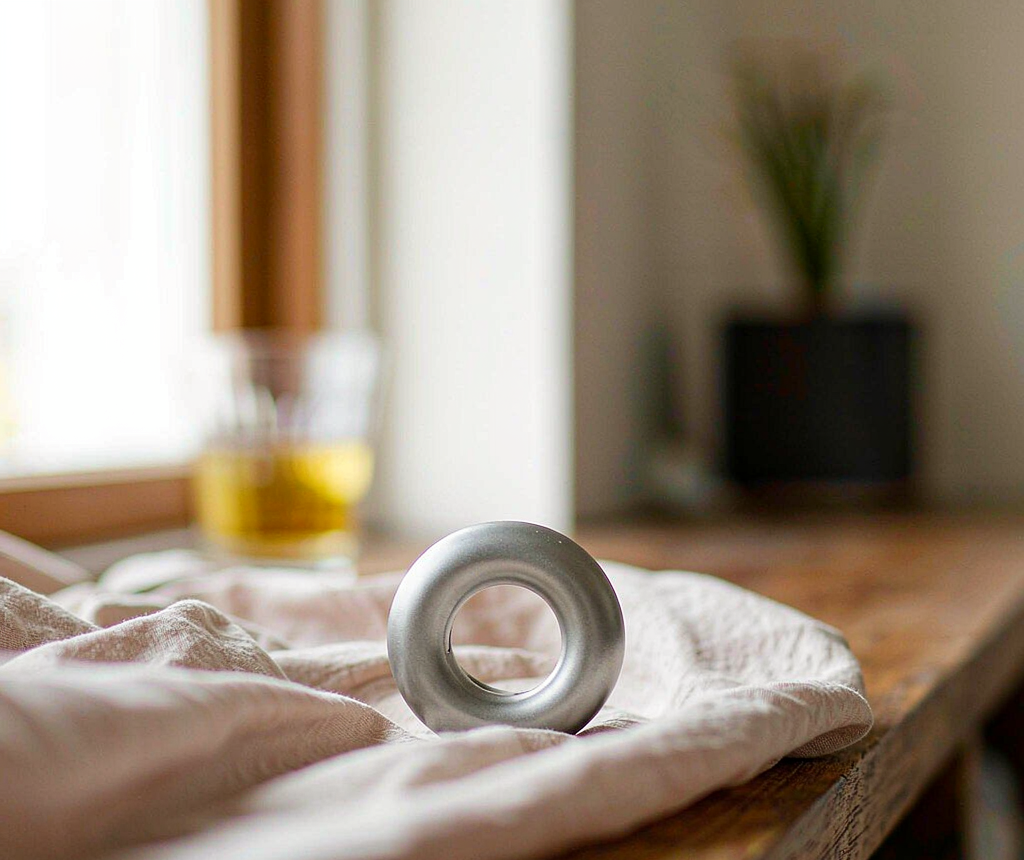
It records bodily signals over time, rather than a value that can be read directly
I. A conversation on the subway
On a crowded morning subway, two young women stood side by side. One held her phone up to her companion, a silver-gray ring-shaped device on her wrist. The screen displayed a spectrum-colored arc labeled “Luteal phase, day 21.”
“Look, it says I am in my luteal phase these days, so feeling low is normal, and I should do more recovery training.” She paused, then added, “It also says my stress is a bit high.”
Her companion leaned over: “Is it accurate?”
“It should be. It keeps measuring my temperature and things.”
Then the companion asked what I consider a crucial question: “So is it measuring the actual hormones in your body?”
The woman holding the phone went quiet for about two seconds, then said, “…I do not know. Anyway, it says luteal phase.”
Those two seconds of silence contain everything this article wants to explore.
59%
Approximately this share of wearable users are women in publicly released manufacturer data—a direct reason manufacturers are investing in women's health
94.1%
The cycle-phase identification accuracy reported for one wrist-worn hormone-monitoring device; manufacturer-released data whose study design and population require scrutiny
II. What has changed: from manually tracking cycles to automatic phase identification
2.1 First generation: a calendar dressed as science
Earlier period apps were essentially calendars plus algorithms. You entered the first day of your last period, and the app projected forward using an average cycle length to tell you “your next period is expected on this date” and “this is your current cycle day.”
These tools are useful for recording and reminders, but have a fundamental limitation: they assume your cycle is regular and apply the same average model to everyone. For people with irregular cycles, polycystic ovary syndrome, or perimenopause, that assumption is precisely what fails. The people most in need of understanding are therefore the easiest to mislead with this model.
2.2 Second generation: adding physiological signals, moving from calculation to recognition
Next came changes in sensors. Devices began continuously collecting multiple physiological signals: nighttime skin temperature, resting heart rate, heart-rate variability, respiratory rate, sleep architecture, activity, and more.
The principle is not mysterious. During the menstrual cycle, progesterone rises after ovulation, producing a small increase in basal body temperature, usually on the order of 0.2–0.5°C, with large individual differences. Continuous nighttime temperature collection could theoretically reveal a temperature step, allowing inference that ovulation may have occurred.
This is genuine progress. It shifts the basis of judgment from “calendar calculation” to “observation of physiological signals,” making it more meaningful than a pure calendar approach for people with irregular cycles.
2.3 Third generation: AI modeling—Oura's proprietary women's-health model
In April 2026, Oura launched its first proprietary model for women's health, claiming to model more than 50 biological signals to identify cycle phases, assess stress and recovery, and provide personalized recommendations. Women account for approximately 59% of its users, a direct commercial reason for increased investment in women's health.
One point needs clarification: this is a multisignal correlation model. Its output is an “inferred probability of a state,” rather than a “measured hormone concentration.” This distinction is not wordplay. It is the core of this article.
The device records automatically, but a notebook that also records how your body feels provides another kind of information
2.4 A fourth route: wrist devices that actually attempt to measure hormones
Different from “inferring from signals” is the attempt to perform direct biochemical monitoring at the body surface. A wrist-worn hormone-monitoring device, Clair, incubated by a Stanford-associated team, reported approximately 94.1% accuracy in cycle-phase identification and has been viewed as a landmark advance toward “noninvasive hormone monitoring.”
If this route succeeds, its significance would indeed differ from the preceding approach, because it obtains biochemical information rather than inferring a state label from temperature, heart rate, and similar signals. But note equally that the reported accuracy comes from the manufacturer's own study design. Its included population, reference standard, and performance in different physiological states, such as perimenopause, PCOS, or hormonal contraceptive use, all require independent validation. A gap usually exists between research data and the real-world performance of a consumer product.
Please distinguish these two technical routes:
One “uses multiple physiological signals to infer which cycle stage you may be in,” a model inference. The other “attempts to directly measure the concentration of a substance in bodily fluid,” a biochemical measurement. Their evidence levels, sources of error, and applicability to individuals differ, although consumer product pages present both with the same professional appearance.
2.5 Why capital and policy are increasing investment together
This is not accidental. The US ARPA-H launched a women's-health initiative worth approximately US$110 million, while several women's-health service providers completed large financing rounds. The industry narrative has shifted from “small consumer hardware” to “menopause healthcare infrastructure.” In other words, what is being sold is no longer just a recording tool, but a service system seeking entry into clinical pathways.
This shift deserves attention because such products will increasingly appear in consultation rooms, medical histories, insurance, and employer-benefit programs. When a tool moves from “something to look at yourself” to “something influencing clinical decisions,” its accuracy threshold is no longer that of consumer electronics.
III. Evidence review: what they can and cannot do
3.1 What they genuinely can do
First, collect continuously over the long term in real life. This is the devices' natural advantage over a single blood draw. A blood draw reflects one moment, while the device records trends over tens or hundreds of days. For someone whose symptoms have an unclear relationship to the cycle, these longitudinal data have real value.
Second, identify individual patterns. Some people may genuinely have a stable pattern of “poorer sleep in the second half of the cycle,” for example. Even when inferential, these individual observations may help with lifestyle adjustments.
Third, improve self-awareness and preparation for medical visits. Taking several months of data to a doctor conveys far more information than relying on memory to say “I feel something has been off recently.”
3.2 What they fundamentally cannot do
First, they do not measure hormone concentrations, in the case of the great majority of consumer devices. This must be emphasized repeatedly. “The algorithm says you are in the luteal phase” and “a blood test shows your progesterone is a particular value” are statements of different kinds. The former is a state label based on a statistical model; the latter is a measurement with units, a reference range, and a range of analytical error.
Treating the former as the latter has a specific consequence: you may assume your hormones are “normal” merely because the device has displayed one of four phases. A “luteal phase” display does not rule out luteal insufficiency, anovulation, or other endocrine abnormalities. It can display a label, but cannot answer “is my progesterone level sufficient?”
A common phrase on social media or product pages: “The device can monitor changes in your hormone levels.”
A more accurate description is that the device uses multiple physiological signals to
infer
which phase of the cycle you are in.
An inferred state ≠ a measured concentration.
The former's accuracy can be assessed as “whether it classified correctly”; the latter requires laboratory-medicine metrics. They cannot substitute for each other.
Units, reference ranges, and analytical error: this is what the word “concentration” actually entails
Second, applicability across populations has boundaries. Most algorithm-training data come from reproductive-age women with regular cycles. In perimenopause, cycles themselves become irregular, ovulation becomes unpredictable, and nighttime temperature patterns may be disrupted by hot flashes and interrupted sleep. A model premised on “regular cycles” becomes substantially less reliable in this population.
This is particularly relevant to this article's readers. Women over 40 are precisely the group these products most want to attract, and also the group in which algorithms most easily lose accuracy. If you are in perimenopause, the device's “cycle phase” label is less credible than it was when you were 30.
Third, they do not diagnose. The device outputs trends rather than diagnoses. No consumer wearable can replace history-taking, physical examination, laboratory testing, and imaging. This is determined by the level of information the tool provides, rather than by regulatory conservatism.
3.3 An easily overlooked methodological point
When you see a figure such as “94.1% accuracy,” ask three questions:
Compared with what? What was the gold standard: blood hormone tests or ultrasound-confirmed ovulation? Different reference standards give the accuracy figure entirely different meanings.
Tested in whom? Were participants healthy young women with regular cycles, or did the study include perimenopausal people and those with endocrine disease? The latter reflects real-world complexity.
Who conducted the research? Manufacturer-led studies and independent third-party validation occupy different evidence levels. This does not mean manufacturer data are untrustworthy; it means they need independent replication.
Three questions when reading product data
What was the reference standard? Who was included? Who performed the research? Without answers to these three questions, no accuracy figure can be directly extrapolated to you.
IV. Risks and controversies: two real categories of concern
4.1 The first category: conceptual confusion
This is the article's main concern.
On a product interface, an algorithmically inferred “luteal phase” label may look just as authoritative as a laboratory-measured “progesterone 12 ng/mL.” Users have no obligation to understand the technical distinction: communicating it is a responsibility of product design.
Specific risks include:
Risk one: equating “the device says normal” with “medically normal.” Seeing four phases cycle normally may cause someone with a real endocrine problem to delay care. Such delays have tangible costs for menstrual irregularity, abnormal bleeding, and menopausal-transition symptoms.
Risk two: treating device suggestions as medical advice. Prompts such as “do more recovery training” and “pay attention to nutrition” are general lifestyle guidance. The device does not have your history, medication information, or knowledge of whether you use drugs or hormonal contraception affecting the cycle. These prompts cannot replace a clinician's advice.
Risk three: anxiety in reverse. Some users become overly invested in data, checking scores daily, worrying over a “low recovery score,” or doubting their bodies because a “cycle prediction was wrong.” A device meant to reduce uncertainty becomes a new source of it.
4.2 The second category: data issues
Cycle data are not ordinary data. They can reveal or allow inference about pregnancy, menstrual abnormalities, endocrine disease, sexual-activity patterns, mood, and sleep.
When these data are uploaded to the cloud, privacy boundaries become concrete questions:
Where are the data stored, for how long, and who can access them? Find explicit answers in the privacy policy instead of relying on a product page saying “we value your privacy.”
Will they be used to train models? Many services state that data may be used to improve algorithms. That means your physiological data may become part of someone else's model. Confirm beforehand whether this can be switched off and whether doing so affects functionality.
Is there commercial sharing? Pay special attention to data flows for products involving employer benefits or insurance partnerships. The extent to which use in such settings is genuinely “voluntary” deserves questioning.
Is there cross-border transfer? Data-protection rules differ by jurisdiction, an especially important issue for cross-border services.
One firm boundary
The device records long-term data about your body. Never make device data your only source of health information, and never delay care because it “looks as if everything is normal.” Symptoms should trigger a medical visit, not scores.
4.3 An honest assessment of the “women's-health technology” industry
Two things can be true simultaneously:
On one hand, this field genuinely fills a long-standing gap. Women's physiological data have been neglected in medical research for decades, especially in perimenopause. Funding, technology, and products entering the field are, overall, progress.
On the other hand, “women's health” is also among today's most commercially attractive narratives. As capital arrives, product marketing can extend further than the evidence supports. The most effective thing you can do as a consumer is evaluate “monitoring” and “diagnostic” capabilities separately, while accepting the value of the former. It is already useful without pretending to be the latter.
V. Practical advice: how to get value from using it
Three principles for using it as a trend-observation tool
1. Use it to identify patterns, not reach conclusions. If several continuous months of data reveal a pattern, such as “my sleep worsens in the second half of every cycle,” that is an observation worth recording. The next step is taking it to a doctor, rather than seeking the answer inside the device.
2. Bring the pattern to the consultation, rather than the device. Exporting a simple record of dates, symptoms, and cycle labels is more effective than pulling out your phone to show a spectrum chart. Doctors need readable time-series information, not a product interface.
3. State clearly what it does not replace. When starting to use it, write this sentence in your phone's notes: It does not measure hormone concentrations, diagnose conditions, or replace any investigation that should be done.
5.1 A privacy self-protection checklist
Four steps before registration
1. Find the “data use” section of the privacy policy, checking whether it includes “model training/product improvement,” and whether that use can be switched off.
2. Confirm data storage and cross-border transfer arrangements, particularly when the provider is registered overseas.
3. If connecting to an employer or insurance-related program, clarify the scope of data sharing first. If the terms do not explicitly state that “individual data will not be provided to the employer,” be cautious.
4. Enable two-factor authentication and regularly review authorized third-party applications. A compromised cycle-data account has consequences beyond privacy alone.
5.2 When you must put the device down and see a doctor
Situations where device data should not persuade you to “wait a little longer”
· Periods stop for more than 3 months, after excluding pregnancy
· Bleeding suddenly becomes much heavier, periods last much longer, or bleeding occurs between periods
· Pain affects everyday life
· Previously regular cycles become persistently irregular for more than 3 cycles
· Marked perimenopausal symptoms, such as hot flashes, night sweats, or mood swings, affect life
· No pregnancy after 12 months of trying, or 6 months if over 35
· Device data remain seriously inconsistent with your actual bodily experience over a prolonged period
If any one occurs, the appropriate action is booking a consultation, rather than adding another device.
5.3 A special reminder for readers over 40
If you are in perimenopause, apply extra skepticism to the device's “cycle phase” labels.
The reason is straightforward: increased cycle variability and unpredictable ovulation define perimenopause. A model trained on regular cycles loses explanatory power at this stage. The device may still assign labels through a “follicular phase–ovulation–luteal phase” framework while your body follows a new path it has never encountered.
At this stage, the most reasonable use of device data is recording when symptoms occur, such as daily hot-flash frequency, sleep interruptions, and mood patterns, then bringing those records to a clinician to assess whether further investigation or intervention is needed.
Do not use it to decide “am I still in a normal cycle?” Perimenopause itself makes the concept of a “normal cycle” less applicable.
VI. Conclusion: let it do what it can do
Return to those two seconds of silence on the subway.
The companion asked this article's most important question: “Is it measuring the actual hormones in your body?”
For the great majority of consumer wearables, the answer is no. They measure temperature, heart rate, heart-rate variability, breathing, sleep, and activity, then use a model to infer which cycle phase you may be in. The inference can be fairly accurate in a suitable population, but it still is not the same thing as “a progesterone result from a blood test.”
This does not mean devices lack value. Quite the opposite:
Their value is long-term, continuous, real-life observation—something a single blood draw cannot provide. They can help identify patterns, record symptoms, and improve information quality at a medical visit.
Their boundaries are that they do not measure hormone concentrations, diagnose, or replace investigations. They provide an observation, rather than a conclusion.
The most appropriate use can therefore be stated in one sentence: use it to identify patterns, then take those patterns to your doctor.
If the device says luteal phase, you can note it. But if your body is telling you something different—bleeding has changed, cycles have become irregular, or symptoms affect life—trust your body and seek medical care. This takes priority
The subway will reach its station, the phone will lock, and the spectrum arc will refresh with tomorrow's data. Your body needs a doctor who can understand it and act on that understanding, rather than a more precise wristwatch.
References and further reading
· For general principles and limitations of wearable inference of menstrual-cycle phase from nighttime skin temperature and similar signals, consult reviews in menstrual physiology and digital health. Both observational and validation studies exist, and model accuracy depends on the population.
· Oura launched a proprietary women's-health model in April 2026, using more than 50 biological signals; approximately 59% of its users are women. Manufacturer-released information.
· Clair, a wrist-worn hormone-monitoring device incubated by a Stanford-associated team, reported cycle-phase identification accuracy of approximately 94.1%. Manufacturer-released research data requiring independent validation.
· The US ARPA-H launched a women's-health initiative worth approximately US$110 million. Public policy information.
· For general principles concerning wearable-data privacy and cross-border transfers, consult data-protection rules in the relevant jurisdictions and the provider's privacy policy.
The manufacturer data cited in this article are identified as such; consult the original public materials for precise figures.
This article is health education and does not constitute individualized diagnostic or treatment advice. Products and technologies are mentioned only to explain principles, without recommendation or endorsement of any brand or product. Wearables are health-trend monitoring tools rather than diagnostic devices, and their outputs cannot replace medical examinations, laboratory tests, or professional diagnosis. Consult a qualified healthcare professional about symptom assessment, investigation choices, and treatment decisions. Any adjustment to medication or hormone-related treatment must be decided by the treating physician after individual assessment.
Read the source material
The original archive manuscript is restored above. These additional references offer context; their inclusion does not constitute medical validation of every original claim. Clinical and regional terminology review are pending.
A good question starts a conversation.
Explore a related editorial discussion. Reading is open to everyone; posting and replying require a free reader account.
More from the library
 Digital health · 10 MIN READWearables, Measurements, and Meaning: Women’s Health Data Across the Life Course↗
 Digital health · 16 MIN READAI and Digital Technology in Women’s Menopause Health Management: An In-Depth Research Report↗
 Body awareness · 14 MIN READEmbracing My Body Signals: The Body Awareness Movement↗