World Menopause Day Beyond a Theme: Ten Years of Priorities and Unfinished Work
An annual theme can bring neglected concerns into view. Lasting value depends on accessible information, care and support throughout the year.
In this article
I. What exactly is World Menopause Day?
October 18 is World Menopause Day each year, and October is commonly used for menopause-related public-health advocacy. The International Menopause Society (IMS) initiated the day in 2009, with support from organizations including the World Health Organization; check IMS’s official pages for specific partnerships and annual resources. Its public-health aim is straightforward: improve awareness so women and healthcare professionals can discuss symptoms, risks, and available support earlier.
Many people assume October 18 is just a reminder to look after their health. It is better understood as an annual entry point into a subject. Depending on the theme, IMS publishes white papers, fact sheets, patient guides, or posters; the formats vary between years. A white paper or review brings together existing evidence, controversies, and questions for discussion. It remains neither an individual diagnosis nor a prescription.
The annual theme therefore helps set the direction of global menopause advocacy. A substantial evidence review and educational materials suitable for community groups or clinic walls often accompany it. The ten themes from 2017–2026 reflect changing international priorities and, in turn, what we may have overlooked. Reading them together as an index to a personal health-awareness checklist can be more useful than considering one year alone.
Guide to this article:
II. Ten-year overview · III. Three patterns across the years · IV. Achievements and unfinished work · V. Conclusion · VI. Checking the public narrative against evidence.
II. Ten years of themes, 2017–2026
| Year | English theme | Theme explained | Focus in one sentence |
|---|---|---|---|
| 2026 | Chronic Pain At Midlife | Chronic pain in midlife/perimenopause | Recognizing and responding to neglected long-term pain, including musculoskeletal and pelvic pain |
| 2025 | Lifestyle Medicine | Lifestyle medicine | The evidence for nutrition, exercise, sleep, and stress management as nonpharmacological care |
| 2024 | Menopause Hormone Therapy | Menopausal hormone therapy, MHT | Clarifying who may use MHT, how, and how benefits and risks are balanced |
| 2023 | Cardiovascular Disease | Cardiovascular disease | Long-term cardiovascular risk after estrogen withdrawal, an underestimated major threat |
| 2022 | Cognition and Mood | Cognition and mood | Mechanisms and responses to brain fog, memory changes, and mood fluctuations |
| 2021 | Bone Health | Bone health | Osteoporosis prevention and long-term management |
| 2020 | Premature Ovarian Insufficiency (POI) | Premature ovarian insufficiency | Recognition, support, and long-term follow-up for ovarian dysfunction before 40 |
| 2019 | Testosterone for Women at Midlife | Testosterone for midlife women | The role and limits of testosterone in desire, energy, and muscle maintenance |
| 2018 | Sexual Wellbeing after Menopause | Sexual health after menopause | Frequency, treatability, and destigmatization of female sexual dysfunction |
| 2017 | Perimenopausal Bleeding | Bleeding during perimenopause | Recognizing abnormal uterine bleeding and when irregularity needs assessment |
Source: IMS World Menopause Days Archive, 2011–2025. The 2026 theme reflects a partner-resource listing visible as of October 5, 2026; the final theme and poster remain subject to official IMS publication.
The table contains a great deal of information, but simply reading each year in order can leave little impression. A few themes deserve closer attention.
2024: making MHT itself the theme
Choosing MHT directly was an international effort to clarify controversy. The public and some healthcare professionals misunderstand what treatment involves, who may use it, and how it should be used. The white paper sought a balanced framework, neither idealizing nor demonizing therapy, but examining suitability, timing, preparation, and risk. For a general reader, encountering either “hormones cure everything” or “hormones cause cancer, never touch them” should prompt a return to that balanced discussion.
2023: cardiovascular disease, an unexpected leading threat for many women
The menopause transition often coincides with changes in blood pressure, lipids, fat distribution, and vascular function. Cardiovascular risk does not, however, arise from one hormonal decline alone. Age, smoking, glucose metabolism, previous disease, and lifestyle jointly determine it. Guidelines therefore emphasize comprehensive assessment rather than treating estrogen withdrawal as a self-contained causal chain.
2021 / 2020: bones and people missed by the usual narrative
Bone health in 2021 challenged the assumption that osteoporosis can wait until old age. Bone changes around and after menopause merit early assessment, but their speed depends on age, genetics, weight, medication, and underlying disease; one sentence cannot describe everyone. The 2020 theme focused before age 40. Women with POI need health management beginning earlier and continuing longer, yet are often overlooked in a generic menopause narrative.
2018 / 2017: making difficult-to-discuss concerns legitimate medical subjects
Sexual wellbeing after menopause reframed concerns long surrounded by shame as treatable medical issues. Perimenopausal bleeding helped distinguish irregularities requiring assessment from those that can initially be observed. Both themes returned hard-to-voice signals to their proper place in healthcare.
Two other years merit mention. Cognition and mood in 2022 addressed the brain fog, memory difficulties, and fluctuating moods many women describe: real concerns with a physiological dimension, not merely overthinking. Lifestyle medicine in 2025 and chronic pain in 2026 return attention to everyday areas of influence—food, activity, sleep, stress—and pain too long endured without help.
Considering these themes personally exposes an uncomfortable gap. Osteoporosis, cardiovascular risk, and chronic pain impose substantial burdens on Asian women, yet everyday menopause conversations often reduce the subject to hot flushes and temper. That is where information gaps begin.
III. Reading across the table: three developing patterns
Individual themes are beads; connecting them reveals the thread.
Pattern one: from individual symptoms to whole-person health
Themes around 2017–2019 centered on specific, visible difficulties: bleeding, sexual health, testosterone, and, in the broader sequence, POI. From 2020, the focus widens toward bones, cognition, mood, and cardiovascular health within long-term management. Lifestyle medicine in 2025 and chronic pain in 2026 ask how the whole person can live better. Across the decade, attention moves from treating a particular symptom toward quality of life over time.
Pattern two: long-term risks receive successive attention
Bones in 2021, cognition/mood in 2022, and cardiovascular health in 2023 show why management cannot stop at short-term symptoms such as hot flushes. These are advocacy priorities, not proof that long-term estrogen deficiency inevitably causes diseases across all three systems. Actual risk requires age, underlying conditions, results, and habits. Together, the themes offer women aged 40+ a checklist of what deserves continuing attention after menopause.
Pattern three: clarification in 2024, followed by a return to daily life
Making MHT the 2024 theme concentrated attention on controversy. The following two years considered what can be done beyond medication: lifestyle and pain management. The message is balanced. Hormone therapy is one option, not the only one; everyday habits and overall care provide the foundation. This accords with many clinicians’ approach: establish that foundation, then consider additional medical treatment.
Together, the patterns suggest that hot flushes alone should not determine whether the transition deserves attention. Long-term issues span bones, cardiovascular and brain health, mood, pain, and lifestyle. Many begin while the only obvious change seems to be slightly irregular periods.
The decade in one sentence:
The themes move from visible symptoms to less visible long-term risks and finally to everyday life within our influence. This aligns with learning about the body in advance, bringing records to appointments, and making decisions with clinicians.
IV. Achievements and unfinished work
Reading the themes together should do more than chart changing priorities. It should honestly ask what advocates have achieved and where their messages still fail to reach people.
Achievements: menopause receives a more accurate public place
First, the subject has broadened substantially. From bleeding in 2017 and sexual health in 2018 through bones, cognition, and cardiovascular disease in 2021–2023 to lifestyle and pain in 2025–2026, menopause has moved from a supposedly minor matter of periods stopping toward whole-life health management. At least in international discussion, reducing it to hot flushes has become harder.
Second, destigmatization has progressed. Sexual health, abnormal bleeding, and chronic pain now appear in white papers and public discussion as concerns worthy of care. Women have more social permission to describe difficulties than a decade ago.
Third, the framework has expanded from symptom management to prevention of long-term harm. Consecutive attention to bones, cognition, and cardiovascular health brings the next twenty or thirty years into view and challenges “just endure it.” Fourth, the field has confronted controversy: the balanced 2024 MHT paper openly addressed misunderstandings rather than avoiding debate. Fifth, multilingual papers, patient guides, and posters improve access to basic education, including in lower-income settings.
Unfinished work: the message still does not reach everyone
The most painful gap is implementation. Themes change and papers grow, while many women, especially in low-resource areas and some Asian communities, still know only about hot flushes. Information weakens along the route from a white paper to a local clinic and finally an individual. Women who have never heard that menopause and chronic pain may overlap illustrate the end of that chain.
Regional and resource inequalities remain. The 2024 white paper itself noted very limited access to basic interventions such as MHT in low-income countries. A good theme cannot overcome unavailable care: advocacy eventually requires accessible medicines, screening, and clinicians.
Other structural gaps remain. Annual rotation can prevent sustained work on issues such as POI or testosterone once their theme year ends. The framework is still heavily medical: disease, risk, and treatment receive more attention than lived experience, social roles, work, and caregiving; quality of life is often an endpoint rather than a starting point. Outreach to partners, families, employers, and policymakers is weaker, although support requires their participation. Finally, international themes translated into Chinese can become simplified, commercialized, or absorbed into anxiety marketing, turning informed choice into product recommendation.
A sentence to bring this together:
The decade’s achievement was to bring menopause into public health. Its unfinished work is reaching everyone. This review tries to connect that public attention to ordinary women, showing what has been recognized, what remains neglected, and what you deserve to know earlier.
V. Themes change; the central task does not
Many women of our generation entered menopause with little information. Across shifting themes—from bleeding and sexual health to lifestyle and pain—the continuing thread is to understand one’s body earlier, bring records to appointments, and make decisions with clinicians.
World Menopause Day speaks once a year; your body sends information daily. Rather than waiting for a theme that matches your concern, begin your own record. No white paper can provide that personal knowledge for you. Consider sharing this review with someone who says she can still endure her symptoms. Learning that a concern is common and deserves attention may prevent unnecessary detours.
Themes rotate, technology changes, and guidance develops. Your body still deserves careful, early understanding. The purpose is to return informed participation to each woman rather than frighten her.
VI. Advocacy themes are not clinical guidelines: checking the overview against evidence
A theme places an overlooked subject at the center of discussion; it is neither a diagnostic criterion nor a prescription. A poster can prompt questions but cannot answer which medicine you should take. Clinical decisions require symptom severity, age, time since menopause, history, medicines, results, and preferences.
| Advocacy subject | What existing guidance supports | What the theme cannot establish |
|---|---|---|
| MHT, vasomotor and genitourinary symptoms | NAMS 2022 and NICE NG23 recognize MHT as effective for troublesome hot flushes and related symptoms; suitability depends on personal risks, preparation, and reassessment | Everyone should start early, or asymptomatic people should use it to prevent cardiovascular disease, dementia, or aging |
| Bone health | Fracture assessment combines age, previous fragility fracture, bone density, falls, and secondary factors; selected people benefit from MHT or other osteoporosis treatment | Menopause or one density result alone determines medication; lifestyle replaces indicated high-risk treatment |
| Cognition, mood, and chronic pain | Symptoms are common around menopause but sleep, depression/anxiety, thyroid disease, medicines, musculoskeletal and neurological causes also matter | A physiological component proves the cause; persistent, progressive, or disabling symptoms need differential assessment |
| POI, bleeding, and sexual health | POI needs long-term bone, cardiovascular, psychological, and fertility counseling; abnormal transition bleeding, postmenopausal bleeding, and painful sex need clinical assessment | A theme replaces testing, or common symptoms never require care |
This also explains why the 2026 entry is labeled as the theme visible at the time of publication. If IMS has not issued the final poster or paper, uncertainty should remain explicit rather than being concealed with a homemade image. Keep the IMS archive, NAMS statement, and local guidance available, then return to the appropriate evidence when a concern arises.
Words such as increased risk, association, and possible improvement have different meanings. Cohorts identify population associations; randomized trials better assess intervention benefits and harms. A poster usually omits absolute risk, study population, and follow-up. Converting relative risk to personal certainty of disease, or an average effect to guaranteed benefit, exaggerates information during transmission. Readers need to know the study type, applicable population, and unanswered questions more than a louder conclusion.
Additional references and guidance: 1) The 2022 hormone therapy position statement of The North American Menopause Society. Menopause. 2022;29(7):767-794. doi:10.1097/GME.0000000000002028; 2) NICE. Menopause: diagnosis and management (NG23), current update; 3) Baber RJ et al. 2016 IMS Recommendations on women's midlife health and menopause hormone therapy. Climacteric. 2016;19(2):109-150. doi:10.3109/13697137.2015.1129166; 4) ESHRE. Guideline: premature ovarian insufficiency, 2024; 5) American Heart Association. Menopause Transition and Cardiovascular Disease Risk Assessment. Circulation. 2020;142:e506-e532. doi:10.1161/CIR.0000000000000912; 6) USPSTF. Hormone Therapy for the Primary Prevention of Chronic Conditions in Postmenopausal Persons. JAMA. 2022;328:1740-1746.
Reading note:
These references calibrate a public narrative, not diagnose or prescribe for an individual. Guidance changes, and indications and availability differ across countries. Open the original sources and check versions before publication.
Appendix: World Menopause Day materials, 2017–2026
The embedded images come from official IMS pages, official society mirrors such as the Australasian Menopause Society, or trustworthy archives of those original files. File type, year, theme wording, and IMS marks were checked individually. Verified materials are included for 2019 and 2021–2025. Verifiable originals for 2020, 2018, and 2017 were not obtained; 2026 awaits final IMS publication. Homemade substitutes are not used. Some 2019 and 2022–2024 materials are banners or first pages of patient information sheets; they are labeled annual materials rather than passed off as single-page posters. Check original reuse conditions before using images.
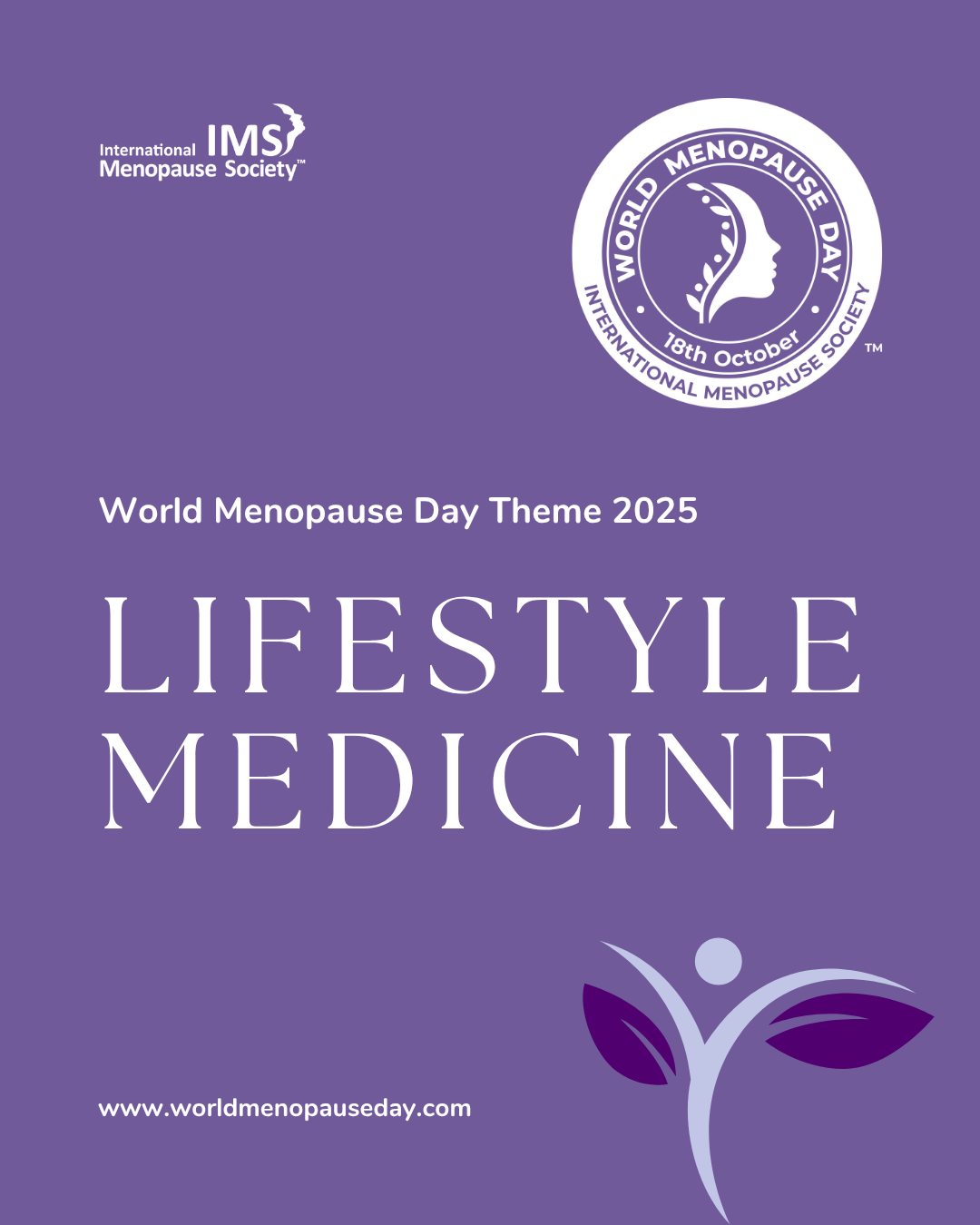
2025 · Lifestyle Medicine; from the Australasian Menopause Society’s official WMD page, identified as IMS annual-theme material · Official IMS original
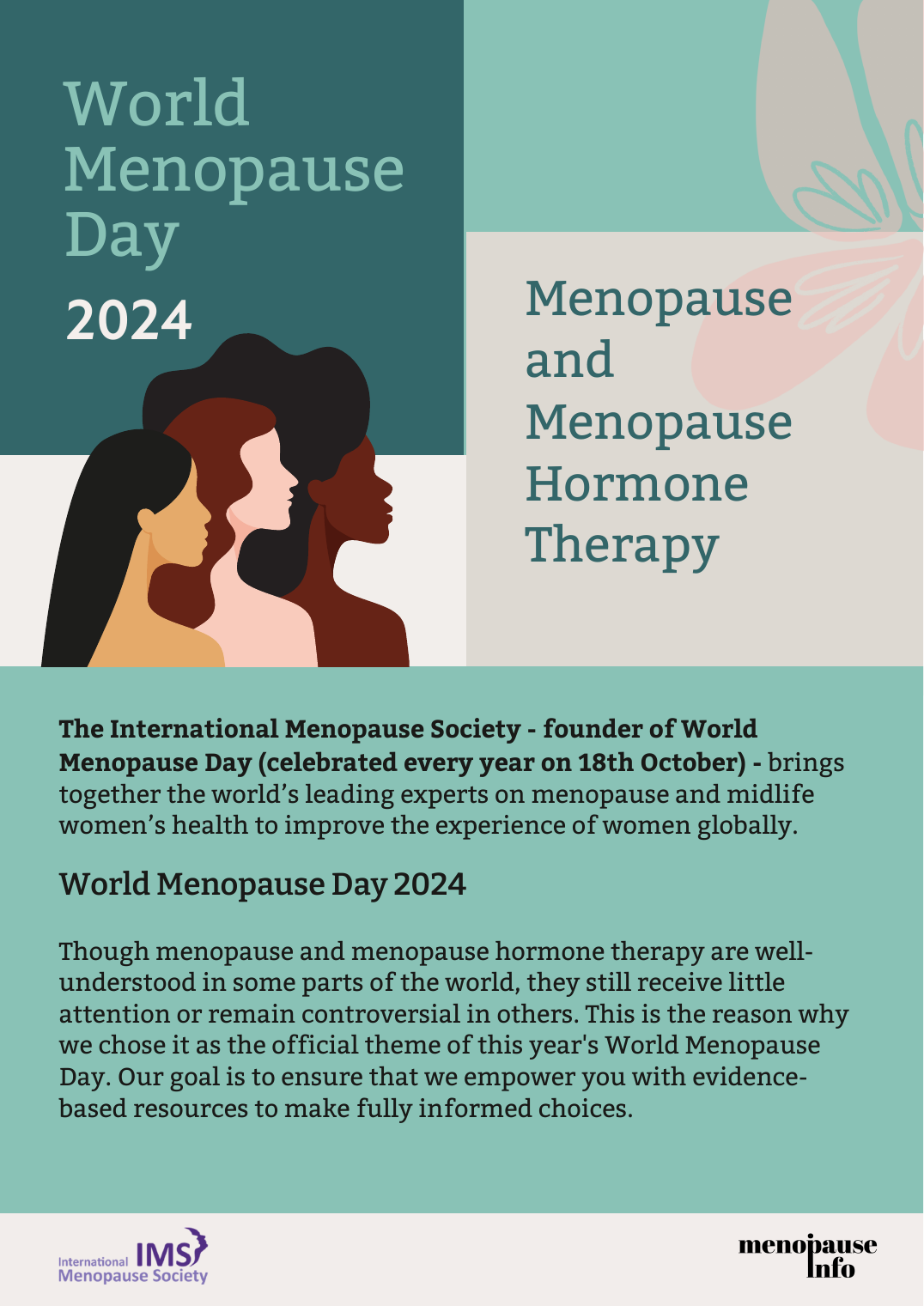
2024 · Menopause and Menopause Hormone Therapy; official file mirrored by the Australasian Menopause Society · Official IMS original
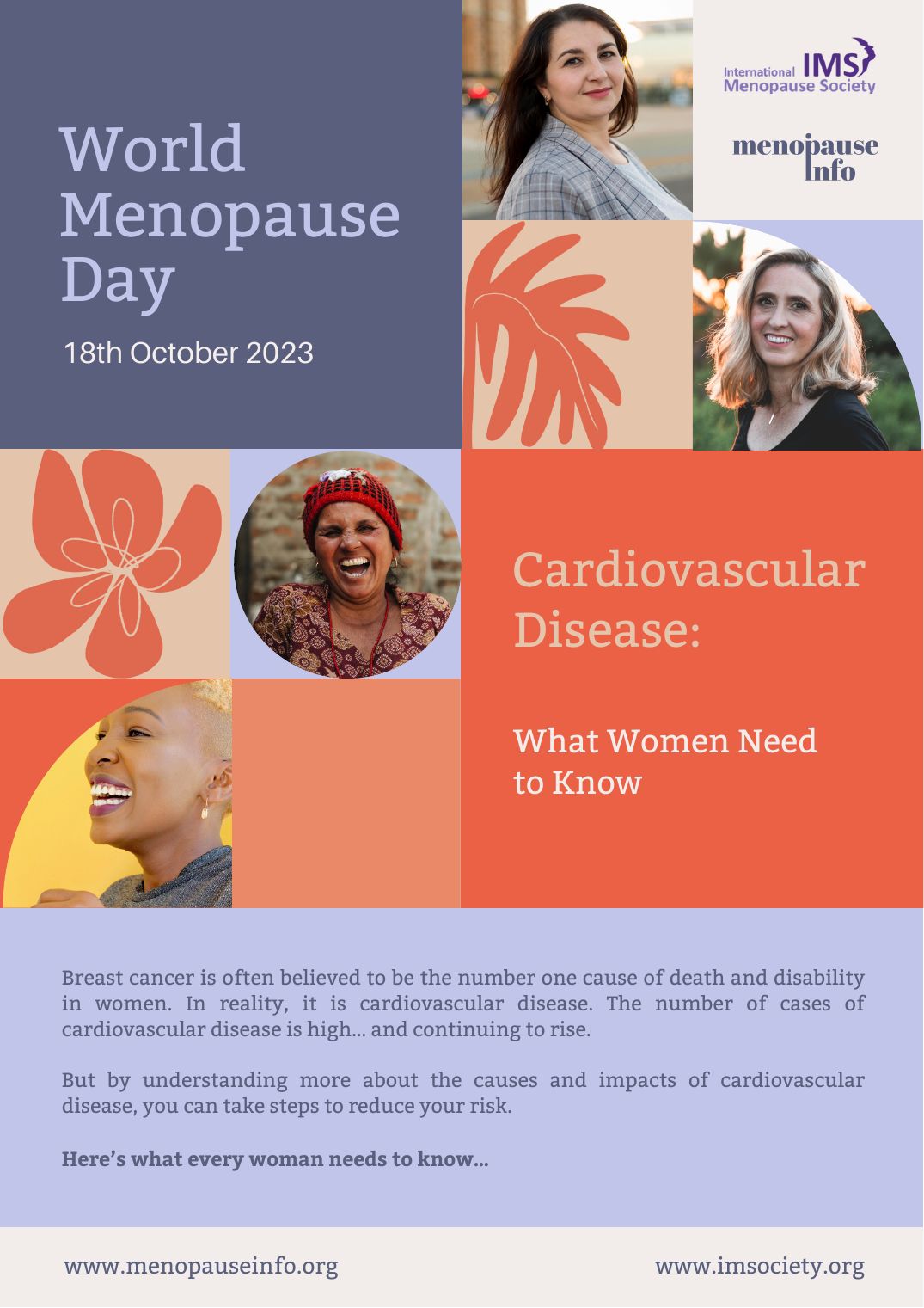
2023 · Cardiovascular Disease; official file mirrored by the Australasian Menopause Society · Official IMS original
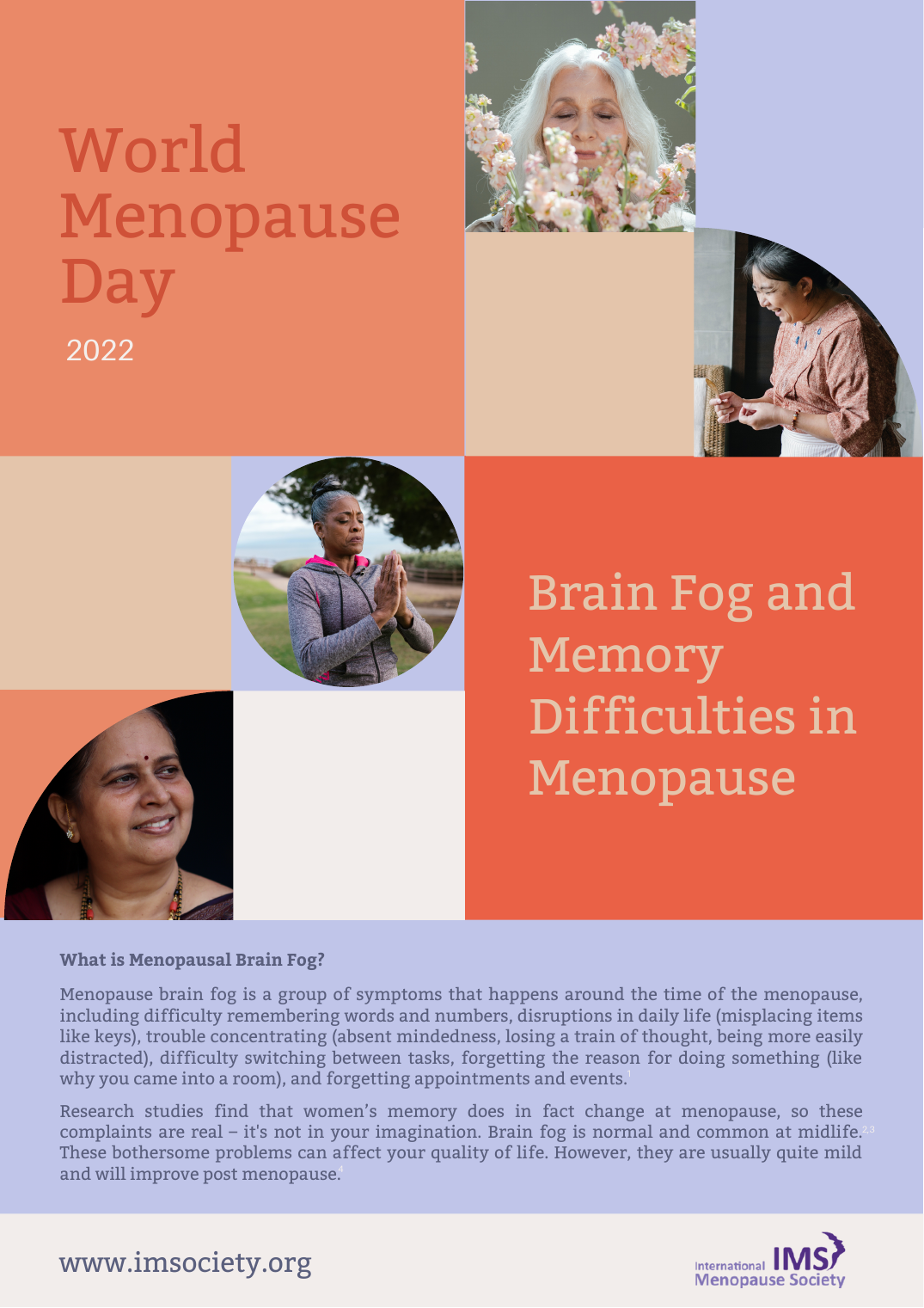
2022 · Brain Fog and Memory Difficulties in Menopause; International Menopause Society, obtained through Arquivo.pt / Australasian Menopause Society mirrors · Official IMS original
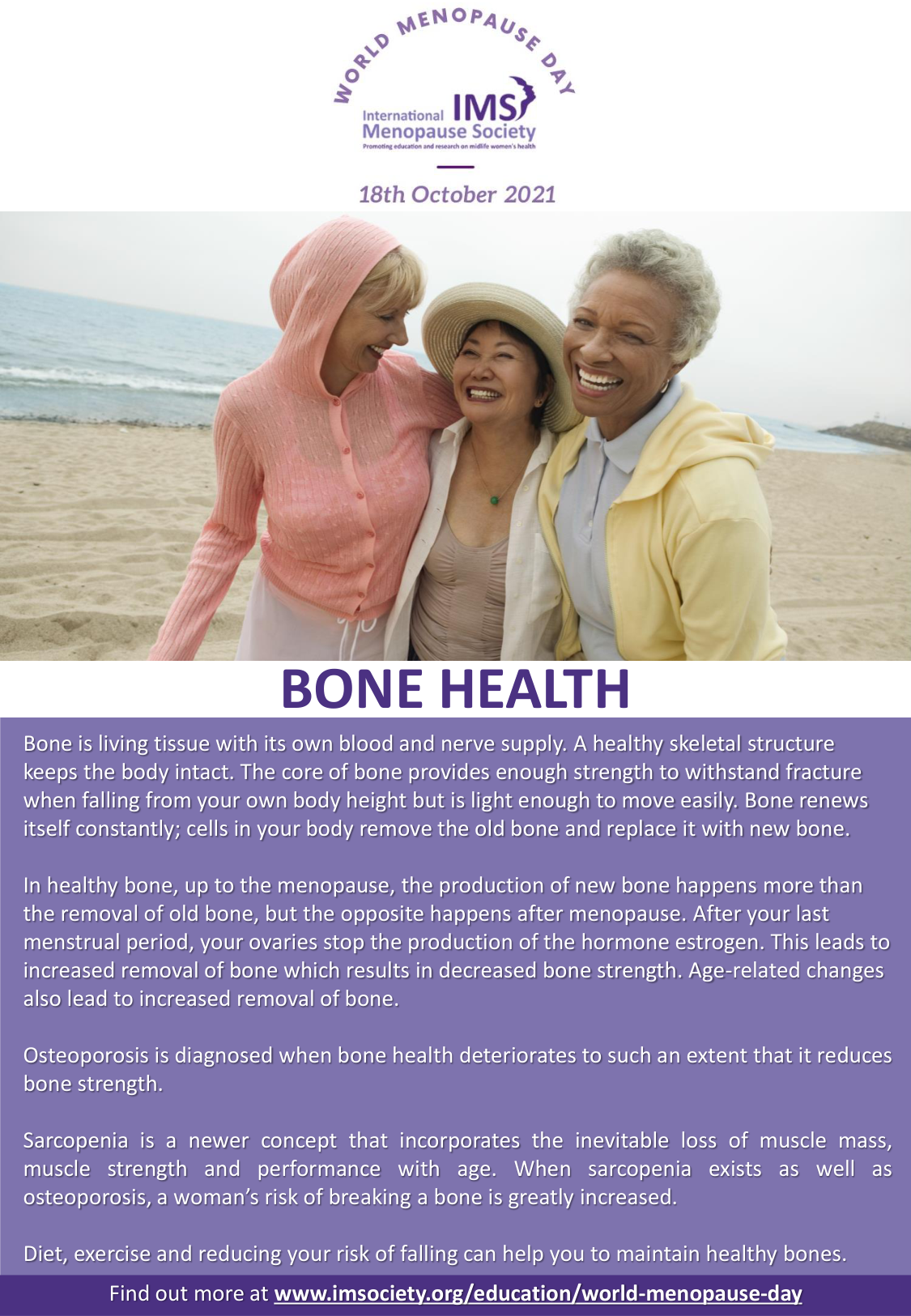
2021 · Bone Health; International Menopause Society, obtained through the Australasian Menopause Society mirror · Official IMS original
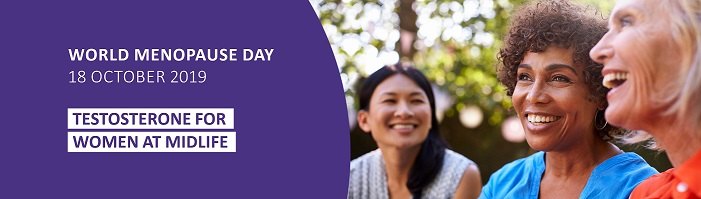
2019 · Testosterone for Women at Midlife; IMS 2019 WMD page, retrieved through Arquivo.pt · Official IMS original
Official-source index
| Year | Theme | Status and verification route |
|---|---|---|
| 2026 | Chronic Pain At Midlife | Theme listing and final poster await official IMS confirmation as of October 5, 2026 · IMS WMD Archive |
| 2025 | Lifestyle Medicine | Verified annual material embedded above · Annual source |
| 2024 | Menopause Hormone Therapy | Verified annual material embedded above · Annual source |
| 2023 | Cardiovascular Disease | Verified annual material embedded above · Annual source |
| 2022 | Cognition and Mood | Verified annual material embedded above · Annual source |
| 2021 | Bone Health | Verified annual material embedded above · Annual source |
| 2020 | Premature Ovarian Insufficiency | Verifiable original not obtained as of October 5, 2026; no homemade substitute · IMS WMD Archive |
| 2019 | Testosterone for Women at Midlife | Verified annual material embedded above · Annual source |
| 2018 | Sexual Wellbeing after Menopause | Verifiable original not obtained as of October 5, 2026; no homemade substitute · IMS WMD Archive |
| 2017 | Perimenopausal Bleeding | Verifiable original not obtained as of October 5, 2026; no homemade substitute · IMS WMD Archive |
“Verifiable original not obtained” describes the files available for this compilation, not proof that IMS did not publish material that year. Consult official archive and annual pages.
Information sources
IMS World Menopause Days Archive, themes from 2011–2025, including 2024 MHT, 2023 cardiovascular disease, 2022 cognition/mood, 2021 bone health, 2020 POI, 2019 testosterone, 2018 sexual wellbeing, and 2017 perimenopausal bleeding.
Background to World Menopause Day: October 18 each year; IMS releases white papers, patient guides, posters, fact sheets, and other advocacy resources in formats varying by year.
Chronic Pain At Midlife for 2026: a theme listing visible in a partner-resource database as of October 5, 2026; the final theme/poster remain subject to IMS publication.
Scope and disclaimer:
This is an educational review of publicly available themes, not medical diagnosis, treatment advice, or endorsement of any therapy or product. MHT is discussed as background. Follow local guidance and consult a qualified clinician for individual decisions. This publication sells no products.
Compilation current to October 5, 2026. Subsequent official IMS publication governs the 2026 theme/poster; use newer versions if wording, translation, or materials change. Only verified IMS originals are embedded; other years retain official archive references without homemade replacements.
Read the source material
- International Menopause Society: World Menopause Day
- World Health Organization: Menopause
- NICE: Menopause identification and management NG23
The original archive manuscript is restored above. These additional references offer context; their inclusion does not constitute medical validation of every original claim. Clinical and regional terminology review are pending.
A good question starts a conversation.
Explore a related editorial discussion. Reading is open to everyone; posting and replying require a free reader account.
More from the library
 Community & information · 14 MIN READWomen Overseas Are Speaking Openly About Menopause. Why Are We Still Enduring It in Silence?↗
 Community & information · 13 MIN READMenopause Communities Across Borders: Miror, India, and the Cost of Silence↗
 Community & information · 13 MIN READInternal Wellness: Turning Real Health Needs into Evidence-Based Care↗