Reading The New Menopause: When Menopause Is No Longer Something to “Just Endure”
From describing symptoms to interpreting studies and commercial recommendations, preserve both readers’ questions and the limits of evidence.
In this article
Reading The New Menopause: When Menopause Is No Longer Something to “Just Endure”
A close reading of Mary Claire Haver's 2024 signature work—why she says “menopause is inevitable; suffering is not”
Written 2026-10-31 · Intended readers: women 40+, family members, and clinicians interested in evidence-based women's health
On a waiting-room bench outside a clinic, two women in their early fifties lower their voices and exchange their confusion: “I eat the same as a few years ago, but I can't get rid of the fat around my waist”; “I wake up hot three or four times a night, and during the day my brain feels like it is full of paste.” They do not know that both may be describing the same thing—the body undergoing a systemic reorganization after estrogen withdrawal, long underestimated by medicine. Mary Claire Haver's The New Menopause: Navigating Your Path Through Hormonal Change with Purpose, Power, and Facts (2024) aims to explain it for them, and for more women who “feel something is wrong, but no one takes it seriously.” These are my reading notes after reading it cover to cover, approximately five thousand Chinese characters, organized into eight sections.
One
One. Who wrote it, and why is it worth reading?
Mary Claire Haver is a US board-certified obstetrician-gynecologist, a menopause practitioner certified by The Menopause Society (formerly the North American Menopause Society), and a certified culinary medicine specialist. She also authored The Galveston Diet (2023). She has more than 7 million social media followers in total (over 2.3 million on TikTok alone), has been called the “queen of menopause” by The New York Times, and leads the movement she calls “Menoposse.”
The book's most persuasive quality is that its author is both a physician and a patient. She admits that during menopause she gained almost 20 pounds (around 9 kilograms), had hot flashes, poor sleep, brain fog, substantial hair loss, and dry skin—yet as a doctor she had previously only told patients to “eat less and move more.” The experience of being “missed by her own knowledge system” prompted her to research again and write this book focused on menopause itself, followed by the companion The New Perimenopause.
Her route to “breaking out” is also notable. She did not stop at the consultation room, but brought voices unheard there to social media. When millions of women discovered “it isn't just me,” isolated individual experiences became a collective public issue. She joined with a group of around 20 menopause clinicians who are also working on the front lines and experiencing menopause, forming “Menoposse”: endorsing each other, sharing literature, and collectively challenging outdated conclusions. This threefold alliance of “physicians + patients + community” is the underlying reason the book became a phenomenon: it organized confusion among women long left without a voice into language people could discuss.
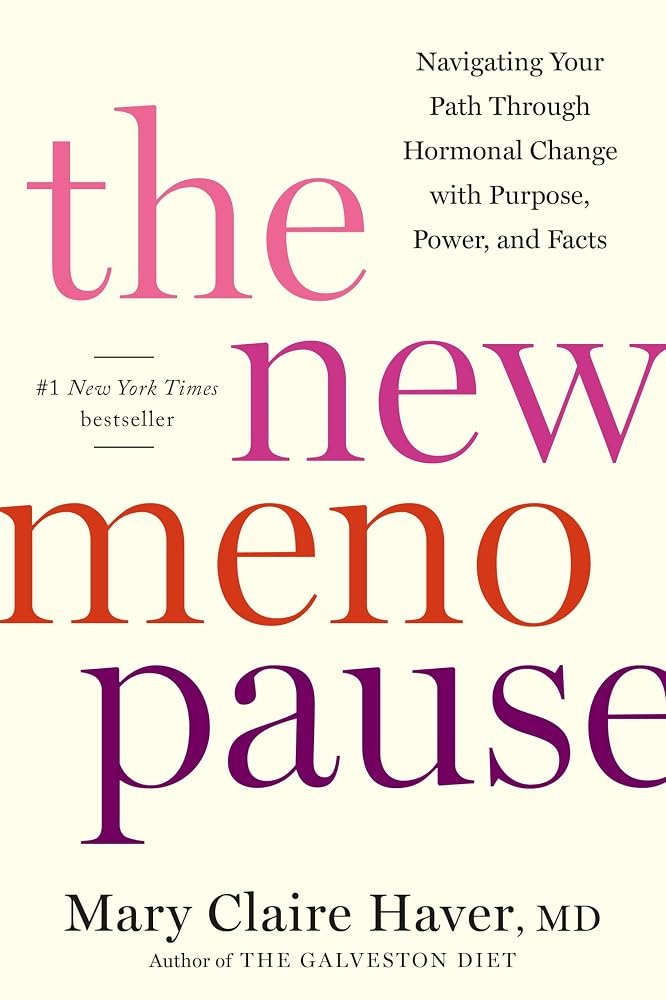
The New Menopause · Mary Claire Haver, MD · #1 New York Times Bestseller · Penguin Random House, 2024
The New Menopause was published by Penguin Random House in 2024, immediately reaching number 1 on The New York Times bestseller list. It was Haver's breakout work: first came The New Menopause, about menopause itself, followed by the 2026 book The New Perimenopause, focused on the “prelude” of perimenopause. Together, the two form a complete narrative from “the zone of chaos” to rediscovering the body.

Night view of Astana, Kazakhstan | Photograph:
About Kazakhstan (source page)
,
Image from the source website (verify permission before reposting or commercial use)
The fundamental reason to read it is that menopause is among the most persistently neglected and deeply misunderstood stages of women's health. Haver's direct motivation was to correct the nationwide fear of hormone therapy following misinterpretation of the 2002 Women's Health Initiative (WHI), which she calls “one of the worst cases of scientific data being misinterpreted.” That misreading caused hormone-therapy use to fall nearly 50% within six months, leaving an entire generation confused. What she wants to do is return the “right to be informed” to patients: you may choose not to use treatment, but you should not be deprived even of the chance to “discuss it seriously.”
For Chinese-language readers, this meaning is sharper still: in our culture, “enduring” is often packaged as a virtue, while menopause-related difficulties are readily dismissed as “a bad temper,” “overthinking,” or “everyone is like this at your age.” This book offers a language of facts to translate vague discomfort into something “discussable and addressable.” It does not decide for you, but gives you confidence to sit down with a clinician and ask clearly about the problem.
Two
Two. The book's three-part framework
The book has three parts, moving clearly from “why it has been ignored” to “what can be done now”:
- Part one: the story of menopause medicine—how medicine has long minimized and denied women's menopausal symptoms; real health risks accompanying estrogen decline (cardiovascular disease, osteoporosis); the history and misinterpretation of WHI 2002; and systemic gaps in menopause research and education.
- Part two: understanding menopause—the three stages of reproductive aging (perimenopause, menopause, postmenopause), estrogen's protective roles in cardiovascular health, insulin sensitivity, and cognition and the consequences of its withdrawal; a systematic guide to menopausal hormone therapy (MHT, commonly called HRT in the US), its formulations, benefits, side effects, and contraindications; an emphasis on individualization, with a “consultation preparation checklist.”
- Part three: symptoms and solutions—a “Menopause Tool Kit” covering 70+ symptoms, plus lifestyle approaches (anti-inflammatory eating, resistance training, aerobic exercise, supplements such as Omega-3 and vitamin D while avoiding overreliance, sleep and stress management); ending with the “Menopause Mandate,” a declaration of the right to know one's options and the evidence behind them.
An efficient way to read it is to skip to the sections that match your questions: if symptoms are troubling you, go straight to the “toolkit” in part three; if you want to understand “why doctors did not mention hormones before,” part one is an antidote to historical misinterpretation; if you are deciding whether to start MHT, return to the benefit–risk discussion in part two. It is not a book to memorize from beginning to end, but a “consultation manual to look things up in as needed.”
Several figures are especially striking: she cites only 0.003% of federal funding going to menopause research in 2021; about 80% of internal-medicine residency graduates saying they did not know how to manage menopause; and only around 1300 certified menopause practitioners nationwide as of 2022-11, versus about 64 million women over 50. The gulf between supply and need is itself a form of structural neglect.

Baiterek landmark, Astana, Kazakhstan | Photograph:
The Astana Times (source page)
,
Image from the source website (verify permission before reposting or commercial use)
Three
Three. Several ideas that challenge assumptions
On reading it, the ideas that repeatedly challenge conventional wisdom point to a shared conclusion: menopause must be treated as a serious, systemic medical event, rather than a destiny to “endure and get over”—that is the collective unconscious the book most wants to change.
1
Menopause is not “a few hot flashes,” but a systemic metabolic and inflammatory reorganization.
Estrogen withdrawal affects cardiovascular health, insulin sensitivity, cognition, bones, joints, skin, and even mood—“menopause is far more than hot flashes.” Treating it as just a few months to “endure” substantially underestimates it.
2
“Menopause is inevitable; suffering is not.”
This is the book's most frequently quoted sentence and its central point: symptoms deserve to be taken seriously and treated.
3
Misinterpretation of WHI 2002 caused around 20 years of “overemphasizing risks and underestimating benefits.”
Most participants at the time were over 60 and years past menopause, yet the findings were extrapolated to every age group. The later “timing window” hypothesis revealed that “starting earlier is more beneficial”: starting MHT before 60 or within 10 years of menopause yields a more favorable benefit–risk ratio; later initiation, particularly with existing cardiovascular disease, has a different risk profile. Treating “one study” as “the whole truth” is the source of 20 years of confusion.
4
Estrogen is a “protective” hormone.
Research shows that among suitable populations, MHT is associated with fewer cardiovascular events, lower all-cause mortality, stronger bones, and fewer urinary tract infections. The book cites a study in the journal Menopause: women starting estrogen at age 50 may have up to 2 additional years of life expectancy, with annual all-cause mortality falling around 20–50%.
(Note: this is the framework cited by the author and needs interpretation in individual context; evidence for “extending life” is weaker than evidence for “relieving symptoms and protecting bones.”)
5
There are few absolute contraindications.
Many women are rejected for treatment based on an overly broad interpretation of “family history of breast cancer/cardiovascular disease” or “history of blood clots,” despite insufficient evidence. She emphasizes that truly absolute contraindications are rare; most people need individualized weighing, rather than blanket refusal.
6
Vaginal estrogen is a low-risk option for “almost every woman.”
Even well after menopause, low-dose vaginal estrogen can protect the genitourinary tract, improve dryness, and reduce recurrent infections, with essentially no systemic risk—an underused “high-value option.”
7
Systemic research and education gaps are the root of “being ignored.”
The figures above—0.003% of funding, 80% of residents lacking confidence, and 1300 certified clinicians—are not trivia, but an indictment. They explain why so many women cannot get care and are dismissed with a single sentence.
Four
Four. The symptom panorama and misdiagnosis
One of the book's most practical elements is a “toolkit” covering 70+ symptoms. In addition to familiar hot flashes and night sweats, it puts on the table many overlooked symptoms previously blamed on “overthinking”:

City square, Astana, Kazakhstan | Photograph:
About Kazakhstan (source page)
,
Image from the source website (verify permission before reposting or commercial use)
More precisely, this toolkit is not a “symptom list,” but a reference manual organized as “symptoms → responses.” The book typically first explains in one or two sentences what is happening behind a symptom (which tissues are affected by estrogen withdrawal), then provides a tiered response—first tier is often MHT (addressing estrogen deficiency itself), second tier is nonhormonal medication (such as NK-3 receptor antagonists for vasomotor symptoms or SSRIs/SNRIs), and third tier is lifestyle and self-care (anti-inflammatory eating, resistance training, sleep hygiene, pelvic-floor exercises). It translates “what is wrong with me?” into “which level can I act on?”—one of its most practical features.
- Vasomotor symptoms: hot flashes, night sweats, waking at night—the underlying issue is estrogen fluctuations disrupting the hypothalamic temperature-control center;
- Joints and muscles: aching and stiffness, often misdiagnosed as orthopedic problems. She cites a Duke University study of “frozen shoulder”: shoulder joints have many estrogen receptors, and estrogen is an anti-inflammatory hormone for bones and joints; withdrawal increases risk;
- Brain and mood: brain fog, reduced attention, anxiety, even depression, and mood changes;
- Body surface and metabolism: hair loss, dry skin, weight gain (especially abdominal and visceral fat), insulin resistance;
- Sleep and genitourinary / sexual health: insomnia, vaginal dryness and pain, recurrent urinary tract infections, changes in libido.
Why are there so many, and why are they so scattered? Because estrogen receptors are distributed throughout the body—in vessel linings, heart muscle, the pancreas, bones, joint synovium, brain tissue, skin, and the urethral and vaginal mucosa. As this “system-wide anti-inflammatory and protective umbrella” slowly closes, different tissues each sound their own alarms, so symptoms seem “completely unrelated.” Understanding this explains why menopause care requires a whole-body perspective rather than “treat whatever hurts”; and why reassurance such as “sigh less and exercise more” cannot treat systemic hormonal withdrawal.
A quick look at the toolkit
- Hot flashes and night sweats: MHT is first line; for those who cannot or do not wish to use hormones, an NK-3 receptor antagonist (such as fezolinetant) or low-dose SSRI/SNRI can be a nonhormonal alternative; avoiding triggers (alcohol, spicy food, overheated environments) and physical cooling can help as additional measures;
- Vaginal dryness / recurrent urinary infection: low-dose vaginal estrogen is preferred and safe long term; combine with lubricants and water-based moisturizers;
- Sleep and mood: MHT (especially progesterone) often improves sleep; with significant anxiety or depression, psychological support or medication may also be needed alongside MHT—do not just endure it, and do not increase medication on your own.
Note: This summarizes the approach corresponding to the book; a physician must make specific medication decisions after considering your history and contraindications.
Misdiagnosis follows a highly consistent pattern: symptoms are long dismissed as “all in your head,” “normal at your age,” or “something to just endure.” Haver responds that “validation is not comfort, but the first step in diagnosis and autonomy”—first acknowledge that symptoms are real, then assess and address them. She repeatedly reminds readers: your discomfort is not oversensitivity; it is a physiological event that can be named, measured, and addressed.

Pamir highland lake, Tajikistan | Photograph:
Ministry of Foreign Affairs of Tajikistan (source page)
,
Image from the source website (verify permission before reposting or commercial use)
One notable controversy is worth mentioning: a prominent journal once proposed an “empowerment model” arguing that “most women can go through menopause without medical care.” Haver and around 20 menopause clinicians in “Menoposse” coauthored a rebuttal in Ms. Magazine, using substantial literature to point out that its data and conclusions were outdated and underestimated symptom burden. The debate over the “right to know about menopause” appears to be a disagreement of opinion, but fundamentally concerns who controls the evidence and the right to speak about it.
Five
Five. Positions on MHT and lifestyle
The book's position on menopausal hormone therapy (MHT, commonly called HRT in the US) can be summarized as “informed choice, individualization, shared decisions.”
One point can be easily conflated: MHT discussed today is not completely the same thing as the “traditional HRT” demonized two or three decades ago. Modern treatment has evolved in formulations (more use of transdermal patches/gels to replace some oral options), progestogen selection (more favorable endometrial protection), and timing of initiation. Study design has also shifted from “generalize across the whole population” toward “stratify by age and years since menopause.” The book is clear that MHT is not a “fountain of youth”; it improves issues arising from estrogen deficiency but does not directly reverse already established atherosclerosis. Setting expectations appropriately makes agreement with a clinician easier and avoids both extremes of “deification” and “demonization.”
Boundaries of MHT
Benefits and risks must be assessed individually; formulations differ—transdermal (patches/gels) treatment has lower venous thrombosis and some cardiovascular risks than oral treatment, so it is prioritized for high-risk populations; there are contraindications and relative contraindications; and MHT is not only “for hot flashes”—in suitable populations it is also a long-term tool for bone, heart, and brain health. The final regimen should be decided together by the treating clinician and patient based on history, risk, and preferences.
For lifestyle, she extends the approach of The Galveston Diet, offering a practical foundation:
- Anti-inflammatory eating: more fruit, vegetables, whole grains, healthy fats, and Omega-3; reduce refined sugar and ultraprocessed food;
- Intermittent fasting + “fuel reset”: a macronutrient structure with a higher proportion of healthy fats, moderate protein, and fewer refined carbohydrates;
- Resistance training: preserve muscle and bone density, countering menopause-related muscle and bone loss;
- Aerobic and cardiovascular exercise: protect the heart and improve mood;
- Moderation with supplements: Omega-3 and vitamin D have evidence-based uses, but beware of treating supplements as “cure-alls”;
- Sleep and stress management: sleep hygiene, mindfulness, and yoga are invisible pillars of symptom management.
The value of these lifestyle recommendations is not “replacing MHT,” but “complementing MHT”: muscle and bone preserved by resistance exercise, and chronic low-grade inflammation reduced by anti-inflammatory eating, provide a foundation no drug can replace. Haver repeatedly emphasizes that these are not either-or choices, but different parts of one plan.
The connection with The New Perimenopause is natural: one book explains “menopause itself,” the other its “prelude of perimenopause”; the first answers “what is happening in my body and what options are available?” while the second asks “how do I identify and communicate during the zone of chaos?” I recommend reading the two alongside each other.
Six
Six. Alignment with the 2026 global guideline wave
It is interesting how closely Haver's call for “informed choice” matches three 2026 guidelines we reviewed earlier (ACOG, BMS-NICE, and ACP):

Valley lake and mountains, Tajikistan | Photograph:
Ministry of Foreign Affairs of Tajikistan (source page)
,
Image from the source website (verify permission before reposting or commercial use)
- MHT as first line for vasomotor symptoms—aligned with ACOG/ACP;
- Tiered nonhormonal options: NK antagonists and SSRIs/SNRIs for those unable or unwilling to use hormones—consistent with BMS-NICE/ACP;
- No support for routine treatment with phytoestrogens/herbs—consistent with all three guidelines;
- Timing window & transdermal preference: for high VTE/CVD risk (including BMI>30), prioritize transdermal use, consistent with the BMS-NICE 2026 update;
- Long-term vaginal estrogen is safe, and POI requires two FSH tests 4–6 weeks apart for confirmation—aligned with BMS-NICE/ACOG.
A concrete example of alignment: the 2026 BMS-NICE update says that those aged 45 and older can receive a clinical menopause diagnosis without blood tests, long-term low-dose vaginal estrogen is broadly safe, and transdermal treatment is preferred for high VTE/CVD risk (including BMI>30). These are not Haver's “personal opinion,” but consensus synchronized with global guidelines. Taking the book to a consultation effectively means bringing a question list already “endorsed by mainstream guidelines,” substantially changing the quality of clinician–patient discussion.
Haver's “right to know” and guideline emphasis on “shared decision-making” are two sides of one thing: put the evidence on the table, then make a decision that belongs only to you, together with someone who understands medicine.
Seven
Seven. What moved me most, and the book's boundaries
What moved me most was a reversal in a single sentence: even an obstetrician-gynecologist was missed by the training she had received. She says that “being overlooked” is itself harmful—not comfort, but the first step toward diagnosis and autonomy. When someone is repeatedly told “nothing is wrong, just endure it,” the first thing they lose is trust in their own body.
This also shows that better menopause care cannot rely only on patients “being braver,” but also on the system becoming “more capable”: more trained physicians, more welcoming clinical processes, and more honest clinician–patient discussions. The book hands the microphone to women, while the stethoscope remains with clinicians.
This publication's standing boundary statement:
This article is a book review and health education,
not diagnosis, treatment advice, or a recommendation for any product/brand
. Hormone therapy is consistently referred to here as
MHT
(called HRT in the US); specific regimens require a shared decision with the treating clinician based on your history, risks, and preferences. The constant focus is:
Informed choice + bringing records to consultations + shared decisions with clinicians
.
Also read critically: some “longevity/mortality” figures in the book and the promoted diet and supplements come from the author's commercial background. Check evidence quality with your clinician, and do not treat a book as a prescription. Reading is valuable because it gives you better questions to bring to a clinician, not because it decides on the clinician's behalf.
Eight
Eight. Recommendations for Chinese readers
Back to our context. Menopause-care resources remain unevenly distributed domestically and misunderstandings are common: some people “endure” everything, others “supplement randomly.” Based on this book, here are several practical suggestions:
- Keep a symptom diary: type, frequency, and effect on daily life—your “evidence” in a conversation with a clinician;
- Organize personal history: cardiovascular disease, thrombosis, family history of breast/ovarian cancer, and current medicines (especially anticoagulants and liver-related drugs);
- Find a clinician who understands menopause: consider gynecological endocrinology or specialized menopause clinics;
- Bring a question list: use these notes as a conversation draft, rather than a prescription, and proactively ask “what are my options, and what are the benefits and risks of each?”;
- Talk with family and coworkers: explain “I am experiencing a systemic change driven by hormones” and seek understanding rather than carrying it alone.

Snowy Pamir mountains, Tajikistan | Photograph:
Ministry of Foreign Affairs of Tajikistan (source page)
,
Image from the source website (verify permission before reposting or commercial use)
Menopause is not the end point of disease, but a physiological reorganization that deserves serious attention. What Haver wants to convey is not “everyone should use hormones,” but that you have the right to know what is happening and the right to participate in decisions about yourself.
In practical terms, in China specialist gynecological-endocrinology and menopause clinics in major tertiary hospitals are relatively well developed, while primary and county-level services remain scarce. Meanwhile, the supplement market has turned “menopause” into a business; phrases such as “estrogen supplementation,” “ovarian care,” and “reversing aging” mingle with genuine medical information and can easily mislead people. My recommendation is simple: use the book as a “question list and evidence draft,” and leave the final judgment to a qualified clinician. Especially for MHT, complete the assessment first (history, examination, and necessary blood tests and imaging) before discussing a plan. Never start on your own based on a post or a box of supplements. The prerequisite for an informed choice is information from trustworthy sources.
Alternative titles
Awei's alternative titles
- Reading The New Menopause: When Menopause Is No Longer Something to “Just Endure”
- Menopause Is Not Something to Endure: An Obstetrician-Gynecologist's “Manifesto for the Right to Know”
- 20 Years Delayed by Misreading WHI: Rethinking Hormone Therapy through The New Menopause
- 70+ Symptoms, One Toolkit: The New Menopause's Full Panorama of Menopause for Women
- “Menopause Is Inevitable; Suffering Is Not”: Reading Mary Claire Haver's The New Menopause
Sources
Sources and further reading (quick references for clinicians)
External evidence anchors for the book's central arguments: ① Women's Health Initiative (WHI) hormone-therapy trial, 2002 (JAMA)—source of early misinterpretation; ② “timing window/timing hypothesis,” Manson JE et al., 2013; ③ The Menopause Society's (formerly NAMS) 2023 MHT position statement; ④ a 2024 article in a prominent journal proposing an “empowerment model of menopause care,” and Menoposse's coauthored rebuttal (Ms. Magazine); ⑤ Duke University research on “frozen shoulder and estrogen receptors” (cited by Haver in interviews); ⑥ the three guidelines already reviewed by this publication: ACOG, BMS-NICE 2026, and ACP (see the eponymous WeChat public-account articles).
The book's citation about “life expectancy with estrogen started at age 50” comes from a study in Menopause. Please check the specific authors and year against the original and your evidence database; decisions on individual treatment should follow local guidelines and the treating clinician's judgment.
· This publication focuses on evidence-based health education and menopause for women 40+.
This article is a book review and health education,
not diagnosis, treatment advice, or a product recommendation
; hormone therapy is consistently referred to as MHT (called HRT in the US). Decide on specific regimens together with the treating clinician—
Informed choice + bringing records to consultations + shared decisions with clinicians
.
The cover is the original The New Menopause cover (Penguin Random House, 2024), included only for identification and educational citation.
Read the source material
- Author’s official page: The New Menopause
- The 2022 NAMS hormone therapy position statement
- ACOG: Hormone therapy for menopause
The original archive manuscript is restored above. These additional references offer context; their inclusion does not constitute medical validation of every original claim. Clinical and regional terminology review are pending.
A good question starts a conversation.
Explore a related editorial discussion. Reading is open to everyone; posting and replying require a free reader account.
More from the library
 Reading & culture · 14 MIN READAntiaging and the Right to Age: Skin Evidence, Marketing, and Informed Choice↗
 Reading & culture · 26 MIN READReading Woman on Fire: From Menopause as a Curse to Life in High Summer↗
 Reading & culture · 14 MIN READReading The New Perimenopause: Rediscovering Your Body in the “Zone of Chaos”↗