Reading The New Perimenopause: Rediscovering Your Body in the “Zone of Chaos”
Starting with the author’s public book description, consider the fluctuating transition. Reading supports questions, not diagnosis or prescribing.
In this article
Reading The New Perimenopause: Rediscovering Your Body in the “Zone of Chaos”
A close reading of Mary Claire Haver's 2026 book—six ideas that challenge assumptions, with a reading map for Chinese readers
Written 2026-10-28 · Intended readers: women 40+, family members, and clinicians interested in evidence-based women's health
By the window of a bookshop on a Sunday afternoon, a 42-year-old reader writes on the flyleaf of The New Perimenopause: “So I wasn't being oversensitive.”
That sentence captures exactly what Mary Claire Haver's new book from April 2026 most wants to convey. This is not another comforting booklet saying “just endure it and it will pass,” but a book of resistance from an obstetrician-gynecologist who personally experienced medicine's neglect of perimenopause, written for women who “feel something is wrong, but no one takes it seriously.” These are my reading notes after going through it, approximately six thousand Chinese characters, organized into eight parts.
One
One. Who wrote it, and why is it worth reading?
Mary Claire Haver is a US board-certified obstetrician-gynecologist, certified culinary medicine specialist, and certified menopause practitioner. She also authored the New York Times bestsellers The New Menopause and The Galveston Diet. She has more than 7 million followers across social media (2.3 million on TikTok alone), has been called the “queen of menopause” by The New York Times, and leads the movement she calls the “Menopossee.” Her 'Pause Wellness clinic specializes in midlife women's care.
The book's most persuasive quality is that its author is both a physician and a patient. She admits that after stopping hormone therapy she gained almost 20 pounds (about 9 kilograms), with hot flashes, poor sleep, and brain fog—yet as a doctor she had previously only told patients to “eat less and move more.” The experience of being “missed by her own knowledge system” prompted her to research again and write The New Menopause and this companion focused on perimenopause.
The New Perimenopause: An Evidence-Based Guide to Surviving the Zone of Chaos and Feeling Like Yourself Again was published by Rodale Books / Diversified Publishing on April 14, 2026, with 368 hardcover pages and around 544 paperback pages. It entered the New York Times bestseller list at number 2 and has a Goodreads score of 4.32 from 1000+ ratings. Brené Brown's endorsement could almost serve as its central theme: “I belonged to the ‘suck it up or die’ generation; today I am proud to be part of the ‘get smarter and stronger’ generation.”
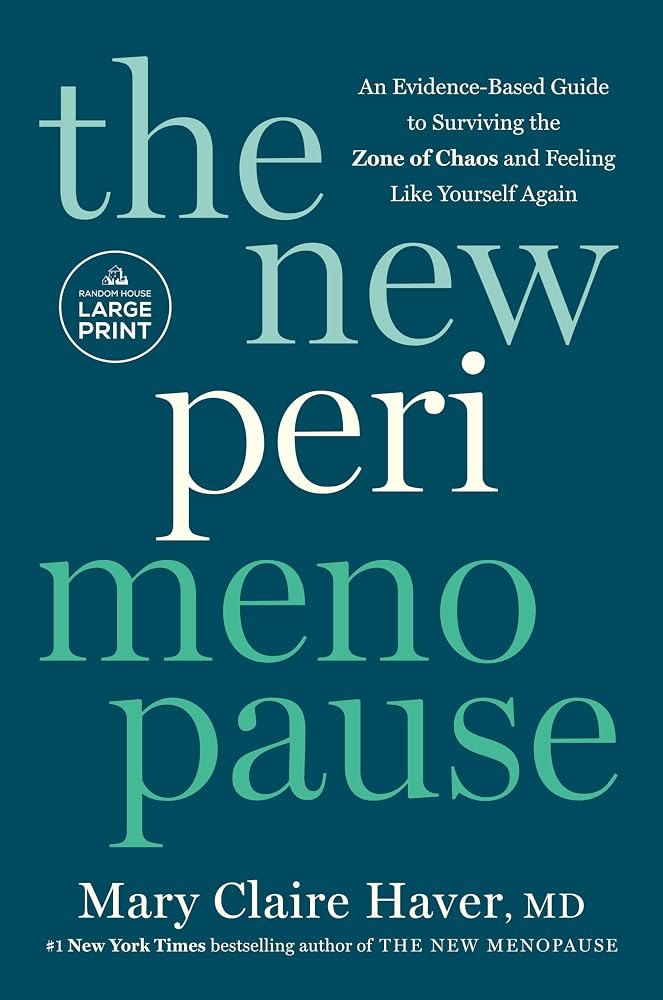
The New Perimenopause · Mary Claire Haver, MD · Random House / Rodale, 2026

Old Porvoo riverfront, Finland | Photograph by:
kallerna
,
CC BY-SA 3.0
The fundamental reason to read it is that perimenopause is one of the most persistently neglected and deeply misunderstood stages of women's health. Haver's direct motivation was to correct the nationwide fear of hormone therapy following misinterpretation of the 2002 Women's Health Initiative (WHI), which she calls “one of the worst cases of scientific data being misinterpreted.” That misreading caused hormone-therapy use to fall nearly 50% within six months, leaving an entire generation confused.
More moving is her view of changing health culture: she writes that this “modern menopause era” is defined by women who “refuse to suffer in silence because of shame.” Their collective voice has moved private troubles once hidden behind consultation-room curtains into public health discussion. Haver's 7 million followers and support from Brené Brown and medical experts are footnotes to that force—the book simply answers, systematically, questions scattered across comment sections.
Two
Two. The book's four-part framework
According to reviews and reading guides, the book has four main parts, moving clearly from “why it has been ignored” to “what can be done now”:
- Part one: historical and clinical context—why women's symptoms have long been minimized, ignored, and dismissed;
- Part two: the root of the problem—what happens to hormones (the mechanism of the “zone of chaos”);
- Part three: physiological and reproductive changes—what you may experience and how symptoms can be addressed;
- Part four: menopausal hormone therapy (MHT, called HRT in the book)—and sustainable lifestyle habits.
The back of the book includes a “question list” for clinicians, self-checklists, a 5-day anti-inflammatory meal example covering three meals daily and a shopping list, ending with a letter “to my younger self”—which many readers say made them cry. One qualification: readers of The New Menopause will find substantial overlap in mechanisms and lifestyle material; new readers will find plenty of information.
Three
Three. Six “disruptive truths” I took from it
Readers most often distill the book's “disruptive truths” into these six points. They interlock to form a new perspective: perimenopause is not a disease, but a bodily systems reorganization that has long been misunderstood.
1
Perimenopause is not “the few months before menopause.”
It is a biological transition lasting
7–10 years
and may begin as early as around
age 35
while periods are still entirely regular. For many women, the first signs are anxiety, fatigue, joint pain, brain fog, reduced libido, or loss of emotional control, long before “menopause.” Haver stresses: do not wait for irregular periods to realize “it has started.”
2
The “Zone of Chaos” is turbulence, rather than a gradual transition.
Haver begins with figures: women are born with around 1–2 million oocytes, only about 400 of which will ovulate over a lifetime. As ovarian reserve declines, the pituitary sends increasingly strong FSH stimulation signals, yet the ovarian response becomes erratic, producing
dramatic estradiol peaks and fluctuations, while progesterone “falls behind” as ovulation becomes sporadic
. Citing Nanette Santoro's 1996 study, she emphasizes that the changes are “sudden and dramatic,” rather than the smooth downward curve of textbooks. Shortened follicular phases and more anovulatory cycles are the reality of this stage.

Saksun village, Faroe Islands | Photograph by:
MiroRosa
,
CC BY-SA 4.0
3
Estrogen receptors occur in almost every organ, so symptoms go far beyond periods and hot flashes.
The cardiovascular system, bones, brain, urinary tract, skin, joints, and more all have estrogen receptors. That explains why perimenopause can simultaneously affect blood pressure, bone loss, cognitive decline, and genitourinary syndrome of menopause (GSM). The book particularly notes:
Reproductive hormones are first and foremost “brain hormones”
—estrogen, progesterone, and testosterone all participate deeply in brain function. Perimenopause raises the risk of first-onset major depression by around 4 times; recurrence risk rises markedly with a history of depression, as fluctuating hormones disrupt neurotransmitters such as serotonin and dopamine. “Low mood, irritability, and brain fog” are physiology, rather than personality.
4
“Medical gaslighting” is real and has structural causes.
Haver lists several striking figures: medical schools barely teach perimenopause; guidelines from organizations such as ACOG take an average of
17 years
to translate new evidence into practice; less than 10% of the NIH annual budget specifically funds women's health, with menopause estimated to receive less than
1%
of that; and without a standard blood test for perimenopause, doctors must rely on symptoms they were never trained to recognize. Her 2024 community survey of 800+ perimenopausal women found the most common symptoms were hot flashes/night sweats, weight gain, anxiety/depression, sleep problems, and fatigue.
5
Perimenopause is a once-in-a-lifetime “golden prevention window.”
This is the book's most powerful yet easily missed argument: addressing these changes now means saving health for later life. Haver cites research that women, despite living longer on average, spend around
25%
more of their lives in ill health than men—and perimenopause is a crucial lever for changing that gap. Treating this stage as “preventive medicine,” rather than something to “get through,” offers substantial long-term benefits.
6
Do not wait until it is “severe enough” to treat.
The book explicitly rejects the old narrative of “wait until you cannot bear it before seeing a doctor.” MHT (menopausal hormone therapy, called HRT in the book) can begin early after individual assessment; vaginal estrogen provides foundational genitourinary support that “everyone might need”; and lifestyle—anti-inflammatory eating, adequate protein, resistance training, vitamin D, Omega-3, even creatine—is the foundation, best built early.
Four
Four. The symptom panorama: why it “hurts everywhere” and is so often misdiagnosed
Haver devotes substantial space to restoring the systemic picture of perimenopause, rather than reducing it to “irregular periods + hot flashes.” Understanding that is the first step toward avoiding misdiagnosis.
Hormones affect the whole body
- Brain and mood: anxiety, depression, brain fog, mood swings (see truth 3);
- Metabolism and weight: abdominal fat redistribution, reduced insulin sensitivity, weight gain;
- Bones: declining estrogen accelerates resorption and bone loss;
- Cardiovascular system: effects on endothelial function, blood lipids, and blood-pressure regulation;
- Musculoskeletal system: joint pain and stiffness, echoing Vonda Wright's 2024 “musculoskeletal syndrome of menopause”;
- Genitourinary system (GSM): vaginal dryness, intercourse pain, urgency/frequency, recurrent UTI;
- Skin and hair: dryness, reduced elasticity, hair loss.

Street scene in Tórshavn, Faroe Islands | Photograph by:
Vincent van Zeijst
,
CC BY-SA 3.0
Because symptoms are diffuse, the book specifically lists “misdiagnoses” including fibromyalgia (substantial overlap with fatigue, brain fog, and muscle pain) and interstitial cystitis (overlap with GSM). This is among the most disempowering aspects of the “zone of chaos”: you seek care for real symptoms, yet may be told “it is all in your head” or even prescribed unnecessary antidepressants. Haver's position is clear: recognize first, exclude other causes, then address symptoms, rather than dismissing them as “stress.”
This also explains why “there is no standard diagnostic blood test for perimenopause” matters so much. Dramatic transitional hormone fluctuations mean a single FSH or estrogen value is often misleading, exactly consistent with our BMS/NICE 2026 interpretation that “above 45, do not diagnose through blood testing”: diagnosis depends on symptom patterns and menstrual history, rather than a laboratory sheet. Remembering this avoids the cycle of “normal tests → told nothing is wrong → continued suffering.” Blood testing is valuable for excluding “mimics” such as thyroid disease and iron deficiency, rather than proving “whether you are menopausal.”
Five
Five. The book's specific positions on MHT/HRT and lifestyle
As a physician-authored book, its fourth part offers the most practical substance. Several aspects of Haver's approach deserve attention:
Her tone on MHT is “individualized,” rather than “everyone should use it,” consistent with this publication's repeated position: hormone therapy is not an anti-aging miracle but a tool for clinically meaningful symptoms. Whether to start, which formulation, and how long to use it must all return to the person's risk profile. She clearly opposes two extremes: the old “endure it without treatment” view and the commercial portrayal of MHT as a universal supplement. In clinical language: “within the timing window, without contraindications, and through shared decisions, use it where it is indicated.”
- Latest research on progesterone therapy: She reviews progesterone's role and side effects during the hormonal transition, emphasizing “new research” rather than old experience.
- Everyone needs vaginal estrogen: A frequently quoted sentence is “Every vagina needs estrogen.” Low-dose local estrogen is safe and effective for GSM, has very low systemic absorption, and can accompany systemic MHT.
- Distinguish three things: MHT, contraceptive pills, and vaginal estrogen have entirely different actions and goals and must not be conflated; contraceptive pills during perimenopause often serve cycle regulation and contraception, rather than systemic symptom treatment.
- Breast cancer myths: She specifically “debunks the HRT–breast cancer myth,” noting that later reanalyses substantially revised the fear arising from 2002 WHI; risk depends on age, timing, formulation, and baseline individual factors, rather than “blanket danger.”
- Do not wait until it is ‘severe enough’: Again, symptoms affecting life warrant assessment rather than endurance.

Helsinki Cathedral, Finland | Photograph by:
Old Pionear
,
CC BY-SA 4.0
The lifestyle foundation
Beyond MHT, Haver offers an actionable daily approach based on her Galveston Diet: anti-inflammatory eating (more fruit, vegetables, fiber, protein, and unsaturated fat; less added sugar and ultraprocessed food), 16:8 intermittent fasting (introduced gradually, avoided in unsuitable groups such as those with eating disorders, type 1 diabetes, or pregnancy/breastfeeding), and adequate protein + resistance training.
She also emphasizes two contemporary reminders: when using GLP-1 medicines (for example for weight loss), adequate protein, resistance training, and body-composition monitoring are essential, or muscle and bone may be lost together; and among supplements, creatine, vitamin D, Omega-3, and dietary fiber receive repeated attention, alongside the histamine–hormone relationship (hormonal fluctuations may amplify histamine sensitivity, causing unexplained flushing, itching, or palpitations). These are not “miracle drugs,” but components of a solid foundation.
Six
Six. How does it align with the global 2026 guideline wave?
While writing these notes, this publication had just systematically reviewed several major 2026 updates. Reading The New Perimenopause gives an intriguing sense of alignment: “a patient-facing book happens to meet the clinical consensus”:
- ACOG Clinical Practice Guideline No.13 (2026-10-15) and ACP (2026-10-06) both elevate MHT to a strong first-line recommendation for vasomotor symptoms;
- BMS / NICE (2026-09) likewise establish HRT first line, nonhormonal options (NK antagonists, SSRIs/SNRIs) for those unable or unwilling to use hormones, and no support for phytoestrogens or herbs;
- All three emphasize the timing window (<60 or within 10 years of menopause), individualization, and shared decisions, and consistently do not recommend phytoestrogens/herbs as treatment.
Haver's book essentially advances these “MHT returns to first line; refuse to be ignored” agreements in language patients understand. Its purpose is empowerment: women know what to ask and what to reject before entering a consultation. That fully aligns with the spirit of shared decision-making in guidelines. The difference is simply that guidelines are written by doctors for doctors, while this book is written by a doctor for women.
Seven
Seven. Two things that moved me most, and the book's boundaries
The first is the “zone of chaos” metaphor itself. It translates a familiar insult—“you are emotional/oversensitive/at that age”—into physiology: your hormones are undergoing a real, dramatic, traceable storm. Naming it is itself empowering.

Gamla Stan, Stockholm, Sweden | Photograph by:
Richardmaackphotography
,
CC BY 4.0
The second is the final letter “to my younger self.” Haver writes that, as a doctor, she too was insufficiently sensitive to perimenopausal complaints until she fell into the same situation and truly understood. The candor of “I was part of the system; now I am stepping forward to correct it” makes this more moving than ordinary health education. It also reminds us that clinicians' “ignorance” is often not personal indifference, but structural gaps in education and research investment—so change begins when “patients feel able to bring information and ask questions.”
Boundaries and shortcomings (read critically):
- Overlap with The New Menopause may feel repetitive to existing readers;
- Resources favor the author's own website, with few alternative remote-care pointers for women without local specialists, creating a somewhat promotional feel;
- The 5-day menu uses American ingredients and may not suit everyday diets elsewhere;
- Limited attention to cultural differences in perimenopause and psychological support (counseling/peer groups);
- It is about patient empowerment, not a clinical guideline; medication decisions remain with the treating clinician.
Eight
Eight. Reading advice for Chinese readers: turn the book into “consultation equipment”
Haver repeatedly encourages one action: take the book to your doctor. In line with this publication's usual approach, I suggest using it this way:
- Record first, then seek care: Track menstrual changes, hot-flash/night-sweat frequency, mood and sleep, joint and urinary symptoms for 2–3 months—this is your strongest evidence.
- Bring a question list: Could my symptoms be perimenopausal? Are there thyroid/iron-deficiency “mimics” to exclude? What are my baseline VTE/cardiovascular/breast cancer risks? If considering MHT, is transdermal or oral treatment more suitable?
- Reject vague reassurance: If a clinician only says “menopause is like that, just endure it,” calmly request discussion of concrete options—the book's central spirit.
- Put lifestyle into practice first: Regardless of medication, protein intake (a palm-sized portion each meal), resistance training, anti-inflammatory eating, sleep, and vitamin D are the foundation agreed by book and guidelines alike.
- Distinguish educational empowerment from medical decisions: The book provides knowledge and courage, but the final plan needs informed joint decision-making with your clinician.
The publication's wider context makes this clearer: recently, we have systematically covered ACOG No.13, ACP, and BMS/NICE's three 2026 guideline updates, along with detailed reports on the POI chronic-endocrine-disease paradigm, ovarian-aging interventions, and recognition of gastrointestinal symptoms. Haver's book translates these “clinical agreements” into “language patients can take away.” Bringing the book and our guideline quick-reads to a consultation means you and your doctor need not begin from zero with “what is perimenopause?”—you can directly discuss “my risk profile, the appropriate route, and when to reassess.” That is the most practical purpose of reading notes.
A special reminder for local readers:
Many conclusions arise from the US healthcare context (specific FDA-approved drugs and the American specialist system). Chinese readers should separate “understanding mechanisms” from “specific medication use”: mechanisms are shared, but availability, formulations, and guideline positions should follow
current Chinese clinical guidelines and your treating clinician
. For menopausal hormone therapy (MHT), this publication's consistent terminology is MHT rather than the misapplied older “HRT” framework; noncommercial, without recommending particular brands; always focused on
Informed choice + bringing records to consultations + shared decisions with clinicians
.

Tromsø harbor, Norway | Photograph by:
Godot13
,
CC BY-SA 4.0
Awei's alternative titles (choose one before publication)
- Suspense: Her periods are still regular at 42—why does her doctor say she is “already perimenopausal”?
- Numbers: 7–10 years, age 35, 25%: this new book redefines “perimenopause”
- Counterintuitive: Menopause is not a gradual change but a “zone of chaos” storm—reading The New Perimenopause
- Identification: “So I wasn't being oversensitive”: a health book that breaks through midlife women's defenses
- Strong emotion: The longest-neglected truths about women's health are in this new 2026 book
First choice: number 2 (numbers), most likely to attract a click in a feed, with a promise consistent with the article and no overspending of trust.
Sources for the book and further information
- Haver MC. The New Perimenopause: An Evidence-Based Guide to Surviving the Zone of Chaos and Feeling Like Yourself Again. Rodale Books / Diversified Publishing, April 14, 2026.
- Public book descriptions and reading guides from SuperSummary / Book Insight Hub / Penguin Random House / Goodreads and others (content, structure, four main parts, reader ratings).
- Santoro N, et al. 1996—classic study of “abrupt rather than gradual” perimenopausal hormonal change (cited in the book).
- Wright VJ, 2024—the “musculoskeletal syndrome of menopause” framework (cited in the book).
- Women's Health Initiative (2002) and subsequent reanalyses—background for the book's discussion of “misinterpretation.”
- SHE MD Podcast and Chicago Tribune interview highlights with Haver (early individualized HRT, vaginal estrogen, GLP-1 and muscle/bone health, supplements).
- This publication's previous reviews: ACOG No.13 (2026-10-15), ACP (2026-10-06), BMS/NICE (2026-09) menopause guideline updates.
Note: This is an English-language original; the Chinese title Xin Weijuejingqi is an informal provisional translation. Quoted figures come from the public descriptions and guides above, rather than my page-by-page verification of the original; for important medication decisions, consult the original and your treating clinician.
Boundary statement:
This article consists of personal reading notes and educational compilation,
not diagnosis, treatment advice, or a recommendation for any product/brand
. The book's views do not represent every position of this publication; individual health decisions must reflect personal circumstances, follow current guidance in the relevant country, and be made jointly by a fully informed patient and treating clinician.
· Health education for women 40+
This publication follows evidence-based, noncommercial principles. Its focus remains:
Informed choice + bringing records to consultations + shared decisions with clinicians
.
If you have questions about this article, bring your own medical history and test results to discuss with your treating clinician.
Read the source material
- Author’s official page: The New Perimenopause
- NICE: Menopause identification and management, NG23
- ACOG: Hormone therapy for menopause
The original archive manuscript is restored above. These additional references offer context; their inclusion does not constitute medical validation of every original claim. Clinical and regional terminology review are pending.
A good question starts a conversation.
Explore a related editorial discussion. Reading is open to everyone; posting and replying require a free reader account.
More from the library
 Reading & culture · 15 MIN READReading The New Menopause: When Menopause Is No Longer Something to “Just Endure”↗
 Reading & culture · 14 MIN READAntiaging and the Right to Age: Skin Evidence, Marketing, and Informed Choice↗
 Reading & culture · 20 MIN READReading Estrogen Matters: Arguments, Evidence Tools, and Remaining Disagreements↗