World Menopause Day, October 18: Bringing the Pain That Is Hard to Speak About Into View
Joint or muscle discomfort may coincide with the menopause transition. “It is menopause” should never end a conversation about persistent pain.

In this article
Clinical highlights for medical readers
- Date: the International Menopause Society (IMS) has marked October 18 as World Menopause Day every year since 2009. The 2026 theme is “Chronic Pain at Midlife,” with the slogan “From recognition to evidence-based care.”
- White paper: the IMS 2026 white paper, Chronic pain at midlife, focuses on migraine, fibromyalgia, chronic pelvic pain, and related conditions. It notes that women's pain is often underestimated because of gender stereotypes and reduced to an “emotional problem.”
- Chinese data: key anchors: a nationwide cross-sectional study in China CDC Weekly (2025) found an overall prevalence of menopausal symptoms of 46.3% among women aged 40–60. Insomnia, 50.0%; fatigue, 48.2%; and nervousness, 46.9%, were the top three symptoms. VMS increase from age 40 and peak at 52, potentially affecting 80% of midlife women. Some 65% said symptoms affected work and 18% had taken leave.
- Population size: according to a projection from the Beijing Municipal Health Commission, China will have more than 210 million menopausal women by 2030, approximately 1/7 of the population.
- Clinical position: persistent or recurrent pain requires medical investigation for osteoporosis, osteoarthritis, neurological factors, and psychological or sleep-related factors. Do not self-medicate or simply endure it. Gender-sensitive, individualized, multidisciplinary assessment is encouraged.
In the clinic, a 50-year-old woman spread out a stack of test reports: “Orthopedics says my bones are fine; rheumatology says it is not rheumatoid arthritis. But my neck and shoulders, lower back, and knees take turns hurting, and I toss and turn all night. Is this simply what happens at my age?” This is exactly the kind of voice World Menopause Day 2026 wants heard: pain that does not announce itself as “hot flashes,” but genuinely depletes women in midlife.
I. Why World Menopause Day 2026 chose “pain”
For more than a decade, public discussion of menopause has been dominated by “hot flashes, night sweats, and mood swings.” Behind the IMS decision to focus its 2026 theme on “Chronic Pain at Midlife” lies a long-underestimated fact: pain is extremely common during the menopausal transition, yet is among the complaints least often seriously explored. Migraine, fibromyalgia, chronic pelvic pain, and widespread musculoskeletal pain cluster noticeably during this period. In her foreword to the white paper, IMS President Rossella Nappi states plainly that women's pain is too often dismissed through gender stereotypes and labeled “emotional,” instead of being properly investigated and treated.
Putting “chronic pain” on the October 18 agenda is not about creating anxiety. It is about bringing “pain that is hard to speak about” into an evidence-based framework where it can be recognized, assessed, and treated. Immediately afterward, October 20 is World Osteoporosis Day, with the theme “Build, protect, and strengthen bones for life.” This naturally connects with pain, because bone loss itself is an important source of hidden pain in midlife women.
Geirangerfjord, Norway | Photograph by Diego Delso, CC BY-SA 4.0.
II. The mechanism: why pain and menopause are linked
Estrogen has never been a hormone concerned only with reproduction. It modulates pain pathways in several ways: raising the pain threshold, stabilizing mood and sleep, and protecting bones, joints, and connective tissue. When ovarian function declines and estrogen fluctuates and withdraws, at least three pathways combine to increase “pain susceptibility”:
- Central sensitization: estrogen exerts a tonic effect on descending pain-inhibitory pathways. After its withdrawal, some women experience a lower pain threshold and fibromyalgia-like widespread pain.
- Bones, joints, and muscles: estrogen protects bone mass and maintains connective-tissue tension. After withdrawal, bone resorption accelerates, osteoporosis and osteoarthritis risks rise, and chronic neck, shoulder, back, and knee pain becomes more frequent.
- Blood vessels and nerves: migraine and VMS share some vascular-regulation mechanisms. Fragmented sleep in turn lowers the pain threshold, creating a “pain → poor sleep → more pain” cycle.
In other words, menopausal pain rarely has a single cause. It often reflects overlapping hormonal changes, musculoskeletal degeneration, sleep, and mood. That is also why it is easily misread as “making a fuss” or “what everyone experiences when they get older.”
III. White-paper highlights: from being ignored to being assessed
The IMS 2026 white paper shifts the clinical stance from “endurance” to “recognition plus evidence-based care.” It emphasizes several key changes:
The white paper's central position
① Chronic pain should be viewed as an essential component of menopause care, rather than an incidental complaint; ② assessment should be gender-sensitive, individualized, and multidisciplinary, investigating bone, joint, nerve, pelvic-floor, and psychological or sleep factors; ③ persistent or recurrent pain should not be attributed simply to emotion, but requires structured history-taking and appropriate investigations.
The clinical implication is straightforward: when a midlife woman says “I hurt everywhere,” the first step is not reassurance that “you just need to put up with it.” It is taking it seriously as a symptom requiring differential diagnosis: record its location, character, duration, and relationship to periods, sleep, and mood before deciding what to investigate.
III-1. Gender bias: why women's pain is more easily dismissed as “emotional”
The white paper's repeated emphasis on “gender stereotypes” is not merely rhetorical; it describes a systematic bias supported by research. Substantial evidence shows that when women describe pain, healthcare systems are more likely to attribute it to anxiety, depression, or “sensitivity,” resulting in fewer objective investigations and weaker pain-relief interventions. The same complaint from a man is more often investigated seriously for organic causes. During menopause, this bias gains another layer through the misreading of “hormonal fluctuations = emotional instability,” making musculoskeletal pain, pelvic pain, and migraine in midlife women easier to brush aside.
The clinical response is not complicated, but it requires deliberate practice. When a midlife woman says “I hurt everywhere,” treat emotion as one parallel differential possibility, rather than the default explanation. Neither overestimate nor underestimate psychological contributions; use the same rigorous history and examination. This stance can turn “ignored pain” into “a managed symptom.”

A city park in Bergen, Norway | Photograph by Olaf Meister, CC BY-SA 4.0.
III-2. Why pain is systematically underestimated at midlife: the sociocultural dimension
Beyond gender bias in healthcare, a sociocultural filter also overlays midlife women's pain. Family and workplace roles make them accustomed to “enduring,” explaining discomfort as “tiredness, age, or something I ought to bear,” thereby raising the threshold for seeking care. Meanwhile, “menopause” itself is often generalized into a synonym for “emotional,” so pain is casually assigned a psychological rather than physical explanation. The white paper's choice of “chronic pain” for 2026 is intended to dislodge this filter and grant “pain that is hard to speak about” the seriousness it deserves. In practice, a clinician's proactive question—“Apart from hot flashes, is there anywhere you have persistent pain?”—often uncovers hidden musculoskeletal pain, pelvic pain, and migraine more effectively than waiting for the patient to raise them.
III-3. Pain can also signal disease: do not attribute every pain to menopause
Emphasizing the association between menopause and pain certainly does not mean putting every pain into the basket of “hormonal fluctuations.” On the contrary, taking pain seriously begins by acknowledging that it may indicate an independent organic problem: new widespread pain with morning stiffness suggests inflammatory joint disease; chronic pelvic pain requires investigation for endometriosis and adenomyosis; unilateral throbbing headache requires exclusion of secondary causes; and radiating neck or shoulder pain requires assessment of cervical nerve roots. The purpose of “Chronic Pain at Midlife” is to ensure that women's pain is properly assessed, rather than dismissed as “menopause—just put up with it.” These are opposite approaches. Maintaining this distinction both respects patients and avoids missing treatable disease.
When documenting pain, completing five elements—“site, character, timing, triggers, and relieving factors”—helps subsequent differentiation more than a vague note of “generalized aching.” This small checklist costs nothing but is often the first piece of the diagnostic puzzle, and makes comparison at follow-up easier.
IV. Chinese data: 46.3% is not an abstract number
Returning to China makes the data more striking. A nationwide cross-sectional study published in China CDC Weekly (2025) found that the overall prevalence of menopausal symptoms among Chinese women aged 40–60 was 46.3%. This means nearly half of women in that age group are experiencing related difficulties. The three most commonly reported symptoms were insomnia, 50.0%; fatigue, 48.2%; and nervousness, 46.9%. Vasomotor symptoms (VMS) increase from 40, peak at 52, and may affect up to 80% of midlife women. More concretely, 65% of respondents said symptoms affected their work, and 18% had taken leave because of them.
According to projections shared by the Beijing Municipal Health Commission, China will have more than 210 million menopausal women by 2030, approximately one-seventh of the total population. This is a rapidly growing public-health issue rather than a niche concern, explaining the urgency of shifting from “endurance” to “active management.”
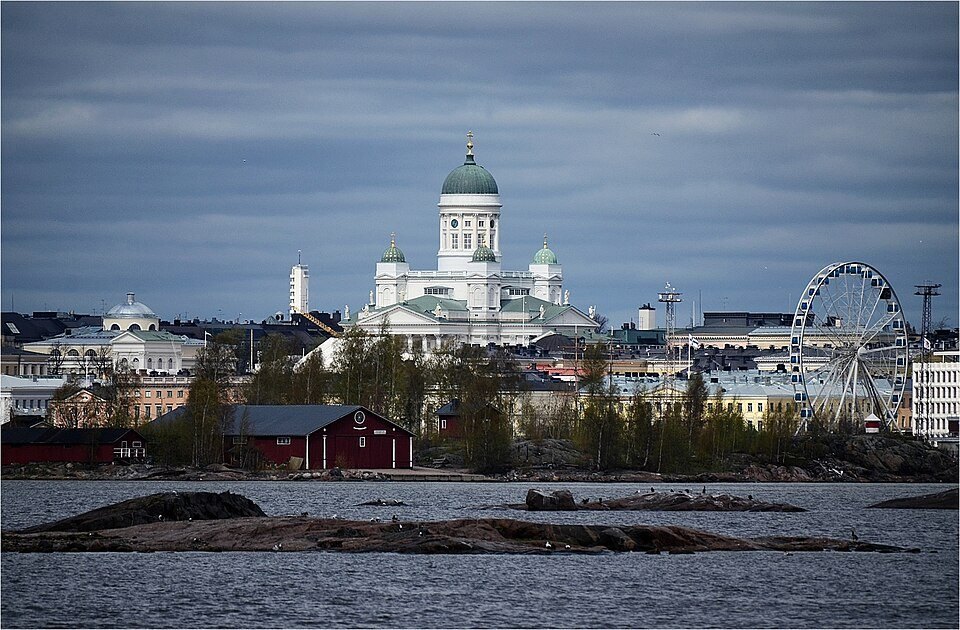
Helsinki Cathedral, Finland | Photograph by Old Pionear, CC BY-SA 4.0.
V. Clinical recognition and screening pathways
For midlife women presenting with pain, a structured pathway is recommended to avoid both missed diagnoses and excessive investigation:
- Pain diary: ask the patient to record site, character—stabbing, aching, or migrating—duration, day/night pattern, and relationships to activity, mood, and sleep. This helps localization and differentiation of physical and psychogenic components.
- Bones and joints: in those over 45 or with early menopause, assess bone density with DXA, vitamin D, and calcium; investigate osteoporosis and osteoarthritis.
- Nerves and pelvic floor: evaluate migraine through a neurological pathway; chronic pelvic pain requires investigation of pelvic-floor myofascial, gynecologic, and urinary factors.
- Sleep and mood: use brief scales, such as the PhQ series, to screen for depression, anxiety, and sleep problems, because both can be causes and consequences of pain.
Do: structured history-taking plus appropriate investigations plus multidisciplinary management
Judge carefully: do not simply attribute pain to “emotion” or “what everyone experiences with age”
Do not: self-medicate long-term to endure pain, or advise endurance without assessment
V-1. Condition-specific differential workup: a table for the clinic wall
When a midlife woman reports “pain everywhere,” the next step is triage by site and character, rather than immediately prescribing analgesics. The table below separates common pain types into “features, priority exclusions, and key investigations or referrals” for rapid clinical orientation:
Chronic pain in midlife women: condition-specific differential pathways
| Pain type | Common features | Priority investigations | Key tests or referral |
|---|---|---|---|
| Migraine / menstrual-related headache | Unilateral throbbing, light and sound sensitivity, association with hormonal fluctuations | Secondary headache, including mass lesions and blood pressure; menstrual association | Neurological assessment; brain imaging if needed; headache diary |
| Fibromyalgia | Widespread pain plus fatigue, sleep disturbance, and tenderness | Thyroid function and inflammatory markers to exclude rheumatoid arthritis | WPI/SSS and 2016 diagnostic criteria; rheumatology or pain referral |
| Chronic pelvic pain, >6 months | Persistent or recurrent lower-abdominal or pelvic-floor pain | Endometriosis, adenomyosis, pelvic-floor myofascial, urinary, and gastrointestinal causes | Gynecologic examination, ultrasound, endoscopy when necessary; pelvic-floor rehabilitation |
| Musculoskeletal pain: neck, shoulders, lower back, knees | Related to activity or posture; worsens with weight-bearing | Osteoporosis with DXA; osteoarthritis | X-ray; MRI when necessary; orthopedics or rehabilitation referral |
| Widespread / migrating pain | Variable location, with poor mood and sleep | Central sensitization and mood/sleep comorbidity | Mood and sleep scales; integrated multidisciplinary assessment |
V-2. MHT and the pain–sleep–mood triangle
Estrogen tonically regulates pain pathways, sleep architecture, and mood stability. Within the appropriate treatment window, MHT relief of moderate-to-severe VMS can reduce sleep fragmentation from night sweats; better sleep then raises the pain threshold. This indirect “MHT → sleep → pain threshold” chain is the physiological basis for its incidental help with some pain complaints. But one point must be explicit: MHT is not a painkiller. Pain clearly arising from osteoarthritis, osteoporosis, fibromyalgia, or neuropathy requires direct treatment of the cause—osteoporosis therapy, rehabilitation, necessary analgesia, and joint neurological or rheumatological care—rather than expecting hormones to “cover everything.” A more reliable clinical explanation is: “First we need to find out why it hurts. MHT can improve the portion of discomfort related to poor sleep from hot flashes, but it cannot repair wear within a joint.”

Blekholmen, Stockholm, Sweden | Photograph by Holger.Ellgaard, CC BY-SA 3.0.
V-3. Tiered management: what primary care can do, and when to refer
Managing pain does not mean every patient must attend a top-tier tertiary hospital. One workable division is: primary/community care handles structured histories, including pain diaries and records of site and character; basic screening such as vitamin D, calcium, TSH, and basic inflammatory markers; sleep and mood scales; and lifestyle interventions involving exercise and nutrition, while helping patients understand that persistent or recurrent pain deserves serious investigation. Menopause/gynecologic endocrinology clinics handle MHT decisions and complex hormonal assessment. Specialists become involved when red flags or diagnostic needs arise: orthopedics/rehabilitation for musculoskeletal problems and osteoporosis; rheumatology/pain medicine for fibromyalgia and inflammatory joint disease; neurology for migraine and neuropathy; and pelvic-floor/gynecology services for chronic pelvic pain. Referral red flags include unexplained weight loss, pain worse at rest than during activity, localizing neurological signs, a new fracture, or refractory pain unresponsive to first-line intervention. Such tiers help avoid missed diagnoses while reducing overload in higher-level hospitals.
V-4. Three phrases to help patients stop enduring pain in silence
- “Pain is not a price you are required to pay”: persistent or recurrent pain deserves careful investigation, rather than “it happens to everyone with age.”
- “Let us first distinguish which kind of pain it is”: record, investigate, and localize before discussing treatment, without rushing straight to analgesics.
- “I will help you work out which specialty to see”: when referral is needed, I will write down the tests and questions to take.
V-5. Choosing analgesics and setting limits
When an osteoarticular or neuropathic component is established, analgesia should follow a stepped approach, as needed, and for the short term. NSAIDs for acute osteoarthritis exacerbations require attention to gastrointestinal, renal, and cardiovascular risks and should not be taken long-term without supervision. Gabapentin or pregabalin may be considered for neuropathic pain, starting at low doses and monitoring drowsiness and dizziness. One boundary needs repeated emphasis: chronic pain at midlife should not become a setting for long-term opioid prescribing. Evidence does not support sustained benefit, while dependence and addiction risks are clear. For pain at multiple sites intertwined with mood and sleep, a single drug is unlikely to suffice. The appropriate approach combines “treatment of the cause + sleep and mood management + exercise rehabilitation + necessary analgesia” into an individualized plan, adjusted dynamically at follow-up.

Reykjavík, Iceland | Photograph by Hedwig Storch, CC BY-SA 3.0.
VI. Management: evidence-based care and the confidence not to endure silently
The principle is clear: identify the cause first, then intervene in tiers. Treat confirmed osteoporosis according to relevant guidelines. For VMS-related pain and sleep disturbance, MHT within the appropriate window can improve both vasomotor symptoms and sleep, indirectly relieving some pain. Nonhormonal options, including SSRIs/SNRIs and NK3 antagonists, are used when hormones are contraindicated or declined. Musculoskeletal pain requires rehabilitation, exercise, and necessary analgesia together. Addressing psychological and sleep factors simultaneously can often break the “pain → poor sleep → more pain” cycle.
In patient communication, the most powerful sentence is: “Persistent or recurrent pain is not a price you have to bear; it deserves careful investigation.” Restoring patients' initiative in assessment is itself part of treatment.
The foundational role of nonpharmacological treatment is often underestimated. For musculoskeletal and widespread pain, **structured exercise—resistance training plus aerobic activity plus flexibility and balance—**has reasonably strong evidence for improving function and pain thresholds. Cognitive behavioral therapy (CBT) helps modulate catastrophic thinking about chronic pain and sleep. Heat and relaxation training can be inexpensive adjuncts. Writing these into a “pain self-management prescription” is often more sustainable than simply adding medication. A final sentence applies to clinicians too: when a midlife woman says “I hurt everywhere,” first assume she needs serious assessment rather than advice to endure. That is the simplest response to the World Menopause Day 2026 theme.
VI-1. When pain meets mood: screening and comorbidity management
Pain, sleep, and mood often form a triad in midlife women. PHQ-9/GAD-7 and the Insomnia Severity Index should be included in routine screening, both to assess the comorbid background of pain and to avoid conflating “somatization caused by depression/anxiety” with “pain caused by physical disease.” For mild-to-moderate mood or sleep problems with positive screening results, evidence-based psychological treatment is preferred: CBT-I for insomnia and CBT for pain catastrophizing, with psychiatry involved when needed. Moderate-to-severe conditions or self-harm risk require referral according to depression/anxiety guidelines; do not independently substitute MHT for antidepressant treatment. Managing this layer can substantially relieve some “unexplained pain,” not because it was “psychological all along,” but because pain and emotion circuits naturally amplify each other.
VI-2. The exercise prescription: how to make it specific
For musculoskeletal and widespread pain, exercise is not “optional” but a core treatment. A practical framework is: resistance training 2–3 times weekly, targeting core and major muscle groups; aerobic activity totaling 150 minutes weekly at moderate intensity, such as brisk walking, swimming, or cycling; and flexibility/balance work, such as tai chi or yoga-style stretches. Evidence shows that regular resistance training improves musculoskeletal pain and function and raises pain thresholds; aerobic activity improves sleep and mood; flexibility and balance reduce falls and sprains. Begin with what is tolerable and increase slowly. For someone inactive for a long time, start with low-impact aerobic activity and stretching, then progressively add loading. A prescription specifying “frequency, duration, and type” produces much better adherence than “exercise more.”

Trolltunga, Norway | Photograph by TerjeN, CC BY 3.0.
VI-3. Referral red flags: which pain needs prompt further investigation
Tiered management depends on recognizing red flags. Any of the following should prompt targeted investigation or referral rather than remaining within a “menopausal pain” framework: ① unexplained weight loss with pain; ② pain worse at rest than with activity, or pain that wakes the patient at night, raising concern for bone tumors, infection, or inflammatory lesions; ③ localizing neurological signs, including weakness, a sensory level, or sphincter dysfunction; ④ a new fragility fracture or marked height loss; ⑤ abdominal pain or a pelvic mass with chronic pelvic pain; ⑥ refractory pain unresponsive to first-line intervention. Including these red flags in the initial assessment creates a safe and efficient boundary between “just endure it” and “overinvestigation.” Printing the checklist as an initial-visit desk card can remind clinicians to check each item and reduce the patient's burden of repeating the history.
A quick literature guide for clinicians
| Item | Content |
|---|---|
| Source | International Menopause Society. World Menopause Day 2026 — Chronic Pain at Midlife, white paper and toolkit, 2026-10-18 |
| Theme | Chronic Pain at Midlife; slogan: From recognition to evidence-based care |
| Pain covered | Migraine, fibromyalgia, chronic pelvic pain, and related conditions; emphasizes gender-sensitive, individualized, multidisciplinary assessment |
| Chinese data | China CDC Weekly 2025: symptom prevalence 46.3% among women 40–60; insomnia 50.0%, fatigue 48.2%, nervousness 46.9%; >210 million menopausal women in China by 2030 |
| Clinical implications | Structured pain history plus differential assessment of bones, joints, nerves, pelvic floor, and sleep; tiered evidence-based intervention after establishing the cause, opposing “silent endurance” |
| Limitations | Cross-sectional and self-report limitations; the white paper is an expert position, not an RCT; pain has multiple causes and requires professional assessment |
The message in one sentence
World Menopause Day 2026 puts pain on the agenda to tell every midlife woman, rather than to frighten her: pain that is hard to describe deserves to be heard seriously and assessed scientifically. Give that awareness, together with “which specialty to see and which questions to bring,” to the woman in your consultation room.
This article is health education based on IMS World Menopause Day 2026 material, publicly available white-paper interpretations, and the 2025 China CDC Weekly cross-sectional study. It is intended only for clinical reference and clinician–patient communication and does not constitute individualized diagnostic or treatment advice. Persistent or recurrent pain should be assessed in a gynecologic endocrinology/menopause clinic or appropriate specialty, where the treating physician can establish the diagnosis and plan with the relevant investigations. Follow medical advice for medications and the approvals and prescribing information of the local regulatory authority.
World Menopause Day 2026 Chronic pain Midlife women For clinicians
Photo sources and licenses: Wikimedia Commons; images have only been scaled to page width, with separate cropping and branded layout for the cover.
- Cover, city view of Copenhagen, Denmark: Pudelek, CC BY-SA 4.0
- Figure 1, Geirangerfjord, Norway: Diego Delso, CC BY-SA 4.0
- Figure 2, city park in Bergen, Norway: Olaf Meister, CC BY-SA 4.0
- Figure 3, Helsinki Cathedral, Finland: Old Pionear, CC BY-SA 4.0
- Figure 4, Blekholmen, Stockholm, Sweden: Holger.Ellgaard, CC BY-SA 3.0
- Figure 5, street view in Reykjavík, Iceland: Hedwig Storch, CC BY-SA 3.0
- Figure 6, mountains at Trolltunga, Norway: TerjeN, CC BY 3.0
Read the source material
The original archive manuscript is restored above. These additional references offer context; their inclusion does not constitute medical validation of every original claim. Clinical and regional terminology review are pending.
A good question starts a conversation.
Explore a related editorial discussion. Reading is open to everyone; posting and replying require a free reader account.
More from the library
 Nutrition & evidence · 13 MIN READSoy, Isoflavones, and Equol: Can That Bowl of Soy Foods Really “Replenish Estrogen” After 40?↗
 Movement & strength · 14 MIN READWomen and Muscle Building: From the Ideal of Being “Fair-Skinned, Thin, and Youthful” to Strength↗
 Body & identity · 14 MIN READHair Loss Is Not Simply “Deficiency”: What Hormones, Childbirth, and Stress Reveal About Your Hair↗